The winners of the latest tech wave are rolling up their sleeves for AI. It’s not the first time it’s happened, but this time the script is different. It’s not just the irresistible allure of potentially enormous profits – as the source suggests – that’s driving already rich and dominant giants. There’s a deeper fear: being left out of the moment that will define the next decades of computing, and with it the very architecture of digital power.
The phenomenon is not new, but its acceleration reveals an uncomfortable truth. Artificial intelligence is not just another software layer you can buy on demand from the cloud. It’s a platform shift that demands brutal computing power, and those who don’t own the hardware risk having to ask permission to exist. This is why companies already generating hundreds of billions in revenue are sweating over infrastructure again: buying tens of thousands of GPUs, designing on-premise clusters, and reassessing the balance between cloud and bare metal. It’s not a choice of convenience, but of survival.
What’s at stake is control. Running an LLM on a public cloud may seem like a bargain as long as inference costs stay low, but when volumes grow and data becomes sensitive, TCO and sovereignty push toward self-hosted deployments. Quantization and fine-tuning of open-weight models on owned hardware allow data to stay within one’s own borders, responding to GDPR pressures and confidentiality needs that no service-level agreement can truly guarantee. In this scenario, tech giants are fortifying a position: whoever owns the servers gets to decide who can run inference and under what terms.
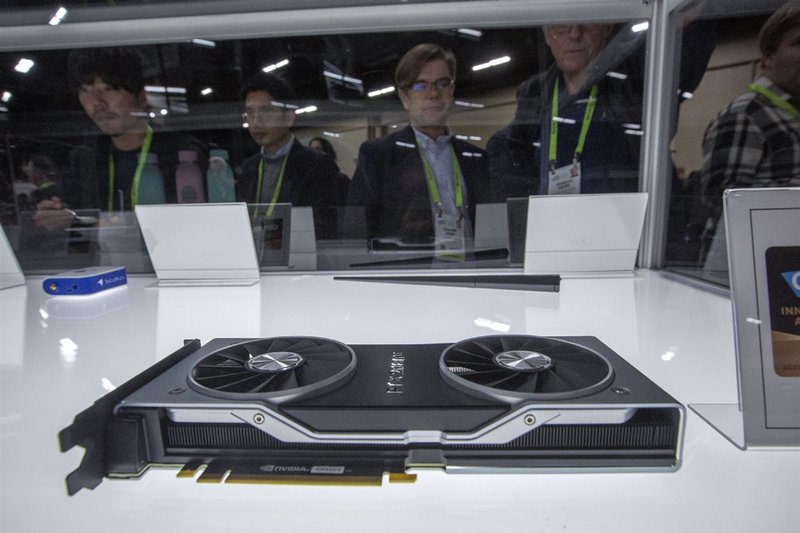
This race is reshaping the landscape. On one side, GPU suppliers are experiencing an unprecedented golden age, with delivery times stretching and prices soaring. On the other, the market is polarizing: companies with the financial muscle to invest in on-premise hardware are building a hard-to-breach moat, while those who can’t afford such CapEx remain hostage to monthly cloud fees and latency constraints. It’s not just about tokens-per-second performance, but about strategic independence. The fear of “missing the moment” translates into an arms race where VRAM becomes the new currency.
In this context, the so-called “grinding” of the tech winners isn’t a simple quest for extra profit. It’s an implicit admission that a cloud-only business model is no longer enough. Large-scale inference, continuous training, and deep customization demand granular infrastructure control, and those who can afford it are doing so, often quietly, away from the spotlight. The wave that seemed to have already passed is coming back, but with a trowel in hand and reinforced concrete.







💬 Comments (0)
🔒 Log in or register to comment on articles.
No comments yet. Be the first to comment!