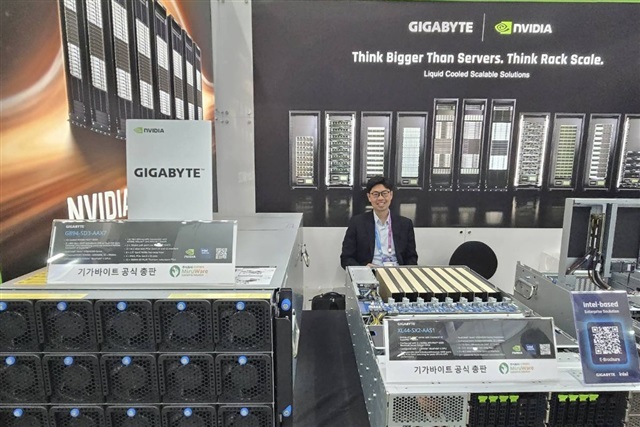
Giga Computing and South Korea's Push Towards Sovereign AI
Giga Computing, a division of Gigabyte, is focusing its strategies on the South Korean market, an area experiencing significant acceleration in the demand for sovereign Artificial Intelligence solutions. This strategic move underscores a growing global trend: the need for nations and their enterprises to maintain tight control over their data and AI infrastructures. The objective is to ensure security, regulatory compliance, and technological autonomy.
South Korea, with its advanced technological ecosystem and strong emphasis on innovation, represents fertile ground for the adoption of AI models that meet stringent sovereignty requirements. Giga Computing's commitment in this context highlights how hardware providers are adapting to deployment needs that prioritize on-premise and self-hosted environments, moving away from exclusive dependencies on public cloud services.
The Context of Sovereign AI: Why It's Crucial
The concept of "sovereign AI" goes beyond mere data localization. It implies complete control over the entire Artificial Intelligence pipeline, from the training phase of Large Language Models (LLM) to Inference, including Fine-tuning and Deployment. For many organizations, particularly those operating in regulated sectors such as finance, healthcare, or public administration, data sovereignty is a non-negotiable requirement.
This approach addresses several critical needs. Firstly, compliance with local and international regulations, such as GDPR in Europe, which impose restrictions on data residency and processing. Secondly, security: keeping data and models within controlled physical and logical boundaries reduces exposure to external risks. Finally, sovereignty can influence the long-term Total Cost of Ownership (TCO), offering greater predictability and control over operational costs compared to cloud-based consumption models.
Technological Implications and Hardware Requirements
To establish a sovereign AI infrastructure, companies must invest in robust and scalable hardware solutions. This includes high-performance servers equipped with cutting-edge GPUs, essential for managing intensive LLM training and Inference workloads. The choice of GPUs is critical, considering factors such as available VRAM, throughput, and computing capacity, which directly influence the size of models that can be run and response speed.
An on-premise deployment also requires careful planning for storage, high-speed network connectivity, and cooling solutions. The ability to run models with advanced Quantization techniques or to support multi-GPU configurations with interconnects like NVLink becomes fundamental for optimizing performance and energy efficiency. The implementation of air-gapped environments, where external connectivity is completely absent, represents the pinnacle of sovereignty and security, albeit with significant implications for management and updates.
Future Prospects and Considerations for Decision Makers
The trend towards sovereign AI, as highlighted by Giga Computing's commitment in South Korea, is set to grow, driven by regulatory, security, and cost optimization needs. For CTOs, DevOps leads, and infrastructure architects, evaluating an on-premise or hybrid deployment for AI workloads becomes a strategic priority. It is crucial to carefully analyze the trade-offs between CapEx and OpEx, desired scalability, and specific privacy and compliance requirements.
AI-RADAR serves as a resource for navigating these complexities, offering analytical frameworks and insights on /llm-onpremise to help companies make informed decisions. There are no universal solutions; the best choice always depends on the organization's specific needs, budget constraints, and long-term strategy regarding data and Artificial Intelligence.









💬 Comments (0)
🔒 Log in or register to comment on articles.
No comments yet. Be the first to comment!