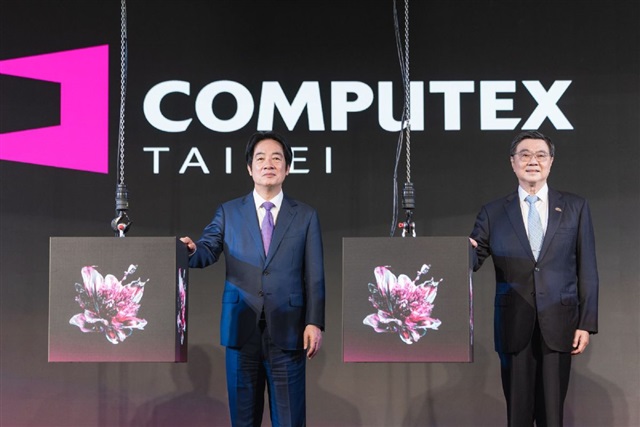
Strategic Investments in Taiwan for the AI Supply Chain
Leading global tech companies are strengthening their presence and investments in Taiwan, an island that continues to be a crucial epicenter for the production of advanced semiconductors and hardware components. This strategic move comes as the Taiwanese government actively commits to ensuring supply chain stability, a factor of paramount importance for the global technology industry. The world's reliance on Taiwan for cutting-edge silicon is well-known, and its stability is a pillar for innovation and operational continuity in high-tech sectors, such as artificial intelligence.
The increase in investments reflects the understanding that reliable access to these components is indispensable for sustaining the rapid growth and evolution of AI workloads. For organizations developing and deploying Large Language Models (LLM), the availability of specific hardware, such as GPUs with high amounts of VRAM and computing capabilities, is a fundamental prerequisite. The guarantee of a stable supply chain directly translates into greater predictability for investment planning and for building robust and high-performing AI infrastructures.
Taiwan's Critical Role in the AI Ecosystem
Taiwan holds a dominant position in semiconductor manufacturing, particularly for the most advanced chips that power artificial intelligence systems. This leadership makes it an indispensable partner for companies that require hardware for LLM training and inference. Supply chain stability is not just a matter of availability, but also of cost predictability and delivery times, essential elements for managing the Total Cost of Ownership (TCO) of a large-scale AI infrastructure.
An interruption or instability in Taiwanese production could have significant repercussions across the entire sector, slowing down the development of new generations of LLMs and the adoption of AI solutions in various fields. For CTOs and infrastructure architects, the ability to procure specific hardware, such as high-performance GPUs, is directly linked to the ability to implement effective deployment strategies, whether in cloud, or increasingly, on-premise or hybrid environments. The Taiwanese government's promise of stability aims to reassure investors and consolidate confidence in this vital production ecosystem.
Implications for On-Premise Deployments and Data Sovereignty
For companies opting for on-premise or self-hosted LLM deployments, hardware supply chain stability is a decisive factor. The choice to keep AI workloads within their own data centers is often driven by data sovereignty requirements, regulatory compliance, and granular control over the infrastructure. However, these benefits are intrinsically dependent on the ability to acquire and update the necessary hardware, from GPUs with sufficient VRAM for complex models, to high-throughput storage and networking systems.
Guaranteed access to advanced silicon components allows companies to plan the expansion of their inference and training capabilities with greater certainty, optimizing long-term TCO compared to purely cloud-based models. The ability to build and maintain air-gapped or tightly controlled environments for sensitive LLMs is directly linked to the availability of reliable hardware. For those evaluating on-premise deployments, AI-RADAR offers analytical frameworks on /llm-onpremise to assess the trade-offs between costs, performance, and security requirements, where supply chain stability plays a significant role.
Future Outlook and Supply Chain Resilience
The intensification of investments in Taiwan by tech giants and the commitment of the local government underscore the collective awareness of the fragility and importance of global supply chains. As the AI sector continues its rapid expansion, the need for resilience and, in some cases, diversification of hardware sourcing will become increasingly pressing. The ability to maintain a steady flow of advanced silicon is essential not only for economic growth but also for technological security and competitiveness globally.
The future of LLM deployments, both on-premise and in the cloud, will be heavily influenced by the industry's ability to ensure stable and predictable access to hardware. The strategic decisions made today in Taiwan will have a lasting impact on companies' ability to innovate and implement cutting-edge AI solutions, while maintaining control over their data and infrastructures. Supply chain stability remains a fundamental pillar for the evolution of artificial intelligence.







💬 Comments (0)
🔒 Log in or register to comment on articles.
No comments yet. Be the first to comment!