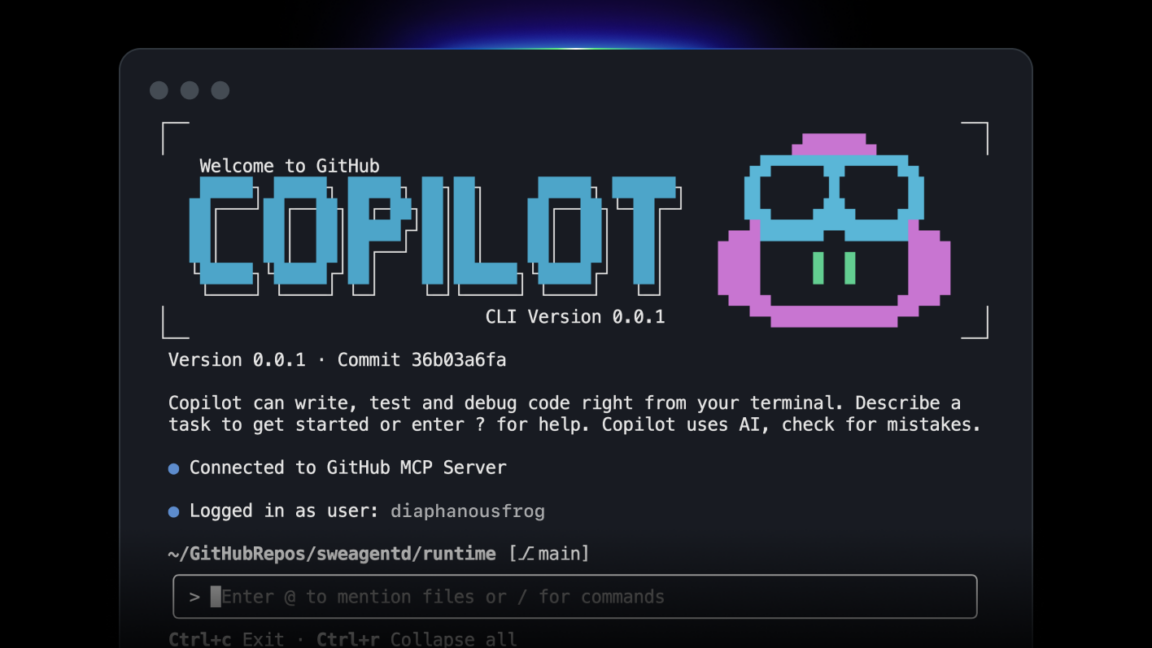
GitHub Copilot Adopts Usage-Based Billing to Manage Inference Costs
GitHub has announced a significant change in the billing model for its AI-powered coding assistant service, GitHub Copilot. Starting June 1, users will transition to a system where pricing is based on the actual usage of AI resources. This move, according to the company, aims for a more precise alignment of costs with real consumption and represents a necessary step to ensure Copilot's financial sustainability amidst surging demand for limited AI computing resources.
The decision by GitHub, a Microsoft-owned company, reflects a broader trend in the artificial intelligence sector, where managing operational costs, particularly those related to Large Language Model (LLM) inference, is becoming a strategic priority. Economic efficiency and scalability are crucial factors for AI service providers, who must balance innovation with long-term sustainability.
Challenges of the Current Model and Inference Costs
Currently, GitHub Copilot subscribers receive a monthly allocation of "requests" and "premium requests," which are consumed whenever the AI service is called upon. However, GitHub has highlighted how these generic categories encompass a wide range of AI activities, each with vastly different backend computing costs. For instance, a quick chat question and a multi-hour autonomous coding session can incur the same cost for the end-user, despite the underlying computational effort being radically different.
The company stated that it has absorbed much of the escalating inference costs associated with this usage to date. However, lumping all "premium requests" together is no longer economically sustainable. This scenario underscores the complexity of resource management for large-scale AI models, where performing inference demands substantial computing power, often on specialized hardware like GPUs, with direct impacts on VRAM and throughput.
Implications for Providers and Tech Decision-Makers
GitHub Copilot's shift to a usage-based billing model offers insight into the challenges AI service providers face in maintaining profitability and scalability. Managing inference costs is a critical factor not only for cloud giants but also for organizations evaluating the deployment of LLMs on-premise or in hybrid environments. For the latter, understanding the Total Cost of Ownership (TCO) of a local AI infrastructure, including energy and hardware maintenance costs, becomes fundamental.
Tech decision-makers, such as CTOs and infrastructure architects, must carefully consider how different types of AI workloads impact resource consumption and, consequently, operational costs. Optimizing inference pipelines, adopting techniques like quantization to reduce memory requirements, and efficient GPU allocation are all key elements for controlling expenditure. AI-RADAR, for example, offers analytical frameworks on /llm-onpremise to evaluate the trade-offs between cloud and self-hosted deployments, providing tools for an in-depth analysis of constraints and opportunities.
Future Outlook and the Importance of Efficiency
GitHub's move underscores the growing importance of efficiency and transparency in AI service billing. As Large Language Models become more pervasive and their capabilities expand, the demand for computational resources will continue to grow. This makes it essential for providers to adopt models that accurately reflect the value and cost of backend operations.
For companies using or planning to use LLMs, whether through cloud services or self-hosted deployments, understanding the dynamics of inference costs is crucial for effective strategic planning. The focus on financial sustainability and resource optimization is no longer just a technical matter but a business imperative that will influence investment decisions in AI infrastructure and software for years to come.









💬 Comments (0)
🔒 Log in or register to comment on articles.
No comments yet. Be the first to comment!