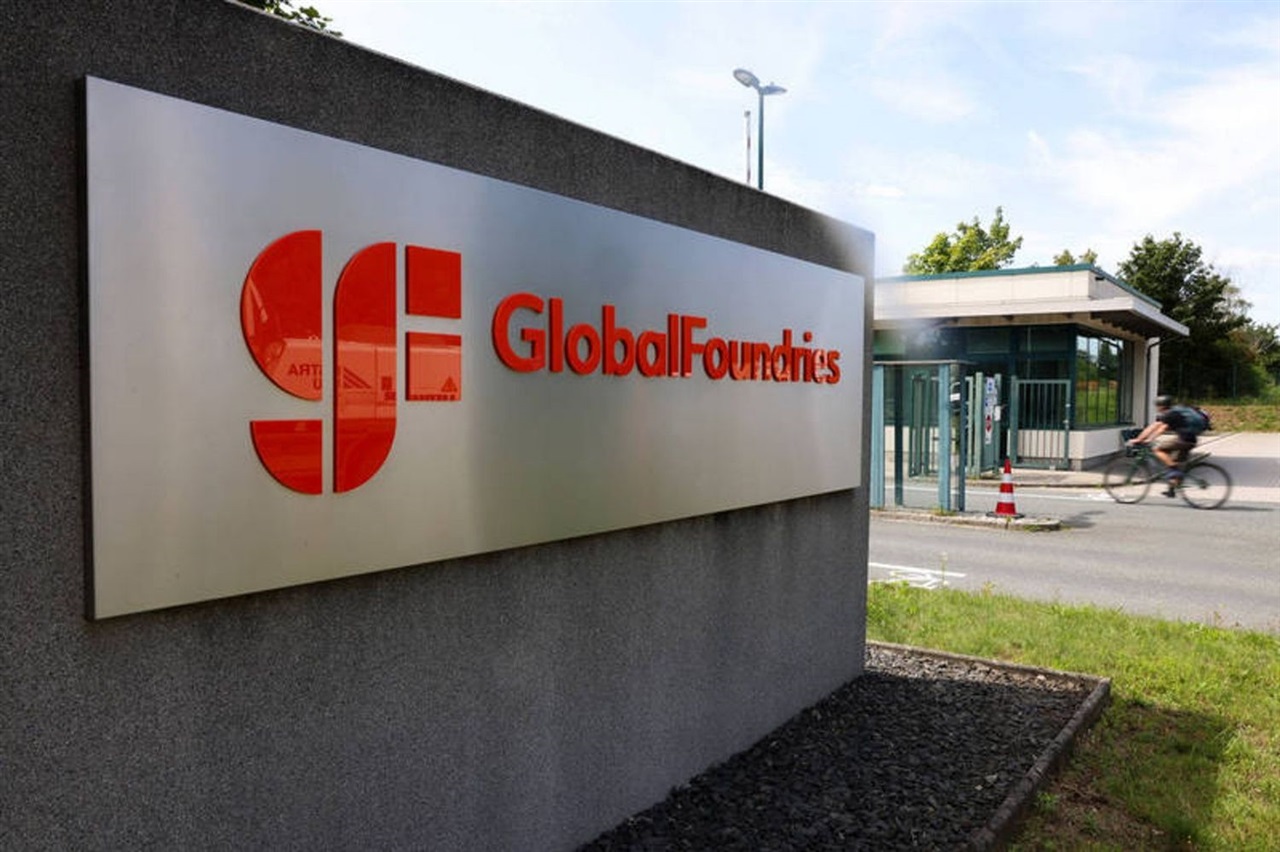
The news is both predictable and disruptive: GlobalFoundries, one of the largest contract chip manufacturers, is expanding its role in Singapore to ride what it calls the “physical AI hardware wave.” That phrase captures the most tangible phase of the AI revolution – not just algorithms and models, but the chips that run them: GPUs, specialized accelerators, neuromorphic processors – increasingly installed in enterprise racks rather than public cloud data centers. The move comes as silicon demand for AI strains the entire supply chain, while Singapore cements its ambition as a strategic hub for advanced electronics manufacturing.
The foundry that shapes artificial intelligence
GlobalFoundries does not design its own chips but manufactures them under contract for others – from major vendors to specialized labs. Its role becomes more critical as AI architectures diversify: beyond training GPUs, demand grows for inference-only chips designed for low power consumption and controlled latency, ideal for edge or on-premise scenarios. “Physical AI hardware” means exactly this material layer – boards, modules, interposers – that turns an LLM’s potential into concrete responses without relying on the cloud. Dedicated production lines, or at least available capacity, allow the company to respond to orders from those building AI servers with custom components and optimal quantization. Singapore, with its investment-friendly policies and a well-established electronics ecosystem, is the linchpin of this strategy.
Fewer bottlenecks, more technological sovereignty
For organizations evaluating self-hosted LLM deployments – healthcare, finance, government bodies – hardware availability at a predictable cost is not a detail. While GlobalFoundries’ expansion does not immediately solve chip shortages, it sends a medium-term signal: manufacturing capacity is moving where demand is most stable and end users demand data control. An accelerator produced in Singapore for a European company, possibly meeting GDPR audit requirements, is no longer an abstract idea. Yet, the usual trade-offs remain: on-premise requires capital expenditure (CapEx) and in-house skills, while the cloud offers elasticity but exposes to unpredictable operational costs and lock-in risks. Those reading GlobalFoundries’ announcement today can interpret it as a piece of a more fragmented and richer ecosystem, where choosing between an external foundry, custom silicon, or off-the-shelf components is never neutral in terms of model sovereignty.
The thread connecting to local deployments
AI-RADAR’s focus on on-premise inference architectures cannot overlook the weight of manufacturing. The ability to obtain optimized chips – for instance, with native support for low-power INT8 computation – affects server density and operating cost. While today’s tokens-per-second benchmarks often rely on general-purpose hardware such as consumer GPUs, tomorrow’s performance champions could be accelerators produced by foundries like GlobalFoundries on open specifications. A signal from Singapore speaks of a broader shift: AI hardware is no longer the exclusive territory of a few giants; it becomes a battleground for a new supply chain, where chip fabs engage more directly with users – and those users increasingly want the hardware physically and jurisdictionally close.
Beyond the announcement: the TCO knot
GlobalFoundries’ investment won’t change price lists overnight, but it reshapes expectations. For IT managers evaluating the Total Cost of Ownership of an LLM infrastructure, having more production hubs in geopolitically stable areas can, over time, mean more predictable hardware costs and less dependence on single suppliers. Building an on-premise AI environment is not just a chip problem: it requires serving frameworks, orchestration, and an update pipeline. But without reliable silicon, everything stalls. In this light, GlobalFoundries’ move is less peripheral than it seems: a slow, concrete shift of the manufacturing center of gravity toward those who see AI as a tool to be governed, not a service to be rented.










💬 Comments (0)
🔒 Log in or register to comment on articles.
No comments yet. Be the first to comment!