
General Motors (GM) is accelerating the development of autonomous driving through the intensive use of simulations and reinforcement learning. The company aims to solve the challenges posed by rare and complex scenarios, training its AI systems at speeds 50,000 times faster than real-time.
Addressing the Long Tail
Autonomous driving requires the ability to interpret a constantly changing environment and react in real time. GM focuses on managing long-tail scenarios, those rare, ambiguous, and unexpected situations that determine the reliability and safety of an autonomous system. These scenarios include rare events such as unexpected objects on the road or situations that require typically human reasoning skills.
Vision Language Action Models
GM is developing Vision Language Action (VLA) models, which combine image understanding with the ability to act. These models are fine-tuned for specific driving-related tasks, allowing the vehicle to interpret complex gestures and road signs. To reduce latency, GM uses a hybrid approach, with a large model for high-level semantic decisions and a smaller model for immediate spatial control.
High-Fidelity Simulations
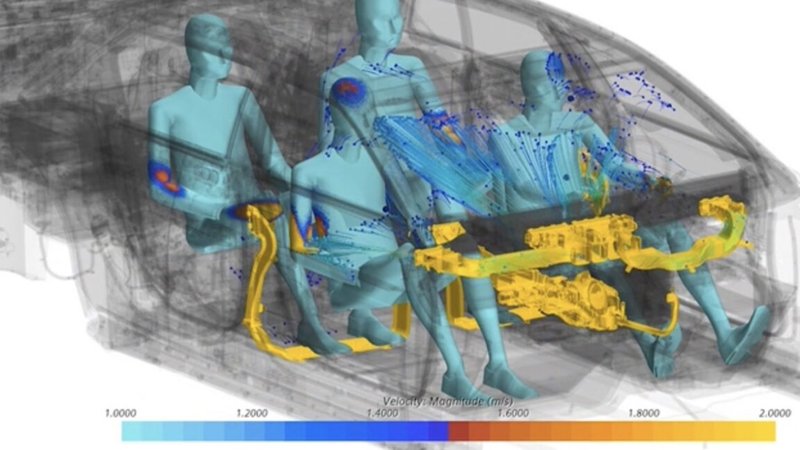
To train models to handle dangerous situations, GM runs millions of high-fidelity simulations, equivalent to tens of thousands of human driving days. These simulations allow the system to be tested in virtual scenarios that would be too risky to face in the real world. GM also uses generative AI techniques to create new training data, modeling extreme situations and preserving the geometry of the scenes.
Reinforcement Learning and "Boxworld"
GM has developed a proprietary simulator, GM Gym, which includes a multi-agent reinforcement learning environment called "Boxworld." This abstract environment allows thousands of drivers to be simulated per second, training the models at very high speeds. The models developed in Boxworld are then transferred to the real world using a technique called "On Policy Distillation," which allows them to inherit the driving strategies learned in simulation.
Stress-Testing and Epistemic Uncertainty
GM uses a system called SHIFT3D to create "adversarial" objects that challenge the perception system. In addition, the models are equipped with an "epistemic uncertainty head" that allows the AI to recognize when it is faced with an unknown situation, flagging the most complex cases for further analysis.








💬 Comments (0)
🔒 Log in or register to comment on articles.
No comments yet. Be the first to comment!