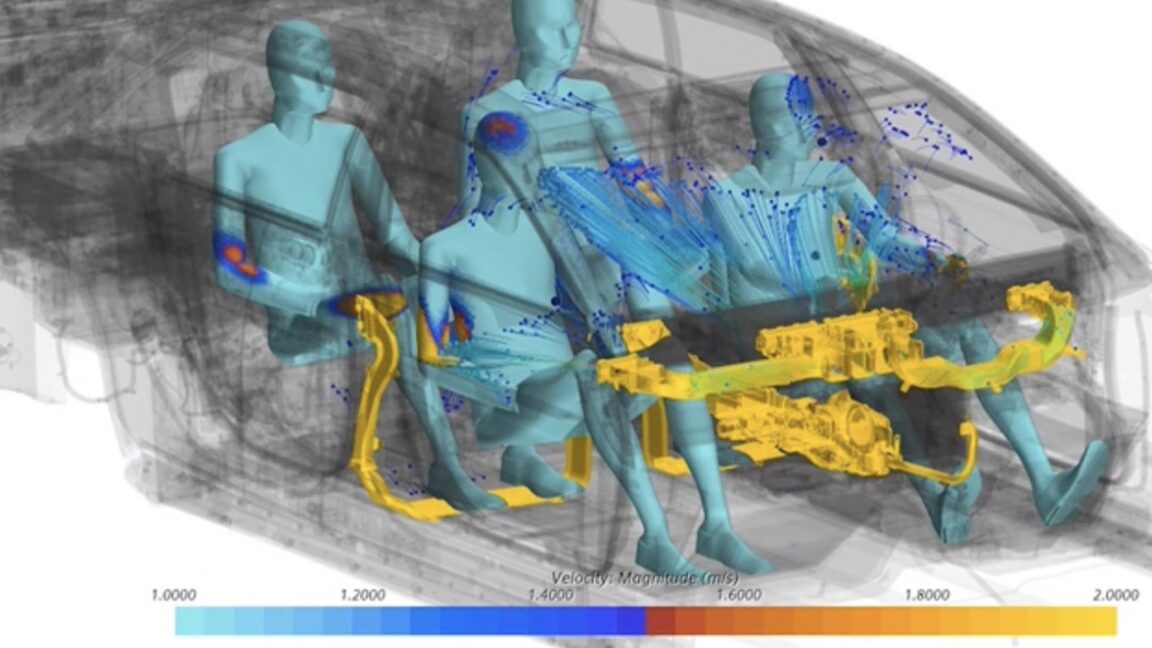
The Dawn of a New Engineering Era at GM
General Motors, one of the largest automotive manufacturers globally, is charting an ambitious course towards what its Chief Product Officer, Sterling Anderson, calls the “third epoch of engineering and design.” Anderson, who co-founded the self-driving startup Aurora in 2016 after significant experience at Tesla, joined GM just over a year ago, bringing with him a clear vision for integrating artificial intelligence and machine learning (AI/ML) into development processes.
This transition marks a clear departure from traditional methods, promising unprecedented acceleration. Although specific details on GM's AI/ML implementations have not been disclosed in the current context, Anderson's vision suggests a potential reduction in development times from hours to mere minutes, a quantum leap that will redefine innovation in the automotive sector.
From Empirical Methods to AI-Assisted Innovation
Anderson describes the “first age of engineering” as an era of highly empirical and iterative design and development. During that period, engineers started with what was known or observed, built prototypes, made small tweaks, and tested them, in a slow “guess-and-check” process that led to only marginally functional solutions. This approach, based on human intuition and physical iteration, dominated for centuries, limiting the speed and complexity of projects.
Today, AI/ML offers the ability to overcome these limitations. Technologies such as generative design, advanced simulations based on predictive models, and automated optimization can explore millions of design variations in fractions of the time, identifying optimal solutions that would be impossible to discover with traditional methods. This not only accelerates the process but also opens the door to radical innovations and superior performance, while simultaneously reducing physical prototyping costs.
Implications for Infrastructure and On-Premise Deployment
The widespread adoption of AI/ML, such as what GM is exploring, requires robust and scalable computational infrastructure. For intensive workloads like vehicle simulation or the training of complex models, companies face the choice between cloud solutions and self-hosted or on-premise deployments. The decision is often driven by critical factors such as data sovereignty, regulatory compliance, Total Cost of Ownership (TCO), and the need for air-gapped environments for security.
An on-premise deployment offers complete control over hardware, data, and the software environment, which are fundamental aspects for sectors like automotive that handle sensitive intellectual property and proprietary data. While it requires a higher initial CapEx investment for purchasing servers, GPUs (like NVIDIA H100 or A100 with high VRAM), and storage, it can offer a lower TCO in the long term and ensure minimal latencies, essential for rapid iterative development cycles. For those evaluating on-premise deployments, AI-RADAR offers analytical frameworks on /llm-onpremise to assess these trade-offs in detail.
Future Prospects and Strategic Challenges
Sterling Anderson's vision for GM reflects a broader industry trend: AI/ML is no longer just an optimization tool, but a fundamental driver for transforming the entire product lifecycle. This evolution brings significant challenges, from the need for specialized skills to managing enormous volumes of data and choosing the most suitable deployment architectures.
For companies like GM, the ability to effectively integrate AI/ML into their engineering processes will not only determine the speed of innovation but also their future competitiveness. The choice between a flexible cloud infrastructure with variable operational costs and an on-premise infrastructure offering greater control and cost predictability will be a key strategic decision to support this new era of accelerated development.







💬 Comments (0)
🔒 Log in or register to comment on articles.
No comments yet. Be the first to comment!