
The news, in its dryness, is a powerful signal. Goldman Sachs booked $3.4 billion in investment banking fees in the second quarter, an all-time record and a 55% jump from a year earlier. Its CEO, David Solomon, doesn’t mince words: “We are in the middle of an AI CapEx super cycle where there are demands on financing into every single financing instrument.” Behind that phrase lies a structural shift, not a fleeting spike.
From an industrial AI perspective, an investment bank’s numbers are far more than financial trivia. They show where real money is going. And real money today is funding infrastructure. Data centers, GPUs, high-speed networking, cooling systems—the hardware needed to train and serve LLMs is absorbing capital at an intensity reminiscent of the cloud computing’s early days, but with a critical difference.
From banking fees to architectural choices
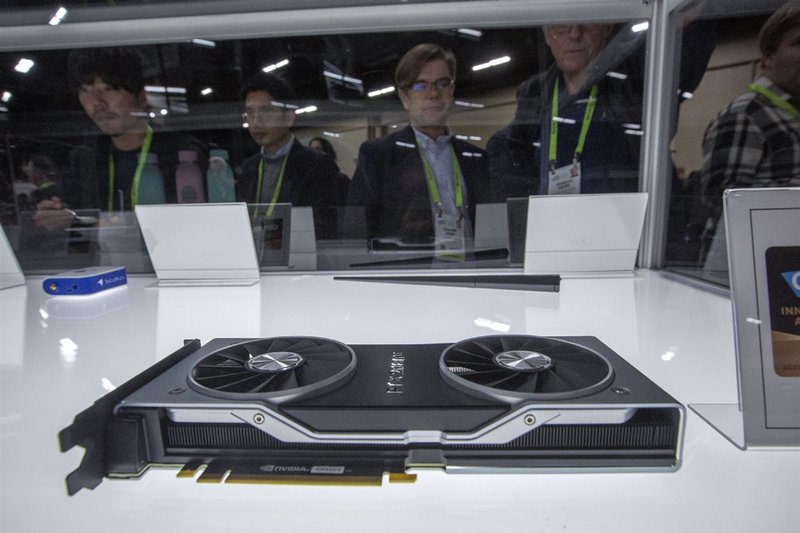
The so-called “CapEx super cycle” isn’t just any speculative bubble. The companies raising billions aren’t betting on individual apps; they’re building long-term production capacity. Meta, Microsoft, generative AI startups, and even new entrants are buying or renting compute power at unprecedented levels. This money flow reshapes the hardware landscape: supply of high-end GPUs (such as NVIDIA’s H100) remains tight, and costs for networking components and VRAM keep climbing. At the same time, massive demand pushes manufacturers to expand capacity, which could, over the medium term, make hardware more accessible for self-hosted deployments.
The most interesting angle for practitioners concerns the cloud versus on-premise trade-off. So far, the AI wave has been absorbed mostly by large cloud providers renting GPUs by the hour. But the new capital influx is also funding hybrid and private initiatives: companies wanting to run inference locally for latency, data sovereignty, or simply to lower total cost of ownership (TCO) on predictable workloads. The investment race could accelerate the availability of turnkey solutions: AI appliances, pre-configured servers for LLMs, management platforms that simplify fine-tuning and quantization.
Winners and losers in the new equilibrium
Capital concentration risks widening the gap between those who can afford massive training cycles and those who must make do with smaller models. Yet the super cycle also generates positive externalities: the hardware supply chain expands, model compression research accelerates, and frameworks like vLLM or TGI become more robust precisely because they’re backed by funded ecosystems. It’s no coincidence that Europe, with its regulatory focus on privacy and GDPR, is pushing for on-premise and hybrid deployments: the capital now flowing through investment banks will allow entire regions to negotiate better terms for building local capacity without depending entirely on a few public clouds.
For engineers evaluating whether to self-host an LLM, the signal is clear: the current financial frenzy isn’t ephemeral. It’s financing the next generation of silicon, inference libraries, and data pipelines. Those deciding on an architecture for the next three years face a fork: stick with an hyperscaler’s monthly bill, or leverage available capital (their own or others’) to build an independent, upgradable, low-latency infrastructure. There’s no one-size-fits-all answer—at AI-RADAR we offer analytical frameworks to weigh these trade-offs—but ignoring the financial tailwind behind hardware would be short-sighted.








💬 Comments (0)
🔒 Log in or register to comment on articles.
No comments yet. Be the first to comment!