
The news comes out of Zurich: goNEON Agentic Systems, an ETH spin-off, has secured €160,000 (CHF150,000) from the Venture Kick fund. The amount is modest, almost symbolic, but the signal it carries is weightier. That’s because the startup has chosen a field where generative AI has yet to make credible inroads: civil infrastructure design.
Anyone working on road networks, water systems, bridges, or land development knows the problem goNEON is tackling. Beneath a veneer of digitization, civil engineers still navigate a maze of manual workflows, disconnected software, and analyses that consume weeks. Every time multiple design alternatives need to be evaluated—say, adjusting a pipeline route or complying with a new regulatory constraint—teams essentially start over, juggling spreadsheets, CAD models, and local checks. The result: only a few, often conservative, configurations get explored, while timelines stretch and budgets tighten.
goNEON’s platform flips the approach at its root. Instead of asking engineers to design and then verify, the system automatically generates design options from technical requirements, local regulations, and real-world site constraints. The AI agent doesn’t spit out rough sketches; it delivers variants that are already compliant with standards, which the human team can assess, compare, and refine. The time leap: from weeks to minutes. That means ten or twenty alternatives can be tested instead of one or two, raising engineering quality and reducing the risk of costly execution-phase errors.
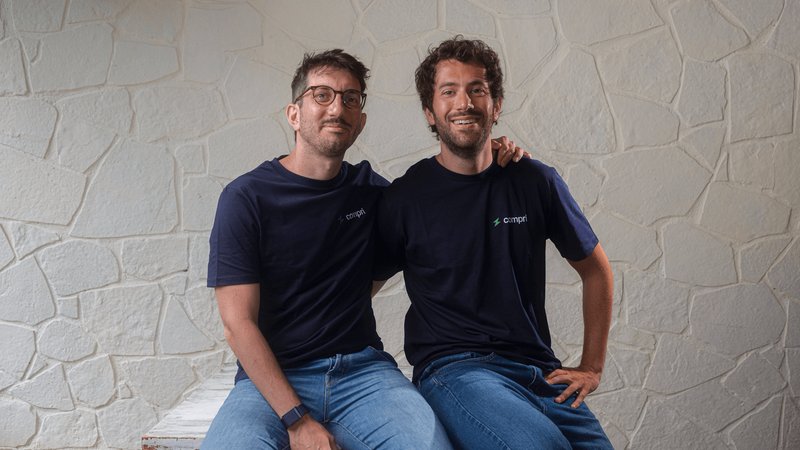
The funding will go toward three goals: identifying pilot projects with the strongest market potential, transforming the most repeatable planning workflows into scalable product modules, and validating the use cases that will form the bedrock of the broader platform. Founders Raphael Eder (CEO) and Lukas Ballo (CTO) combine expertise in entrepreneurship, artificial intelligence, and urban planning. Ballo, in particular, brings deep research experience at the heart of automated spatial decision-making.
It’s the story’s blind spot, however, that matters for anyone tracking AI deployment in regulated contexts. goNEON doesn’t say whether the platform will run in the cloud, on-premise, or in hybrid mode. Yet the application domain—public or utility infrastructure—touches raw nerves around data sovereignty, project confidentiality, and regulatory compliance. Municipalities, multi-utilities, and engineering firms handling government commissions deal with information that simply cannot leave the corporate perimeter. In many cases, local regulations mandate that data remains physically within specific boundaries. For that reason, an agentic platform that generates infrastructure plans may sooner or later need to offer a self-hosted, air-gapped variant.
This isn’t a technical footnote; it’s a structural question. Intelligent design automation brings with it a latent demand: who safeguards sensitive territorial data? If the answer is “the cloud provider,” many public clients will raise a wall. If instead it’s “the client itself, on its own infrastructure,” then the business model must evolve toward on-premise licenses, containerized packages, or dedicated appliances—all of which require security investments and a different approach to TCO.
That’s where goNEON’s story connects to dynamics AI-RADAR follows closely: the adoption of Large Language Models and agents in enterprise environments cannot ignore the deployment choice. For those evaluating self-hosting, there are clear trade-offs among control, latency, operating cost, and update velocity that must be weighed case by case. An analytical framework on /llm-onpremise helps untangle those knots.
From a competitive standpoint, goNEON won’t shake the CAD giants overnight, but it plants a promise: agentic AI can become a trusted co-pilot in civil engineering, not a replacement. The winners will be small-to-medium firms that can bid with more robust proposals, and public clients who see better-optimized, verifiable designs. The losers could be software vendors clinging to traditional interfaces without automatic reasoning modules. The real battle, though, will be fought over trust: every design option must be explainable, repeatable, and auditable. Without that, no engineer will ever sign off on an AI-generated plan, no matter how fast it arrives.








💬 Comments (0)
🔒 Log in or register to comment on articles.
No comments yet. Be the first to comment!