
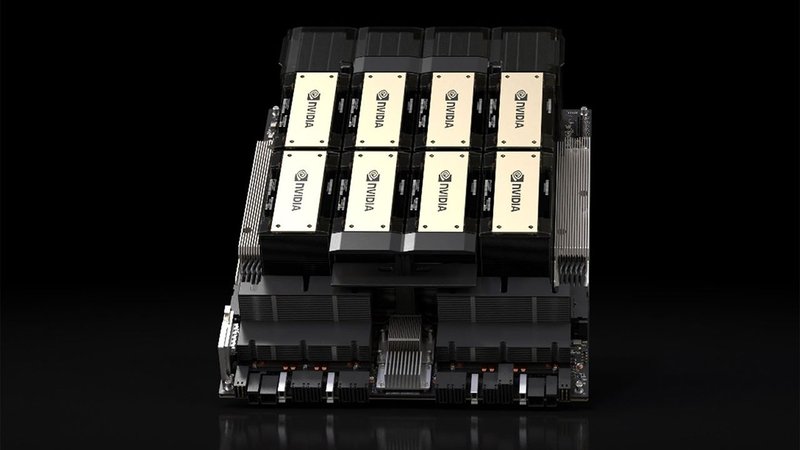
The news, carried by AFP, lands at a moment when surging demand for LLM inference and training is straining the entire hardware supply chain. Nvidia’s near-uncontested dominance in the accelerator market is beginning to show fissures, and Google is not just offering a technical alternative with its TPU (Tensor Processing Unit) family, but a different economic model: chips optimized for specific workloads, available exclusively in its own cloud, at price points designed to erode the edge built on general-purpose GPU computing.
The courtship of cloud providers that currently build their infrastructure on Nvidia GPUs carries a clear stake. On one hand, adopting TPUs allows differentiation through lower inference costs and performance tailored to common AI workloads, from transformers to embedding models. On the other, it entails significant lock-in: TPUs are not available on-premises and tie the entire stack to Google Cloud, from training pipelines to serving. Cloud providers thus face a delicate calculation—forego the flexibility of Nvidia GPUs, which let customers move between different environments, in exchange for better margins and negotiating leverage against the dominant supplier.
Google’s move is not isolated. AWS pushes Trainium and Inferentia, Microsoft is working on Maia, and the entire sector is fragmenting around specialized silicon. This is the real structural signal: the AI accelerator market is heading toward a multipolar landscape, where value will be measured not just in teraflops or memory bandwidth, but in the ability to govern the entire model lifecycle without hidden exit costs. For organizations considering on-premise deployments, this scenario is a double-edged sword. On one side, competition could moderate GPU prices and spur innovation, making high-performance servers more accessible for self-hosted environments. On the other, the proliferation of cloud-only custom silicon risks draining the ecosystem of tools and frameworks optimized for general-purpose hardware, creating a divide between those who can afford to tie themselves to a single vendor and those seeking portability and direct data control.
A second-order effect touches data sovereignty. If TPUs become the cheapest and most performant option for inference on massive models, enterprises with stringent data residency requirements may face a forced choice: relinquish economic benefits to keep data in-house, or move sensitive workloads to the public cloud with all the resulting compliance implications. It’s no coincidence that discussions on sovereign AI and GDPR are increasingly focusing on the infrastructure layer.
The TPU contest, in short, is not just about better chips: it’s the opening act of a strategic fragmentation of AI infrastructure, where the real crux will not be teraflops, but the freedom to choose where your models run.






💬 Comments (0)
🔒 Log in or register to comment on articles.
No comments yet. Be the first to comment!