
Google Cloud Boosts AI Offering with New Chips: The Nvidia Challenge Continues
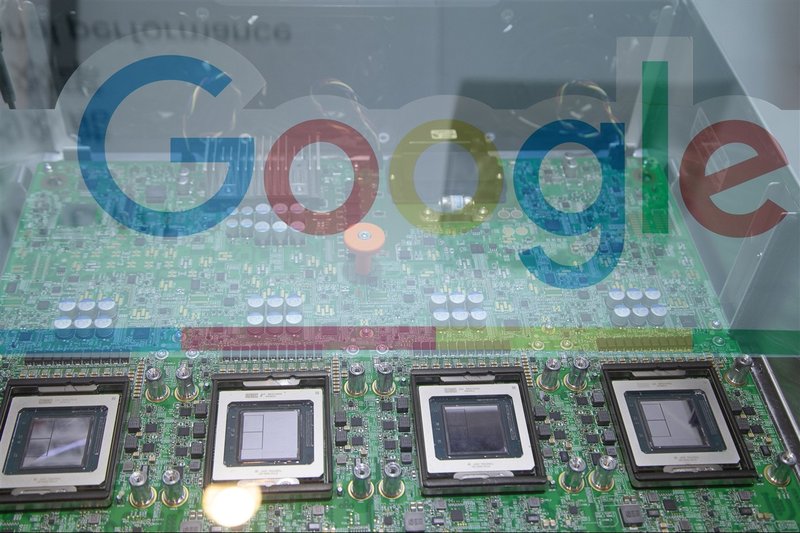
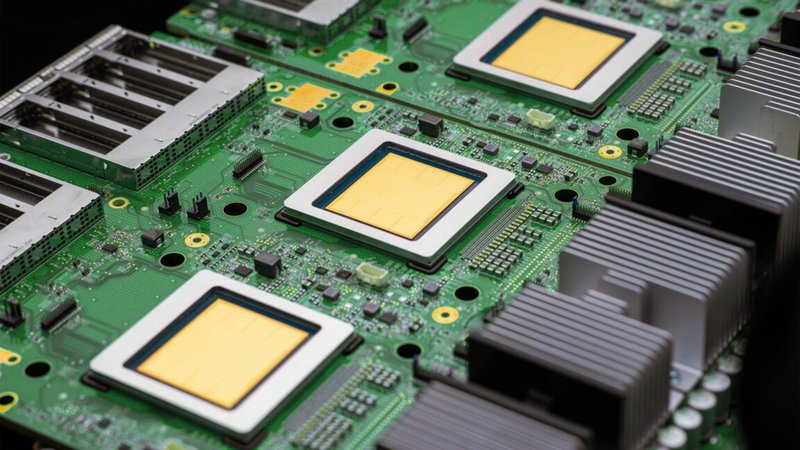
Google Cloud has announced the release of two new generations of its dedicated artificial intelligence chips, the Tensor Processing Units (TPUs). This strategic move aims to strengthen the company's position in the competitive landscape of AI accelerators, offering its customers more performant and cost-effective solutions for machine learning workloads. The introduction of these new processors underscores Google's commitment to developing proprietary hardware, while maintaining a pragmatic approach that includes support for Nvidia GPUs within its cloud infrastructure.
These new TPUs represent a significant step forward compared to previous versions, promising improvements in both processing speed and economic efficiency. This combination is crucial for companies managing large-scale artificial intelligence models, where every optimization can translate into substantial operational savings and increased innovation capacity. The ability to offer faster and more affordable solutions is a decisive factor in attracting and retaining customers in the rapidly evolving AI sector, especially for training and Inference of Large Language Models (LLMs).
Technical Details and Strategic Implications
Tensor Processing Units are specifically designed to accelerate tensor computation operations, which are fundamental to machine learning algorithms. Optimizing the hardware architecture for these specific operations allows TPUs to achieve efficiency levels that often surpass those of general-purpose GPUs in certain AI contexts. Google's investment in developing proprietary chips reflects a broader trend in the tech industry, where large companies seek greater control over their hardware and software stack to optimize performance and reduce costs.
However, Google's strategy is not limited to promoting its own TPUs. The company continues to integrate and offer Nvidia GPUs within its cloud platform, recognizing Nvidia's dominant role and the extensive ecosystem of tools and Frameworks it has built over the years. This dual offering allows Google Cloud customers to choose the solution best suited to their specific needs, balancing factors such as software compatibility, required performance, and available budget. Competition between proprietary hardware and third-party solutions stimulates innovation and offers greater flexibility to end-users.
Cloud vs. On-Premise: TCO Considerations
The introduction of more efficient AI accelerators in the cloud has direct implications for companies evaluating their Deployment strategies for AI workloads. While Google's cloud offering with the new TPUs promises reduced operational costs and increased speed, organizations must consider the trade-offs compared to a self-hosted or on-premise Deployment. Factors such as data sovereignty, compliance requirements, and the need for air-gapped environments can drive decisions towards local solutions, where direct control over hardware and data is paramount.
Total Cost of Ownership (TCO) becomes a critical parameter in these decisions. While the cloud offers flexibility and an OpEx model, an on-premise Deployment may present higher initial CapEx but potentially lower long-term operational costs, especially for stable, large-scale workloads. The choice between available VRAM, Throughput per Token, and p95 latency is critical and depends on specific application needs. For organizations evaluating the trade-offs between cloud and self-hosted options, AI-RADAR offers analytical Frameworks on /llm-onpremise to support these decisions, providing a neutral perspective on the constraints and opportunities of each approach.
Future Prospects in the AI Accelerator Market
The AI accelerator market is constantly evolving, with a growing demand for computing power for training and Inference of increasingly complex models. Google Cloud's move to enhance its TPU offering is a clear signal of this trend and its willingness to actively compete with established players like Nvidia. Other tech giants, such as AWS with its Inferentia and Trainium, and companies like AMD and Intel, are also investing heavily in developing dedicated hardware.
This competition is beneficial for the entire AI ecosystem, as it drives innovation and cost reduction, making artificial intelligence more accessible and powerful. For businesses, the challenge lies in navigating an increasingly vast landscape of hardware and software options, choosing solutions that best align with their strategic objectives, budget constraints, and specific technical requirements. The ability to carefully evaluate hardware specifications, cost models, and Deployment implications will be crucial for successful AI adoption.






💬 Comments (0)
🔒 Log in or register to comment on articles.
No comments yet. Be the first to comment!