
A New Alliance for AI Hardware
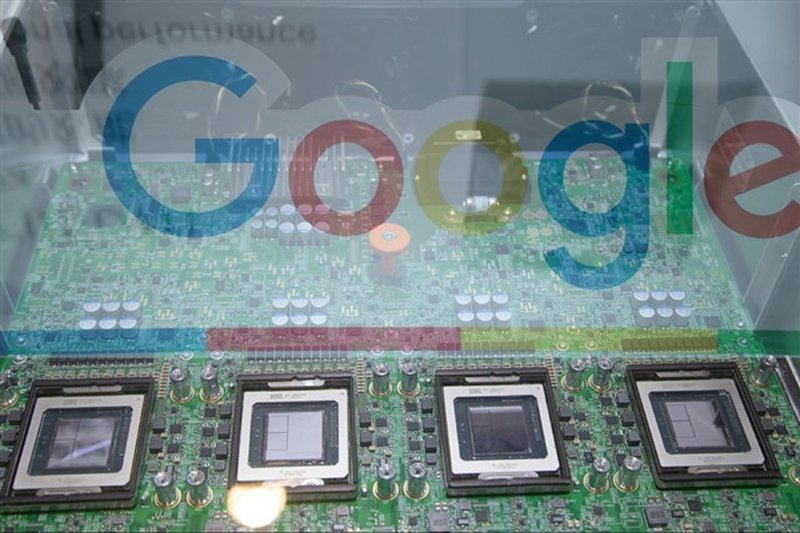
Google and Blackstone have announced a joint venture that could redefine access to specialized artificial intelligence hardware. The initiative focuses on leasing Tensor Processing Units (TPUs), Google's proprietary accelerators, with the aim of making these computational resources more accessible to a wide range of enterprises. This collaboration combines Google's expertise in AI silicon development with Blackstone's deep knowledge in financing and managing large-scale infrastructure.
The move comes at a time when the demand for AI computing capacity, particularly for Large Language Models (LLMs), is constantly growing. Companies face the challenge of acquiring and managing expensive and complex infrastructure. A leasing model could offer an intermediate solution, allowing organizations to leverage the power of TPUs without the burden of a massive upfront CapEx investment.
TPUs: Google's Accelerator and its Technical Implications
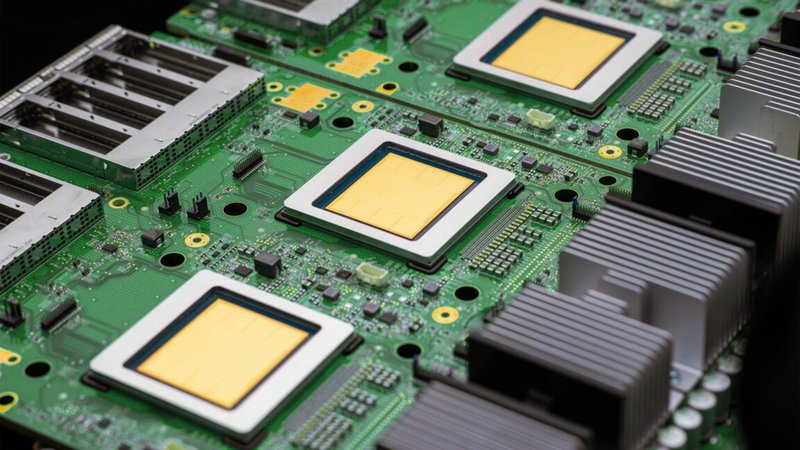
Tensor Processing Units (TPUs) are Application-Specific Integrated Circuits (ASICs) designed by Google specifically to accelerate machine learning workloads. Unlike general-purpose GPUs, TPUs are optimized for linear algebra operations and tensor calculations, which are fundamental for training and inference of AI models. This specialization allows TPUs to offer superior energy efficiency and performance for certain types of AI workloads compared to more generic solutions.
Adopting dedicated hardware like TPUs involves significant technical considerations. Companies must evaluate not only raw computing power but also integration with their existing software stacks, machine learning frameworks, and deployment pipelines. The choice between TPUs, GPUs, or other ASIC solutions depends on factors such as model type, dataset size, latency and throughput requirements, and of course, the overall Total Cost of Ownership (TCO).
The Leasing Model: Flexibility and Control for Enterprises
The leasing model proposed by Google and Blackstone offers an interesting alternative to direct purchase or exclusive use of public cloud services. For enterprises that require significant AI computing capacity but wish to maintain a degree of control over their data and deployment environment, TPU leasing could represent a beneficial hybrid solution. This approach allows for shifting some expenses from CapEx to OpEx, improving financial flexibility.
However, even with leasing, decisions regarding data sovereignty and compliance remain crucial. Companies will need to evaluate where the leased TPUs will be physically located and who will be responsible for their management and maintenance. For the most sensitive workloads, requiring air-gapped environments or strict data residency requirements, a leasing model may still necessitate careful due diligence to ensure that regulatory and security constraints are fully met. For those evaluating on-premise deployments, complex trade-offs exist, which AI-RADAR analyzes in detail, offering analytical frameworks on /llm-onpremise to support these decisions.
Future Prospects and Deployment Trade-offs
This joint venture has the potential to further stimulate demand for ASICs and other specialized AI accelerators in the market. By making TPUs more accessible, Google and Blackstone could accelerate the adoption of advanced AI solutions in sectors that have so far hesitated due to high costs or infrastructural complexity. The initiative also underscores the growing trend towards flexible consumption models for AI hardware, which seek to balance performance, cost, and control.
Enterprises choosing between on-premise, cloud, or hybrid deployment for their LLMs will need to carefully consider the pros and cons of a leasing option. While it offers flexibility and access to cutting-edge hardware, it also requires careful evaluation of contractual terms, service levels, and implications for data security and governance. The final decision will always depend on a thorough analysis of TCO, specific workload requirements, and the overall business strategy.






💬 Comments (0)
🔒 Log in or register to comment on articles.
No comments yet. Be the first to comment!