
Google's Return to the Smart Glasses Segment
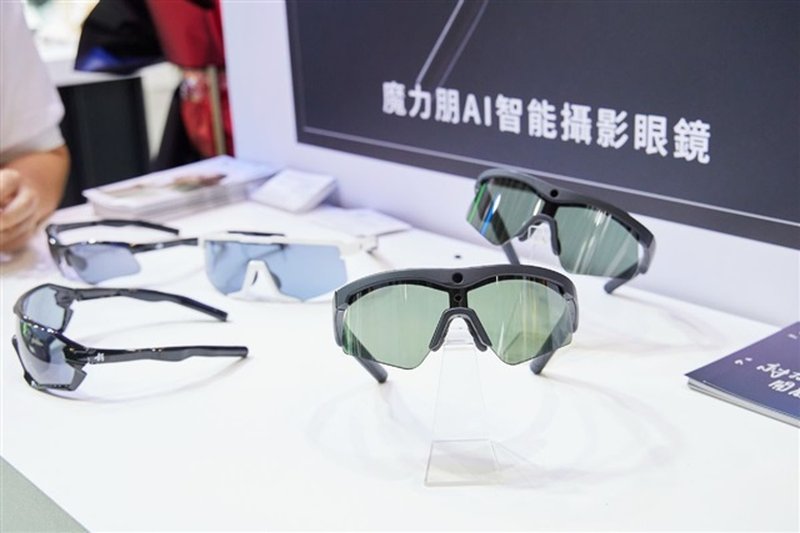
Google has announced a renewed effort in the smart glasses sector, unveiling a strategy that combines advanced technology with design. During the Google I/O 2026 event, the company revealed a strategic partnership with fashion brands Warby Parker and Gentle Monster. This collaboration aims to create "AI-powered audio glasses," designed in synergy with Samsung.
This initiative marks an evolution in Google's approach to wearable devices, seeking to overcome past adoption challenges. The integration of design elements and a focus on aesthetics, thanks to fashion industry partners, suggests a desire to make the technology more accessible and desirable for a broader audience, moving beyond the niche of early adopters.
Gemini 2.5 Pro Intelligence Onboard
The technological core of these new glasses is represented by Gemini 2.5 Pro, Google's LLM. Integrating such a powerful language model directly into a wearable device opens new frontiers for user interaction and real-time processing capabilities. While specific details on the deployment architecture have not been fully disclosed, the use of an LLM on an edge device like glasses implies significant considerations.
Running complex models like Gemini 2.5 Pro on limited hardware requires advanced Quantization techniques and optimization for low-latency Inference. This raises crucial questions for system architects and CTOs evaluating AI solutions: how much processing occurs on-device versus in the cloud? The ability to process data locally is fundamental for data sovereignty and ensuring user privacy, reducing reliance on external services and communication latency.
Implications for Edge AI and Data Sovereignty
The Deployment of LLMs on edge devices, such as smart glasses, highlights the growing importance of Edge AI. This architecture allows AI workloads to run directly on the device, reducing the need to send sensitive data to the cloud for processing. For enterprises considering implementing AI solutions in contexts with stringent privacy requirements or in Air-gapped environments, optimization for Edge AI is a critical factor.
Choosing to process data locally offers advantages in terms of latency, reliability, and, crucially, data control. This is particularly relevant for sectors like finance or healthcare, where regulatory compliance and the protection of personal information are absolute priorities. For those evaluating on-premise deployments, AI-RADAR offers analytical frameworks on /llm-onpremise to assess the trade-offs between computing capacity, power consumption, and security requirements for Edge AI.
Future Prospects for Smart Wearable Devices
Google's announcement at I/O 2026 is not just a product launch but an indicator of the direction the wearable device market is taking. The deep integration of artificial intelligence, powered by advanced LLMs like Gemini 2.5 Pro, promises to transform these gadgets into truly contextually aware personal assistants.
The challenge will remain balancing performance, battery life, design, and, crucially, data privacy and security management. The success of these devices will depend on their ability to offer tangible value to users while maintaining robust control over their data. Decisions regarding the AI deployment architecture, whether on-device, hybrid, or cloud-based, will be decisive in shaping the future of this product category.




💬 Comments (0)
🔒 Log in or register to comment on articles.
No comments yet. Be the first to comment!