
The Evolution of AI Chips: From Generalization to Specialization
The landscape of artificial intelligence hardware is in constant evolution, and a significant signal of this transformation emerges from Google's approach. The company is indeed orienting the development of its TPU (Tensor Processing Units) chips towards more specialized architectures, moving away from a universal design. This move, although not yet detailed in its specific implementations, indicates a broader trend in the industry: the pursuit of optimal efficiency and performance through hardware customization for specific AI workloads.
Traditionally, AI accelerators, such as GPUs, have been designed to be versatile, capable of handling a wide range of tasks, from training Large Language Models (LLMs) to inference for computer vision applications. However, with the increasing complexity and diversification of AI models, the universal approach shows its limitations in terms of energy efficiency and throughput for highly specific scenarios. The direction taken by Google with its TPUs suggests that the future may lie in hardware solutions finely calibrated to maximize performance on particular AI pipelines.
Technical Detail: The Value of Specialization in AI
The distinction between universal and specialized AI accelerators is fundamental to understanding this evolution. GPUs, for example, excel due to their flexibility and ability to perform parallel computations across a wide variety of algorithms. They are the default choice for multiple workloads, from gaming to scientific simulation, up to large-scale LLM training. However, this versatility often comes with a compromise in terms of efficiency for highly specific tasks.
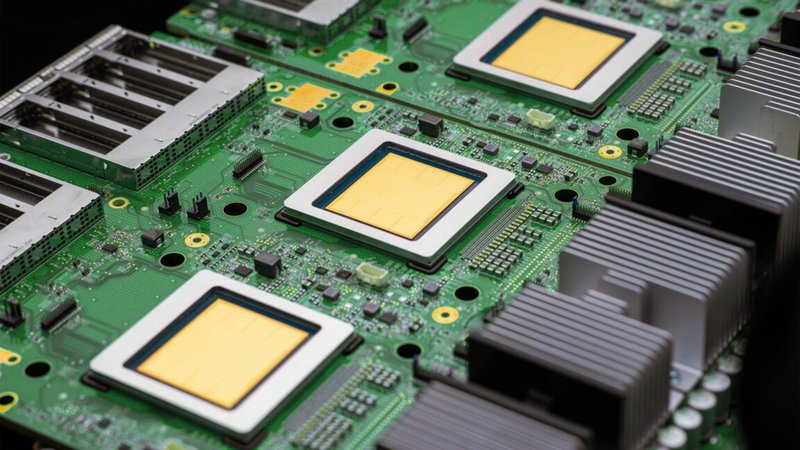
Specialized accelerators, such as Google's TPUs or other ASICs (Application-Specific Integrated Circuits), are designed from the ground up to execute specific mathematical operations, typical of neural networks, with maximum efficiency. This can translate into lower power consumption and higher throughput for the operations for which they have been optimized. A 'split' TPU chip could mean the existence of variants optimized for training versus inference, or even for different model architectures, allowing for performance and energy efficiency peaks unattainable with more generic solutions.
Context and Implications for On-Premise Deployment
For CTOs, DevOps leads, and infrastructure architects, this trend towards hardware specialization has direct implications for deployment decisions, particularly for self-hosted infrastructures. The choice between universal and specialized hardware becomes a critical trade-off impacting Total Cost of Ownership (TCO), flexibility, and scalability. A specialized accelerator might offer a lower long-term TCO due to its greater energy efficiency and optimized throughput for specific workloads, but it might require higher initial CapEx and offer less flexibility for future changes in AI model requirements.
Organizations evaluating on-premise LLM deployment must carefully consider their workload profiles. If a company has very specific and stable needs, an investment in specialized hardware could prove advantageous. Conversely, for more heterogeneous or rapidly evolving workloads, the flexibility offered by more generic accelerators might be preferable. For those evaluating on-premise deployments, AI-RADAR offers analytical frameworks on /llm-onpremise to assess these trade-offs, considering factors such as data sovereignty, compliance, and air-gapped environment requirements.
Final Perspective: Infrastructure Strategies in the Era of Specialized AI
Google's move with its TPUs is a clear indicator that the AI accelerator market is maturing, pushing towards increasingly targeted solutions. This evolution compels companies to adopt a strategic and forward-thinking approach in planning their AI infrastructures. It is no longer just about acquiring the most powerful GPU, but about selecting the hardware that best aligns with the specific needs of models and applications, balancing performance, efficiency, and costs.
The ability to choose the right accelerator for the right task will become a distinguishing factor for organizations aiming to build resilient, efficient, and data sovereignty-compliant AI infrastructures. Understanding the nuances between universal and specialized hardware will be essential to optimize TCO and ensure that AI deployments, both on-premise and hybrid, are sustainable in the long term.





💬 Comments (0)
🔒 Log in or register to comment on articles.
No comments yet. Be the first to comment!