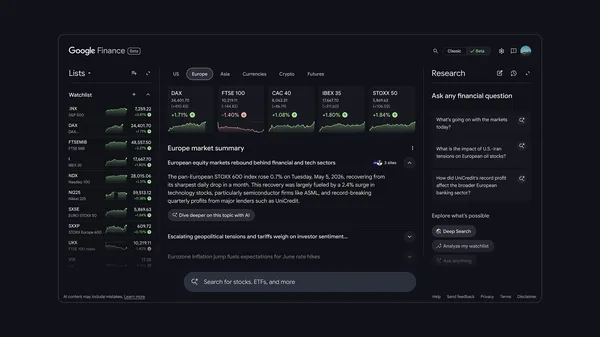
Google Finance si espande in Europa con funzionalità basate su AI
Google ha annunciato l'espansione della sua piattaforma Google Finance in tutta Europa, introducendo una versione rinnovata che integra funzionalità avanzate basate su intelligenza artificiale. Questa mossa strategica mira a fornire agli utenti europei un'esperienza più ricca e personalizzata per la gestione e l'analisi dei propri investimenti. La piattaforma sarà disponibile con supporto completo per le lingue locali, facilitando l'accesso e l'interazione per un pubblico più ampio.
L'integrazione dell'AI in servizi finanziari come Google Finance riflette una tendenza crescente nel settore, dove le tecnicie di machine learning e i Large Language Models (LLM) vengono impiegati per elaborare grandi volumi di dati, identificare pattern e offrire insight predittivi. Per gli utenti, ciò si traduce in strumenti più intelligenti per monitorare i mercati, analizzare le performance e prendere decisioni informate.
Le Implicazioni dell'AI nel Settore Finanziario
L'adozione dell'intelligenza artificiale nel settore finanziario non è una novità, ma la sua integrazione in piattaforme di largo consumo come Google Finance ne sottolinea la maturazione e l'accessibilità. Le capacità “AI-powered” possono spaziare dall'analisi automatizzata di notizie finanziarie e report aziendali, alla generazione di riassunti personalizzati, fino alla previsione di movimenti di mercato basata su modelli complessi. Questo tipo di funzionalità richiede infrastrutture di calcolo significative per l'Inference e, in alcuni casi, per il Fine-tuning dei modelli.
Per le aziende e le istituzioni finanziarie, l'utilizzo di LLM e altre tecnicie AI solleva questioni fondamentali relative al Deployment. Se da un lato servizi cloud-based offrono scalabilità e costi operativi (OpEx) potenzialmente ridotti, dall'altro lato, la necessità di mantenere il controllo sui dati sensibili e di garantire la conformità normativa spinge molte organizzazioni a valutare soluzioni Self-hosted o ibride. La scelta tra un Deployment in cloud e un'infrastruttura Bare metal on-premise dipende da un'attenta analisi del TCO e dei requisiti specifici di sovranità dei dati.
Considerazioni sul Deployment e la Sovranità dei Dati
L'espansione di un servizio come Google Finance, che opera su infrastrutture cloud, evidenzia il valore della rapidità di rilascio e della scalabilità offerta dai provider hyperscale. Tuttavia, per le organizzazioni che gestiscono dati finanziari altamente sensibili, la decisione di affidarsi a servizi esterni o di sviluppare capacità AI interne è complessa. La sovranità dei dati, in particolare in Europa con normative come il GDPR, è un fattore critico. Un Deployment on-premise o in ambienti Air-gapped garantisce il controllo diretto sull'infrastruttura e sui dati, mitigando i rischi associati alla residenza dei dati e alla compliance.
La valutazione di un Deployment on-premise per carichi di lavoro AI, inclusi LLM, richiede un'analisi approfondita delle specifiche hardware, come la VRAM delle GPU (es. A100 80GB o H100 SXM5), il Throughput desiderato e la latenza accettabile. Questi fattori influenzano direttamente il CapEx iniziale e i costi operativi a lungo termine. AI-RADAR offre Framework analitici su /llm-onpremise per aiutare le aziende a valutare questi trade-off, fornendo strumenti per confrontare i costi e i benefici delle diverse architetture di Deployment.
Prospettive Future e Scelte Strategiche
L'evoluzione di Google Finance in Europa con l'integrazione dell'AI è un chiaro indicatore della direzione che sta prendendo il settore finanziario. L'obiettivo è rendere l'analisi e la gestione finanziaria più accessibili e potenti per l'utente finale. Tuttavia, per le imprese che operano in questo spazio, la sfida rimane quella di bilanciare innovazione, sicurezza e controllo.
La scelta tra l'adozione di servizi AI esterni e lo sviluppo di capacità interne con Deployment Self-hosted non è banale. Richiede una comprensione chiara dei propri requisiti di sicurezza, compliance e performance. Mentre le soluzioni cloud offrono convenienza e velocità, le architetture on-premise e ibride possono fornire il livello di controllo e personalizzazione necessario per applicazioni critiche, specialmente quando la sovranità dei dati è una priorità assoluta. La tendenza è verso un ecosistema diversificato, dove le organizzazioni devono strategicamente posizionarsi in base ai propri vincoli e obiettivi.








💬 Commenti (0)
🔒 Accedi o registrati per commentare gli articoli.
Nessun commento ancora. Sii il primo a commentare!