The Era of Conversational Search According to Google
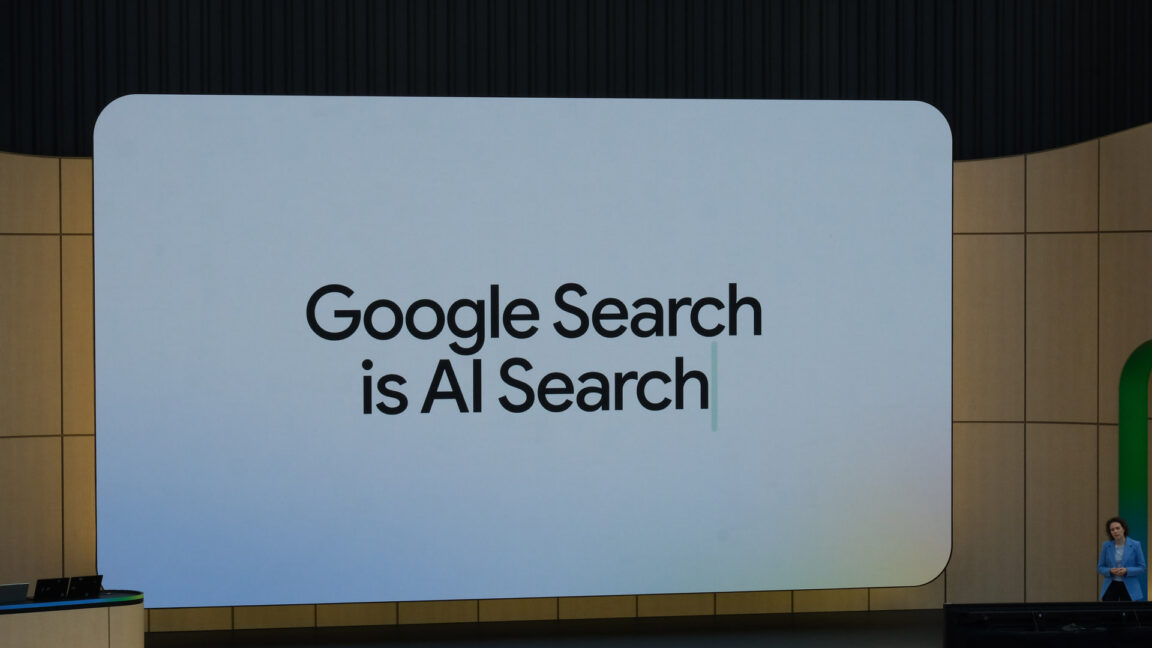
Google is redefining the online search landscape, placing artificial intelligence at the core of its strategy. Since last year, the company has shown an explicit focus on AI-powered search, a direction solidified at I/O 2025. Liz Reid, Google's Vice President of Search, clarified the company's vision during the keynote, stating that "Google search is AI search." This change is not merely an evolution but a fundamental structural transformation of the service.
Google's move reflects a broader trend in the tech industry, where Large Language Models (LLMs) are becoming the engine for new user interfaces and interaction modes. For companies evaluating the deployment of similar AI solutions, Google's strategy highlights growing user expectations for more intuitive and conversational experiences. This implies the need for infrastructures capable of handling complex inference workloads and ensuring low latency for fluid interaction.
Adoption Strategy and Growing Numbers
Google began testing "AI Mode" for search over a year ago, making this transition official at I/O 2025. Despite the discussions and objections that often accompany such radical changes, the company is achieving its desired results: a significant increase in searches. At I/O 2026, Liz Reid revealed that AI Mode usage has doubled every quarter, bringing the number of monthly users to over one billion.
This success is attributable to several factors. AI Mode encourages a conversational experience, asking users questions and interpreting each follow-up query as a new search. Google has also actively promoted AI Mode, integrating prominent links and nudges to encourage users to prefer the AI search chatbot over the traditional product. Unlike many other AI experiences offered by Google, AI search is completely free for all users, removing an adoption barrier and accelerating its widespread diffusion.
Market Implications and Deployment Challenges
Google's ability to drive this transformation stems from its dominant market position and influence. For organizations operating in sectors with stringent data sovereignty requirements or needing air-gapped environments, reliance on third-party cloud services for advanced AI functionalities can present significant challenges. The scalability and availability demonstrated by Google with its AI Mode highlight the level of infrastructural investment required to support large-scale LLM applications.
For those evaluating self-hosted LLM deployments, replicating a conversational experience for billions of users demands meticulous planning in terms of hardware, such as GPUs with ample VRAM, and a system architecture optimized for inference. Total Cost of Ownership (TCO) considerations become crucial, balancing initial CapEx costs for silicon and infrastructure acquisition with operational costs for energy and maintenance, compared to OpEx models based on cloud service consumption.
Future Prospects and the Role of Agentic AI
Google's orientation towards increasingly "agentic" search suggests a future where AI systems will not merely provide answers but will proactively act to assist users with complex tasks. This evolution could profoundly impact how businesses interact with data and automate internal processes. For enterprises, adopting on-premise LLMs and agentic AI offers the opportunity to maintain complete control over their sensitive data and customize solutions based on specific compliance needs.
However, the development and deployment of AI agents require advanced technical expertise and robust infrastructure. The choice between cloud-native and self-hosted solutions will depend on a careful evaluation of trade-offs between flexibility, cost, security, and data sovereignty. AI-RADAR offers analytical frameworks on /llm-onpremise to support decision-makers in evaluating these complex deployment scenarios, providing tools to compare different options and their constraints.






💬 Comments (0)
🔒 Log in or register to comment on articles.
No comments yet. Be the first to comment!