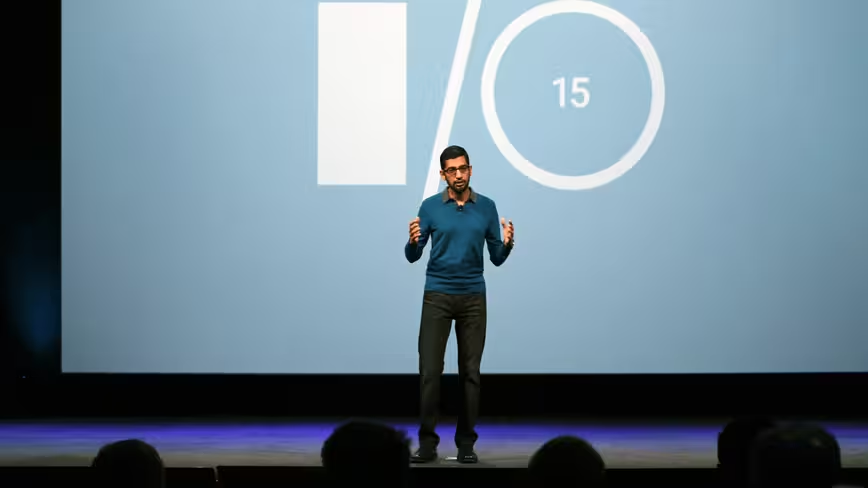
Google’s tactic is bold and effective: offer customers such favorable economic conditions that saying no becomes almost impossible. That’s exactly what Nvidia has done for years to place its GPUs in data centers around the world. Now Google is copying the playbook, aiming to displace its rival and establish its own chips, the Tensor Processing Units, as the go-to silicon for cloud AI.
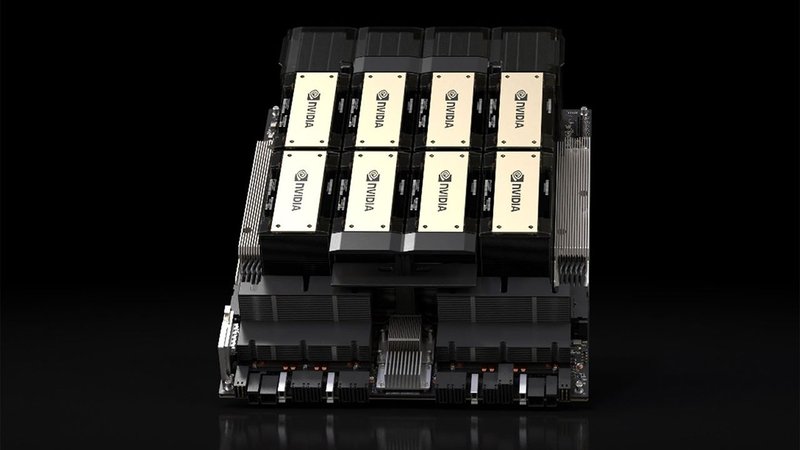
The Wall Street Journal investigation reveals the mechanisms: volume purchase guarantees, long-term contract discounts, and a clever ‘circular financing’ scheme where Google itself provides capital to customers to buy its infrastructure, creating a closed loop that amplifies demand. It’s a move that closely mirrors Nvidia’s rise, powered not just by technical excellence but by a commercial machine that locks hyperscalers and enterprises into almost inescapable financial incentives.
Financial leverage as a competitive weapon
In the AI semiconductor world, supremacy isn’t just about transistors or teraflops. It’s about building an ecosystem that traps the customer. Nvidia perfected this with the CUDA platform, optimized libraries, and, crucially, commercial agreements that make switching suppliers prohibitive. Companies that bet on Nvidia GPUs for training and serving LLMs have invested in skills, development pipelines, and supply contracts that create a massive exit cost.
Google is now trying to replicate this with its TPUs. It’s not just offering chips; it’s packaging them with full cloud services, frameworks like JAX and TensorFlow, and now economic incentives modeled on the market leader’s. ‘Circular financing’ – essentially, Google lends money to customers to buy compute power on its servers – is the modern take on a practice that has shaped enterprise IT.
What it means for AI builders
For companies deciding where to run their inference or training workloads, this introduces a new variable. On one hand, greater competition could lead to lower prices for GPU and TPU access in the cloud. On the other, ecosystem lock-in shifts: those embracing Google’s solution will still be tied to a proprietary architecture, with little room to move models to on-premise or multi-cloud environments without costly refactoring.
AI-RADAR follows such dynamics closely. For those evaluating on-premise deployment, the challenge is clear: market concentration in chips makes any single-vendor strategy vulnerable. Google’s TPUs remain cloud-only for now, but competitive pressure on Nvidia could accelerate innovation in accelerators that might one day be available for direct purchase.
The long shadow of strategic dependency
If Google’s gambit succeeds, it will simply reinforce a soft lock-in model: a change of master, but the cage remains. Enterprises with strict data sovereignty requirements – for example in government or finance, where GDPR demands physical control over endpoints – eye cloud-only solutions with suspicion, no matter how convenient. The real escape from Nvidia’s monopoly might not come from another giant copying its tactics, but from a more open ecosystem with on-premise alternatives that are genuinely competitive on total cost of ownership.
In the short term, the immediate effect is heating price competition. Cloud customers may benefit, while the market waits for this commercial war to spill over into hardware for local deployments.





💬 Comments (0)
🔒 Log in or register to comment on articles.
No comments yet. Be the first to comment!