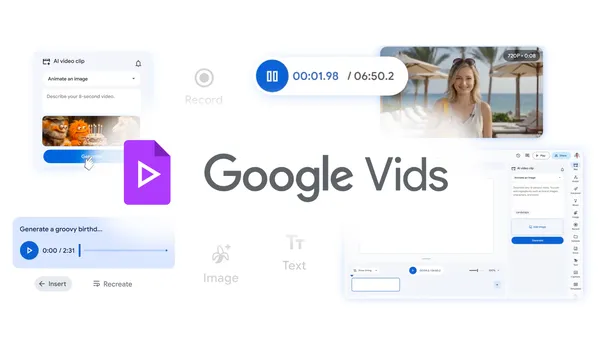
Google Vids integra nuove capacità AI per la creazione video gratuita
Google ha annunciato un significativo aggiornamento per Google Vids, la sua piattaforma dedicata alla creazione, editing e condivisione di video. Le nuove funzionalità, potenziate da avanzate capacità di intelligenza artificiale, promettono di semplificare e migliorare la produzione di contenuti multimediali, offrendo agli utenti la possibilità di generare video di alta qualità senza costi aggiuntivi. Questa mossa sottolinea l'impegno di Google nell'integrare l'AI in strumenti di produttività quotidiana, rendendo tecnicie complesse accessibili a un pubblico più ampio.
L'introduzione di queste capacità AI in Google Vids rappresenta un passo avanti nell'automazione della produzione video. Gli utenti potranno beneficiare di strumenti intelligenti per la generazione di clip, l'editing assistito e la personalizzazione dei contenuti, il tutto all'interno di un'interfaccia intuitiva. L'aspetto "senza costi" è particolarmente rilevante, in quanto democratizza l'accesso a tecnicie che, fino a poco tempo fa, richiedevano software professionali e competenze specifiche.
Il Ruolo dei Modelli Generativi: Lyria 3 e Veo 3.1
Al centro di queste nuove funzionalità vi sono i modelli Lyria 3 e Veo 3.1, sviluppati da Google. Questi Large Language Models (LLM) e modelli multimodali sono progettati per comprendere e generare contenuti complessi, estendendo le loro capacità dal testo all'immagine e, in questo caso specifico, al video. Lyria 3 e Veo 3.1 rappresentano l'ultima frontiera nella generazione di media, consentendo di trasformare semplici input testuali o visivi in sequenze video coerenti e di elevata qualità.
La potenza di questi modelli risiede nella loro capacità di analizzare vasti dataset di informazioni per apprendere pattern e stili, permettendo poi di creare contenuti originali. Nel contesto di Google Vids, ciò significa che l'AI può assistere nella selezione di scene, nella generazione di transizioni, nell'aggiunta di musica e persino nella creazione di intere sequenze video basate su una descrizione testuale. Questo approccio riduce drasticamente il tempo e le risorse necessarie per la produzione video, spostando il focus dall'esecuzione tecnica alla visione creativa.
Implicazioni per l'Ecosistema AI e il Deployment
Sebbene Google Vids sia un servizio cloud-based offerto da Google, le capacità di AI generativa che incorpora sollevano questioni importanti per le aziende che valutano l'implementazione di soluzioni simili on-premise. La generazione di video di alta qualità, come quella abilitata da Lyria 3 e Veo 3.1, richiede significative risorse computazionali. Per le organizzazioni che desiderano mantenere il controllo completo sui propri dati e sulle proprie pipeline di produzione, la scelta di un deployment self-hosted diventa cruciale.
L'implementazione di LLM e modelli generativi multimodali in ambienti on-premise implica la gestione di requisiti hardware specifici, come GPU con elevata VRAM e capacità di throughput per l'inference e, potenzialmente, per il fine-tuning. La sovranità dei dati, la compliance normativa e la necessità di ambienti air-gapped sono fattori che spingono molte aziende a considerare alternative al cloud. Per chi valuta deployment on-premise, AI-RADAR offre framework analitici su /llm-onpremise per valutare i trade-off tra costi iniziali (CapEx), costi operativi (OpEx) e il Total Cost of Ownership (TCO) complessivo, bilanciando performance, sicurezza e controllo.
Prospettive Future dell'AI Generativa nel Video
L'integrazione di capacità AI avanzate in strumenti come Google Vids è indicativa di una tendenza più ampia: la democratizzazione delle tecnicie di intelligenza artificiale. Man mano che i modelli generativi diventano più potenti ed efficienti, la loro applicazione si estenderà a un numero crescente di settori, trasformando il modo in cui creiamo e interagiamo con i contenuti digitali.
Per le aziende, la sfida sarà quella di capitalizzare su queste innovazioni mantenendo al contempo la flessibilità e la sicurezza necessarie. Che si tratti di sfruttare servizi cloud gestiti o di investire in infrastrutture on-premise per carichi di lavoro AI specifici, la comprensione dei vincoli e dei trade-off tecnicici sarà fondamentale per prendere decisioni strategiche informate. L'evoluzione di piattaforme come Google Vids dimostra il potenziale trasformativo dell'AI, ma anche la complessità delle scelte di deployment per le realtà enterprise.





💬 Commenti (0)
🔒 Accedi o registrati per commentare gli articoli.
Nessun commento ancora. Sii il primo a commentare!