
The era of typing queries into a search box and scrolling through blue links is officially dead. If Google I/O 2026 taught us anything, it’s that Sundar Pichai—the "big Google guy" who pivoted the company to an AI-first stance a decade ago—has grown tired of playing defensive whack-a-mole against aggressive AI startups. At this year’s developer conference, Pichai did not just unveil new models; he laid out a comprehensive, vertically integrated war plan. Google is no longer just indexing the web; it is rebuilding the internet's underlying protocols so that autonomous AI agents can read, click, and purchase things on our behalf.
This is the dawn of the "Agentic Web," and Google’s strategy to crush competitors like OpenAI, Anthropic, and DeepSeek is surprisingly familiar: they are copying Apple's playbook. By owning the silicon, the operating system, the browser, the foundation models, and the payment protocols, Google is creating an inescapable ecosystem.
Let’s deeply analyze Google's post-convention offensive, breaking down the hardware, software, market economics, and a healthy dose of industry reality.
The Competitive Bloodbath: Why Google Had to Strike Back
Mid-2026 is characterized by intense specialization, rapid model duplication, and brutal price wars. Organizations have stopped drooling over raw benchmark scores and started calculating the Total Cost of Ownership (TCO) for running AI. The competition is fierce, and the heavyweights have not been sleeping:
OpenAI: Released GPT-5.5, pivoting heavily toward business workflows, agentic coding, and scientific research rather than just consumer chat. OpenAI has amassed over 900 million weekly active ChatGPT users and $25 billion in annualized revenue.Anthropic: Claude Opus 4.7 is the darling of the developer world. By achieving 87.6% on the SWE-bench Verified test, Claude has become the default engine for popular AI coding environments like Cursor and Windsurf. Anthropic also pushes the "literalness" of its models, making it the safest bet for heavily regulated enterprise environments.DeepSeek: The absolute disruptor. DeepSeek V4 Pro, a 1.6-trillion-parameter Mixture-of-Experts (MoE) model, runs at an aggressive $0.145 per million input tokens. By offering a 1-million token context window at rock-bottom prices, DeepSeek is destroying the profit margins of proprietary API wrappers.xAI: Elon Musk’s Grok 4.20 and 4.3 offer massive 2-million token windows and real-time X data access, while Grok Imagine 1.0 dominates image-to-video benchmarks.Microsoft: Pushing enterprise control with Copilot Studio and "Agent 365," a centralized control plane for governing autonomous agents across environments.
Google’s response? Stop fighting model-for-model and start fighting ecosystem-for-ecosystem.
Table 1: The 2026 Frontier AI Model Battleground
| Model | Primary Architecture | Context Window | Key Pricing (In/Out per 1M) | Core Strength / Focus |
|---|---|---|---|---|
| Google Gemini 3.5 Flash | Proprietary Co-Designed | 2.0M tokens | Compute-based | Extreme speed, Agentic Workflows |
| OpenAI GPT-5.5 | Proprietary Closed | 1.0M tokens | $5.00 / $30.00 | Complex coding & research autonomy |
| Anthropic Opus 4.7 | Proprietary Closed | 1.0M tokens | $15.00 / $75.00 | Safety, literal prompt adherence, IDE integration |
| DeepSeek V4 Pro | Open-Weight MoE | 1.0M tokens | $0.145 / $3.48 | Radical cost compression & bulk processing |
| xAI Grok 4.3 | Proprietary Closed | 2.0M tokens | $2.00 / $15.00 | Real-time social data, fast inference pipelines |
--------------------------------------------------------------------------------
Google's Software Counter-Offensive: The Gemini 3.5 Era
To understand Google's scale, consider this: at I/O 2024, Google processed 9.7 trillion tokens a month. Today, that number has surged to over 3.2 quadrillion tokens per month, fueled by 8.5 million developers building on their stack.
At I/O 2026, Pichai unveiled the Gemini 3.5 series, combining frontier intelligence with action. Gemini 3.5 Flash is the new default model, vastly outperforming previous iterations in agentic coding and multimodal tasks while running 4x faster than comparable frontier models—and up to 12x faster within Google's own Antigravity developer harness.
But Google didn't stop at text. They launched Gemini Omni Flash, a multimodal "world model" that predicts and simulates reality. Starting with video outputs, Omni can blend text, audio, image, and video to generate cinematic content directly in YouTube Shorts or via the Google Flow app. Want to change the lighting in a video or swap out a character? You simply speak to the model using conversational dialogue.
For personal productivity, Pichai introduced Gemini Spark, a 24/7 personal AI agent that lives in the cloud. Spark operates on dedicated virtual machines, meaning it works on your behalf even when your laptop is closed. Spark can autonomously dig through your inbox, cross-reference your Jira tickets, update Google Sheets, and draft emails to stakeholders. Google also revealed Docs Live, a feature that allows users to verbally "brain dump" into a microphone while Gemini instantly formats, edits, and organizes the chaotic stream of consciousness into a professional document.
Table 2: Google's Autonomous Agent & Software Arsenal
| Tool / Feature | Description | Enterprise Value / Impact |
|---|---|---|
| Gemini Spark | 24/7 personal cloud agent that executes background tasks across apps. | Replaces manual data-entry and task orchestration; heavily encrypted via Agent Gateway. |
| Antigravity 2.0 | Agent-first developer platform (Desktop App & CLI). | Allows devs to orchestrate multiple sub-agents in parallel with terminal sandboxing. |
| Google Pics | AI image generation tool powered by Nano Banana; treats elements as independent objects. | Enables easy swapping and resizing of global marketing assets directly in Workspace. |
| CodeMender | Autonomous security agent that finds, tests, and patches vulnerabilities. | Automates secure deployment processes while keeping human-in-the-loop approvals. |
| Daily Brief | Generates highly personalized, actionable morning digests based on emails, calendars, and tasks. | Prioritizes workflows instead of just dumping unread notifications on the user. |
--------------------------------------------------------------------------------
The "Token Consumption Paradox" and Google's Pricing War
Google realizes that the only way to kill aggressive competitors is to starve them of oxygen. Consequently, Google slashed its AI Ultra plan from $250 to $200 per month and introduced a new $100 entry-level tier. For developers, Google claims migrating workloads to Gemini 3.5 Flash could save enterprises over $1 billion annually.
However, there is a catch. Industry analysts have identified the Token Consumption Paradox. By transitioning from flat daily limits to compute-based billing, Google lowered the unit price of a token, but the volume of tokens consumed has skyrocketed.
When you unleash a 24/7 autonomous agent like Gemini Spark, it doesn't just answer one query. It loops. It reads a document, checks a database, reasons through an error, and drafts a response. This multi-turn background execution has caused operational token consumption to surge nearly fivefold. So, while the price-per-token looks like a steal, the sheer volume of tokens generated by background agents ensures that Google’s cloud revenue will continue to swell. It’s a brilliant casino strategy: the drinks are cheaper, but you're staying at the tables five times longer.
--------------------------------------------------------------------------------
Copying Apple: The Vertical Silicon Strategy
This massive explosion in token processing is only financially viable because Google refuses to pay the "NVIDIA tax". The heart of Google’s defense is its vertical silicon strategy, directly mirroring Apple's move to M-series chips to control margins, battery life, and the entire technology stack.
Google is reportedly bypassing intermediate designers to build direct relationships with Taiwan Semiconductor Manufacturing Company (TSMC), tightening its grip on production. In the datacenter, Google’s Custom Silicon team has deployed the TPU v6e (Trillium), which features 32GB of HBM, 1638 GiBps of bandwidth, and 918 TFLOPS of peak compute. While a single Trillium chip has less memory than NVIDIA’s B200 (which boasts 192GB of HBM3e), Google aggregates these chips into massive 256-chip pods interconnected by blazing-fast Optical Circuit Switching (OCS).
Looking ahead, Google teased Ironwood (TPU v7), built for the "Age of Inference" with 192GB HBM3e and an astonishing 4.6 PFLOPS per chip, capable of scaling to massive 9,216-chip pods. Furthermore, Google bifurcated its upcoming 8th Generation TPUs into two distinct beasts: the TPU 8t for massive model training (12.6 PFLOPS) and the TPU 8i for low-latency inference and agentic reasoning (10.1 PFLOPS, 288GB HBM3e).
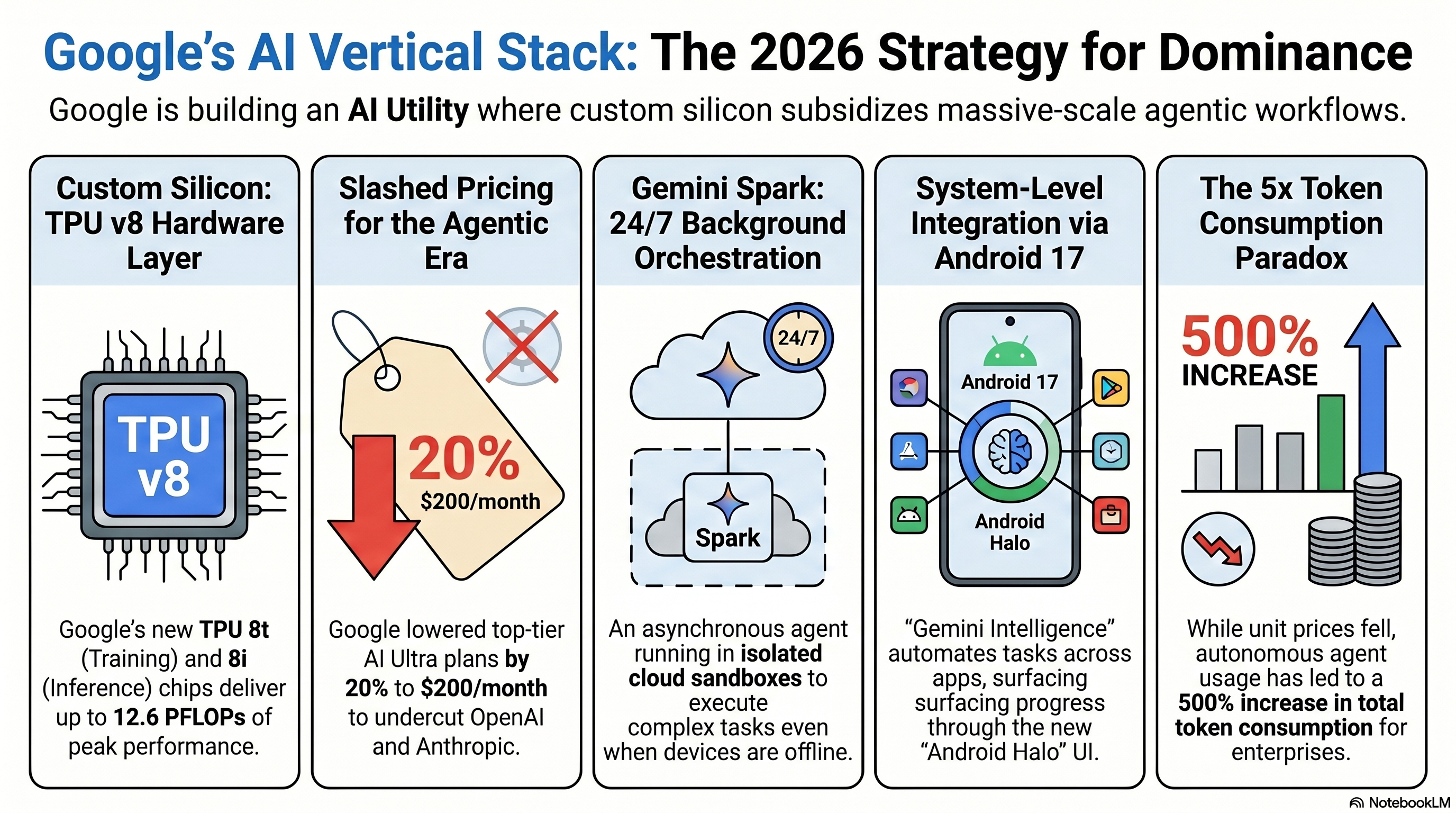
Table 3: The Silicon Cold War (Google TPU vs. NVIDIA)
| Specification / Feature | Google TPU v6e (Trillium) | Google TPU 8i (Inference) | NVIDIA B200 (Blackwell) |
|---|---|---|---|
| Target Workload | High-batch steady-state inference | High-speed AI agents & serving | General purpose, versatile AI |
| Per-Chip Memory | 32 GB HBM | 288 GB HBM3e | 192 GB HBM3e |
| Memory Bandwidth | 1,638 GiBps | 8,601 GB/s | 8.0 TB/s |
| Peak Compute | 918 TFLOPS (BF16) | 10.1 PFLOPS (FP4) | 2,250 TFLOPS (BF16) |
| Primary Software Stack | JAX, MaxText, Jetstream | JAX, PyTorch via vLLM | CUDA, TensorRT-LLM, vLLM |
| Ecosystem Status | High friction to migrate from CUDA, but native PyTorch/XLA support is improving | Unifying software stack via Project EAT | Absolute industry standard (FlashAttention 3 native) |
While migrating a production stack from CUDA to JAX/TPU can take engineering teams 4 to 12 weeks, Google is rapidly bridging the gap. The release of a unified vLLM backend for TPUs means developers can now run PyTorch models on TPUs with zero code changes, severely threatening NVIDIA's software moat. Google is projecting deployments of over 5 million TPUs by 2027, positioning AI compute as a global utility.
--------------------------------------------------------------------------------
Wiring the Web for Agents: Protocol Hegemony
Hardware is only half the battle. If AI agents are going to browse the web for us, the web needs to be redesigned so algorithms can actually read it.
Google introduced WebMCP, an open web standard that allows websites to expose structured tools—like HTML forms and backend APIs—directly to browsing AI agents. Instead of a clumsy AI trying to simulate mouse clicks on a travel website's visual layout, WebMCP allows the agent to communicate directly with the site's database to book a flight instantly.
Simultaneously, to prevent the internet from devolving into unreadable 3D visual slop, Google launched the HTML-in-Canvas API. This declarative API integrates real DOM elements directly into WebGL/WebGPU canvases. It ensures that immersive, high-fidelity 3D website experiences remain searchable, natively translatable, and perfectly readable by screen readers and AI agents alike.
Developers were also gifted Chrome DevTools for Agents, allowing autonomous models to run quality audits, emulate user experiences, and debug code in real-time without human oversight.
--------------------------------------------------------------------------------
Search 2.0 and The Zero-Click Reality
Google's evolution is terrifying news for traditional SEO agencies. AI Mode has surpassed 1 billion monthly active users. "AI Overviews" now trigger on roughly 48% of all global Google queries, leading to a massive surge in "zero-click" searches. In Google's dedicated AI Mode, an astonishing 93% of searches end without a single click to an external website. When an AI overview appears, organic click-through rates plummet by 61%.
Google is also building tools directly into the Search Interface using Antigravity. If a user searches for a "moving budget calculator," Google doesn't send them to a financial blog; Gemini generates a custom, interactive calculator directly on the search results page. Generic how-to content is effectively dead.
To monetize this enclosed ecosystem, Google is rolling out the Universal Commerce Protocol (UCP) and the Agent Payments Protocol (AP2). UCP powers a "Universal Cart" allowing users to add products to a single cart whether they are watching a YouTube video, reading Gmail, or chatting with Gemini. AP2 goes a step further, establishing guardrails that allow your AI agent to spend your money on your behalf. Google wants your agent to monitor the price of sneakers, buy them when they drop below a certain threshold, and do it all without you ever visiting the retailer’s website.
Table 4: The 2026 Search & Commerce Reality
| Metric / Feature | Data Point / Description | Implication for Brands & Agencies |
|---|---|---|
| AI Mode Usage | > 1 Billion Monthly Active Users | Conversational search is now the mainstream default, not an experiment. |
| Zero-Click Rate | 93% in AI Mode; 43% standard average | Traditional organic click-through strategies are failing; focus must shift to AI citation. |
| AI Conversion Rate | 14.2% (vs 2.8% traditional Google organic) | AI-referred traffic is roughly 5x more valuable per session. |
| Universal Cart (UCP) | Cross-platform shopping across Gmail, YouTube, Search | Retailers become mere fulfillment backends; Google owns the customer relationship. |
| Personal Intelligence | Gemini searches your personal photos, emails, and receipts. | AI handles retargeting natively ("reorder that skincare brand I bought"), bypassing traditional display ads. |
--------------------------------------------------------------------------------
Physical AI: Putting Gemini on Your Face
Finally, a digital hegemony is incomplete without a physical anchor. Google, in partnership with Samsung, Warby Parker, and Gentle Monster, revealed their new Intelligent Eyewear. Launching this fall, these aren't bulky AR goggles with distracting digital overlays. They are screen-free, fashionable companions running the Android XR platform.
By focusing on audio and voice, the glasses act as a direct lifeline to Gemini. Outfitted with cameras and microphones, the glasses understand your physical context in real-time. They provide navigation, summarize notifications, and can even translate foreign languages in real-time—synthesizing the translated audio to match the original speaker's vocal tone. Users can also snap photos completely hands-free.
This wearable strategy pairs perfectly with Android 17, which introduced system-level "Gemini Intelligence" to automate tasks across different mobile apps. Through a UI space called Android Halo, users can watch their background agents complete tasks in real-time. Google is bridging the gap between ambient physical computing and cloud-based agentic workflows.
--------------------------------------------------------------------------------
The Verdict
Sundar Pichai’s Google I/O 2026 was not a mere product showcase; it was a declaration of total ecosystem warfare. By co-designing the Gemini 3.5 architectures with their massive custom TPU infrastructure (Trillium and Ironwood), Google is aggressively undercutting the API prices of competitors while silently profiting from the massive token volume generated by agentic loops.
Simultaneously, they are redefining web protocols through WebMCP, replacing organic search traffic with zero-click Universal Carts, and capturing physical reality with stylish, screen-free Samsung eyewear.
For startups, SEO agencies, and enterprise competitors, the message is clear: The Agentic Hegemony has arrived. Google isn't just trying to provide the smartest chatbot; they are wiring the entire digital and physical world to ensure that every autonomous action, every background web request, and every sneaker purchase flows entirely through their silicon.
If this is Google "copying Apple," they might just execute it at a scale Cupertino never dreamed of.


💬 Commenti (0)
🔒 Accedi o registrati per commentare gli articoli.
Nessun commento ancora. Sii il primo a commentare!