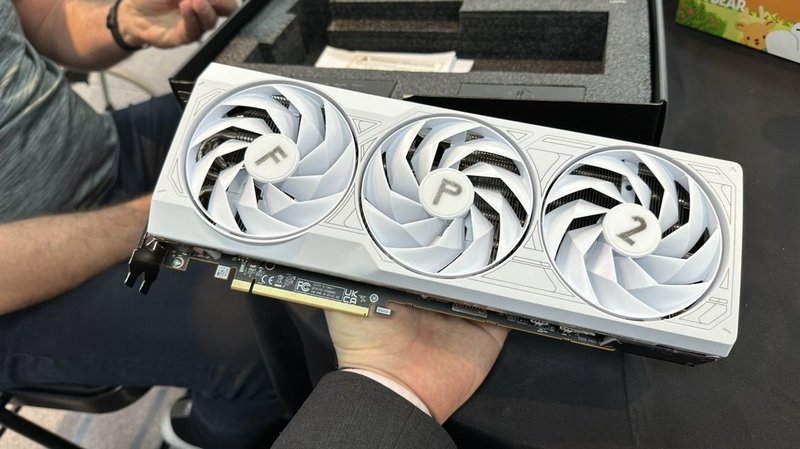
“So… anyone copped one of these?” The question, posted on Reddit, drips with sarcasm but hits its target squarely: nearly a year after the panic triggered by US export restrictions on NVIDIA GPUs, how many people have actually rack-mounted a Huawei accelerator? And, more to the point, does CUDA work on them yet? The answer sheds more light on the real direction of the AI hardware market and the constraints faced by anyone planning an on-premise deployment, especially when sovereignty is the driver.
Huawei’s Ascend GPUs are not vaporware. The Chinese company has been shipping silicon for Large Language Model training and inference for several generations now, with specs that, on paper, can stand up to Western alternatives. The real battle, however, is fought on the software battlefield. CUDA is more than a set of libraries; it is a compatibility layer so deeply embedded in frameworks, data pipelines, and developer habits that replacing it demands an effort comparable to rewriting entire stack segments. Without CUDA, an alternative GPU risks becoming an expensive brick.
Huawei offers its own platform – CANN (Compute Architecture for Neural Networks) – complete with porting tools and growing PyTorch support. Yet anyone who has attempted a migration knows the devil is in the details: unsupported operators, missing optimizations, and a debugging path that stretches time-to-production. For large Chinese firms forced by sanctions, this extra cost is swallowed by necessity. Outside that bubble, the economic and operational appeal rapidly evaporates.
The issue is structural. NVIDIA’s advantage is not the fastest GPU on the block, but the fact that all LLM software is already written for its GPUs. The Total Cost of Ownership of an alternative solution, even with competitively priced hardware, balloons when you account for the person-months required to adapt development environments, retrain team expertise, and maintain a fork of the entire inference stack. For self-hosted infrastructure that prioritizes data control, where operational simplicity is a hard requirement, this friction becomes a showstopper.
That is why the Reddit post is more than a punchline. It signals that the geopolitical fragmentation of the chip market does not automatically translate into a viable parallel ecosystem. Obligatory niches will emerge (China itself, certain state actors, projects with data residency mandates that make the switching costs tolerable), but the rest of the world will keep gravitating around CUDA – even when frustration with pricing and market concentration grows. The “death of the monopoly” proclaimed a year ago looks more like a slow erosion, propelled by politics rather than genuine technical advantage.






💬 Comments (0)
🔒 Log in or register to comment on articles.
No comments yet. Be the first to comment!