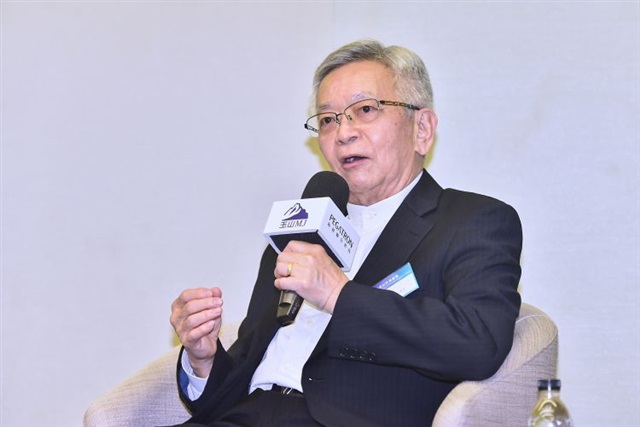
The news, reported by DIGITIMES, marks a significant governance shift for Gus Technology, a Taiwanese company active in the development of cathode materials for lithium-iron-phosphate and nickel-manganese-cobalt batteries. Placing the president of Hota Group at the helm of the board is not a mere managerial reshuffle: it reflects a strategic convergence between two entities that share the same trajectory along the electrification supply chain.
The cathode active materials bottleneck
Gus Technology operates in one of the hottest segments of the energy transition. Cathode materials determine energy density, lifespan, and cell costs, and their availability is a critical factor for large-scale battery producers. As global EV demand puts supply chains under pressure, companies like Gus seek to consolidate relationships with industrial partners that can offer financial stability, access to raw materials, and vertical integration. Hota Group, a conglomerate rooted in precision manufacturing and automotive components, brings exactly that: a solid anchor to scale up production and research capabilities.
What changes in governance
Handing the chairmanship to the head of an established industrial group is not a neutral step. Typically, it signals the intention to accelerate alignment between the company’s operational vision and the needs of an increasingly integrated supply chain. In a sector where new material development timelines can exceed five years, having a leader who deeply understands automotive production rhythms and supply contract dynamics becomes a competitive advantage. This is clearly not an organizational revolution, but rather an infusion of industrial expertise into the decision-making perimeter.
Taiwan in the global battery game
The island is not just semiconductors. For years, its battery materials supply chain has been quietly working to carve out a role alongside the giants of China, Korea, and Japan. Gus Technology represents one of the few local players with international growth ambitions, both in lithium-iron-phosphate and in higher-density chemistries. The entry of Hota Group into the boardroom could facilitate partnerships with vehicle manufacturers and speed up investments in new pilot plants, at a time when every region is striving to reduce dependence on single suppliers.
A supply chain perspective
For market watchers, the news tastes more like a signal than an isolated event. The appointment of Hota Group’s president as chairman of Gus Technology reinforces the thesis that control of the battery value chain also runs through cross-governance between complementary companies. This is not about formal vertical integration, but about a strategic alignment that can influence technology partnerships, capacity plans, and investment choices in the coming years. In an ecosystem where supplier loyalty is as precious as cell chemistry, this move carries a specific weight that goes far beyond a simple board seat.





💬 Comments (0)
🔒 Log in or register to comment on articles.
No comments yet. Be the first to comment!