The news seems contradictory at first glance: the United States is widening export licenses for Nvidia’s H200 GPUs to China, yet the number of units actually reaching Chinese customers is barely a handful. It’s a double signal that says more than meets the eye. On one side, Washington is cautiously loosening the grip of semiconductor export controls for artificial intelligence; on the other, the tiny volumes confirm that the tap remains almost completely shut.
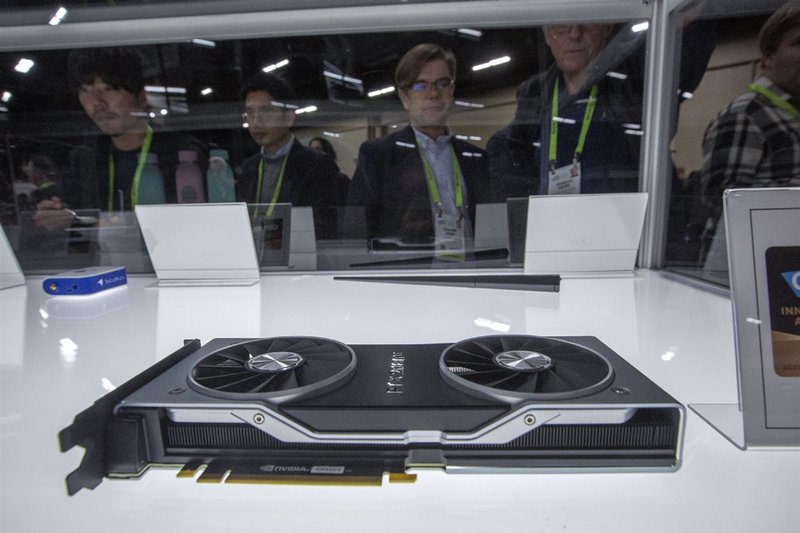
The H200, the direct successor to the H100, is the go-to accelerator for training and inference of the most demanding models. With its 141 GB of HBM3e memory and enormous bandwidth, this GPU is the backbone of clusters handling large context windows and heavy LLM workloads. For China’s government and tech champions, gaining access to these chips is a matter of competitive survival: without them, the gap with Western labs threatens to become unbridgeable.
Behind the license expansion, however, lies a complex political calculus. This is not liberalization, but a selective mechanism that grants waivers case by case, likely to academic institutions or sectors far from military applications. Even the few chips that clear customs end up in an ecosystem where compute demand outstrips supply by orders of magnitude. China needs tens of thousands of GPUs to train frontier models; receiving a few dozen is like trying to put out a fire with a teacup.
For those designing on-premise AI infrastructure in China, this bottleneck triggers second- and third-order effects. First, it accelerates a forced migration to domestic alternatives such as Huawei’s Ascend GPUs. These, however, suffer from a less mature software ecosystem: training pipelines, frameworks, and optimizations must be adapted, often at a high engineering cost. In parallel, the lack of powerful hardware pushes toward extreme technical pragmatism: aggressive quantization, fine-tuning on smaller models, and distributed architectures that squeeze every teraflop. Doing more with less becomes a design constraint rather than a slogan.
The episode underscores how the entire AI value chain hangs on a physical choke point controlled by a handful of global players. Anyone evaluating on-premise deployments in regulated environments—banks, healthcare, government—can read a warning here: GPU availability is subject to geopolitical shocks that upend TCO calculations and long-term planning. Data sovereignty alone is insufficient if the underlying hardware depends on a single supplier exposed to restrictions.
Looking at third-order consequences, the risk of a split between two parallel ecosystems is already visible. The West consolidates its stack around CUDA and Nvidia/AMD hardware; China is forced to forge its own path on proprietary solutions, often less performant but immune to embargoes. Such a bifurcation could slow global innovation, but it also offers a clear lesson for on-premise operators: diversifying hardware sources and adopting portable, accelerator-agnostic frameworks is the only rational strategy for staying out of a geopolitical minefield.
In the end, wider licenses and minimal shipments are two faces of the same coin—a fragile compromise that shines a light on the vulnerability of anyone dependent on a single AI hardware supplier. For professionals evaluating how to bring LLMs into their own data centers, the Chinese case is a reminder that technological sovereignty starts with silicon.





💬 Comments (0)
🔒 Log in or register to comment on articles.
No comments yet. Be the first to comment!