
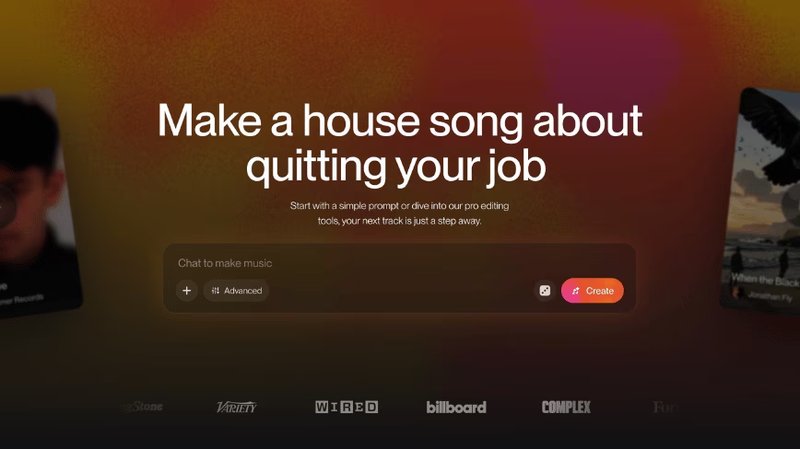
The intrusion started with a single stolen employee credential. Once inside, the intruder combed through Suno's source code and found evidence that the startup – famous for generating music tracks from text descriptions – built its dataset by training models on decades of audio scraped from YouTube.
The discovery does not land in a legal vacuum. Suno is already in the crosshairs of major record labels, who have sued for copyright infringement. The company's defense leaned on fair use doctrine: training an AI on protected material would be a transformative process, thus lawful. The leak makes that stance shakier, because it exposes an embarrassing operational detail: YouTube's terms of service explicitly prohibit scraping content for commercial purposes. And Suno's generated music is a paid product.
The data provenance knot
What makes this story emblematic isn't just the legal back-and-forth. It signals a structural tension running through all generative AI development. The mantra «more data, better models» pushes companies toward any reachable source, often bypassing legal barriers that would be considered insurmountable in other sectors. Suno is no exception: it's the latest instance of a widespread practice affecting language models, image generators, and now music.
For organizations evaluating AI adoption, the lesson is immediate. Relying on third-party models trained on opaque data means exposing oneself to compliance risks that are hard to quantify. A legal battle like Suno's could retroactively invalidate the lawfulness of generated content, creating cascading liabilities for those who used it in commercial settings.
Control and sovereignty: the on-premise answer
It's no coincidence that the wave of data-scraping lawsuits is accelerating demand for in-house deployments. Those who train or fine-tune LLMs in an on-premise environment can ensure dataset provenance, because they can populate it solely with proprietary data or verified licenses. The same principle applies to inference: a self-hosted model eliminates the flow of sensitive information through cloud APIs that could retain logs or reuse prompts for future training.
Admittedly, managing local compute infrastructure involves costs and complexity. But for regulated entities, banks, and public administrations, the risk-benefit balance increasingly tips toward solutions that guarantee data sovereignty and traceability. In this sense, the Suno leak is not just a security incident: it's a quiet warning about the fragility of AI supply chains when the starting data is collected without rules.
The legal proceedings will run their course, and Suno may yet prove that its training did not breach regulations. But reputational damage and legal uncertainty remain, acting as a powerful incentive to rethink the entire training architecture. For AI builders, data transparency is no longer a negotiable option.






💬 Comments (0)
🔒 Log in or register to comment on articles.
No comments yet. Be the first to comment!