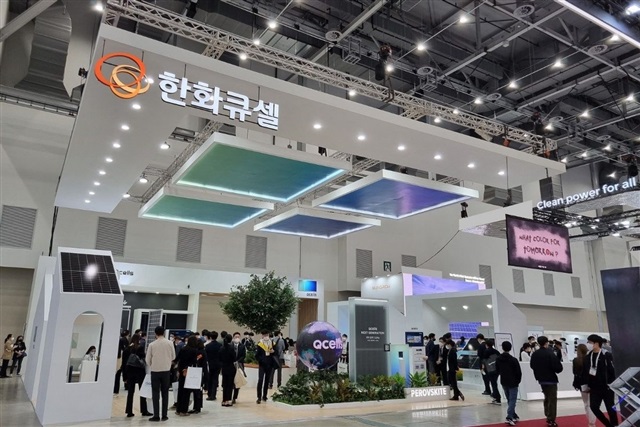
Hanwha Qcells' Expansion: A Signal for the Tech Sector
Hanwha Qcells, an established player in the US solar manufacturing landscape, has announced a significant expansion of its activities, now venturing into lunar testing. This transition, seemingly distant from its core business, carries relevant implications for the broader supply chain and technological development. Although the announcement does not directly concern the Large Language Model (LLM) sector or artificial intelligence infrastructure, it offers a crucial point of reflection for decision-makers operating in technology-intensive fields.
Hanwha Qcells' move underscores how innovation and diversification are fundamental pillars for business resilience. In an era characterized by rapid technological evolution and increasing geopolitical complexity, a company's ability to explore new horizons, even in emerging sectors like space, can serve as an indicator of its strategic robustness. This approach is particularly pertinent for those managing critical infrastructures, such as those dedicated to on-premise LLM inference and training.
From Earth to Moon: Innovation and Supply Chain Resilience
Hanwha Qcells' expansion from manufacturing solar panels for the terrestrial market to testing for lunar applications represents a notable technological leap. This type of investment in research and development, often driven by niche requirements or government programs, generates know-how that can have positive spillover effects across multiple sectors. The ability to develop and test technologies in extreme environments, such as the lunar one, demands precision engineering and impeccable supply chain management.
For companies relying on complex infrastructures for their AI workloads, the lesson is clear: dependence on a single source or a fragile supply chain can expose them to significant risks. The pursuit of hardware and software solutions that guarantee autonomy and control, typical of self-hosted and air-gapped deployments, is intrinsically linked to the availability and stability of the global supply chain. The ability of a company like Hanwha Qcells to navigate and innovate in such diverse contexts demonstrates the importance of a long-term vision for resource and skill management.
Implications for Data Sovereignty and TCO in AI Deployments
AI-RADAR's focus is on data sovereignty, control, and Total Cost of Ownership (TCO) in on-premise LLM deployments. In this context, the example of Hanwha Qcells, though indirect, highlights how supply chain stability is a critical factor. The procurement of specific hardware, such as high-performance GPUs with adequate VRAM for inference or fine-tuning of complex models, is a key element for those who choose to keep data and workloads within their own infrastructural boundaries.
Supply chain disruptions or reliance on proprietary technologies can directly impact TCO, increasing acquisition and maintenance costs, and even risks related to compliance. Opting for an on-premise deployment also means taking responsibility for building and maintaining a robust technological pipeline, which includes selecting reliable suppliers and the ability to adapt to changing market scenarios. The diversification and innovation demonstrated by Hanwha Qcells are, in this sense, a model of strategic resilience.
Future Prospects and Strategic Decisions in the AI Ecosystem
Hanwha Qcells' expansion into lunar testing, with its implications for supply chain and technology, offers a broader perspective on the strategic decisions companies must face. For CTOs, DevOps leads, and infrastructure architects evaluating self-hosted alternatives to cloud solutions for AI/LLM workloads, it is crucial to consider not only immediate technical specifications but also the long-term resilience of the entire infrastructure.
The ability of a company to innovate and manage complex supply chains, as demonstrated by Hanwha Qcells, is a factor that contributes to the stability of the global technological ecosystem. For those seeking to ensure data sovereignty and complete control over their LLMs, understanding these macro-trends is essential. AI-RADAR continues to provide analytical frameworks on /llm-onpremise to help evaluate the trade-offs between control, performance, and TCO, supporting informed decisions in a constantly evolving technological landscape.





💬 Comments (0)
🔒 Log in or register to comment on articles.
No comments yet. Be the first to comment!