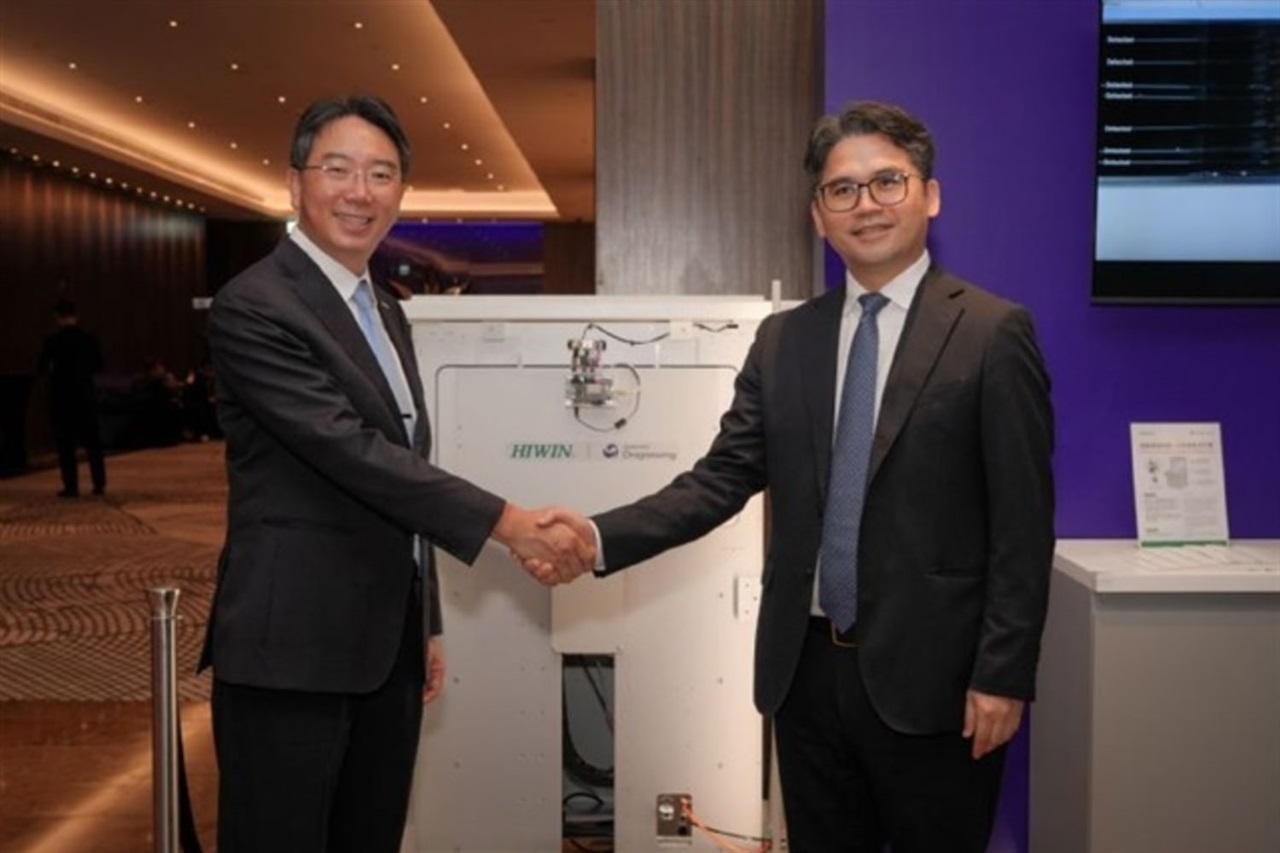
Edge Artificial Intelligence for Industry
Hiwin and Qualcomm have forged a strategic partnership, announced at Computex, to bring artificial intelligence directly to the edge (edge AI) in Panel Level Packaging (PLP) equipment, with a specific focus on Load Port systems. This collaboration highlights a growing trend in the industrial sector: the need to process data in real-time, directly on-site, to optimize production processes and ensure greater operational autonomy.
Integrating AI into complex machinery like Load Ports, which are crucial for handling wafers or substrates in semiconductor or display manufacturing environments, promises to significantly enhance efficiency, precision, and self-diagnostic capabilities. Shifting computational intelligence from centralized cloud infrastructure to peripheral devices reduces latency, a critical factor in contexts where every millisecond can impact production quality and yield.
Implications for On-Premise Deployment and Data Sovereignty
The adoption of edge AI, as proposed by Hiwin and Qualcomm, has profound implications for enterprise deployment strategies. Instead of relying exclusively on remote cloud services for AI analysis and inference, companies can now evaluate solutions that keep data and processing within their operational boundaries. This on-premise or hybrid approach is particularly beneficial for sectors with stringent security, regulatory compliance, and data sovereignty requirements, such as advanced manufacturing.
The ability to process data locally, without transferring it to external data centers, not only minimizes privacy and security risks but also reduces bandwidth costs and dependence on network connectivity. For CTOs and infrastructure architects, choosing an edge deployment means balancing the initial investment in dedicated hardware (CapEx) with potential long-term operational cost savings (OpEx), in addition to ensuring more direct control over the entire AI pipeline, from data collection to inference.
Industrial Context and Hardware Specifications
PLP equipment and Load Port systems operate in environments demanding extreme precision and reliability. The introduction of AI into these contexts, enabled by Qualcomm's edge-designed chips, allows for advanced functionalities such as predictive maintenance, automated quality control, and real-time workflow optimization. These processors are optimized for AI inference with low power consumption, a crucial aspect for devices operating 24/7 in factories and plants.
While specific hardware details were not disclosed at this stage, the use of Qualcomm solutions suggests the deployment of System-on-Chips (SoC) with integrated AI accelerators, capable of efficiently handling machine learning workloads. For companies considering the implementation of LLMs or other complex models at the edge, it is essential to carefully evaluate specifications such as available VRAM, throughput per token, and latency, to ensure the hardware is adequate for the model and application requirements.
Future Prospects and Strategic Considerations
The collaboration between Hiwin and Qualcomm is a clear example of the direction innovation is taking in industrial automation. Edge AI is no longer a futuristic vision but a reality offering tangible benefits in terms of operational efficiency, data security, and system resilience. For organizations evaluating AI solutions, especially for sensitive or critical workloads, the edge approach represents a powerful alternative to traditional cloud computing.
Deciding between on-premise, hybrid, or cloud-based deployment for AI/LLM workloads requires a thorough analysis of Total Cost of Ownership (TCO), compliance needs, and desired performance. AI-RADAR offers analytical frameworks on /llm-onpremise to help companies evaluate these trade-offs and make informed decisions, ensuring that AI solutions align with the organization's strategic and operational objectives.








💬 Comments (0)
🔒 Log in or register to comment on articles.
No comments yet. Be the first to comment!