
Financial markets are rarely abstract numbers. When Hong Kong’s equity issuance surges 29% to nearly $44 billion in the first half of 2026, led by battery and circuit-board manufacturers, the data tells a story that reaches straight into the racks of local data centers. The hardware powering on-premise AI — GPUs, power systems, network boards — depends on a supply chain where these components play a structural role. Ignoring this link means making deployment choices with a partial view.
Why batteries and PCBs matter for local inference
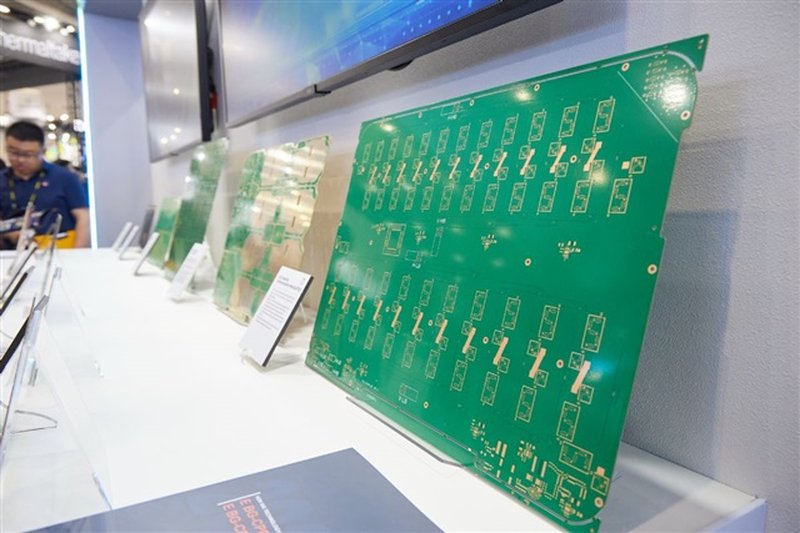
A server dedicated to self-hosted LLM inference is more than compute silicon. Every node needs stable power, operational continuity, and high-density interconnects. Battery makers supply the UPS units that protect workloads from micro-outages, while printed circuit boards are the skeleton carrying signals, VRAM, and network interfaces. The growth of these sectors, confirmed by the capital wave raised in Hong Kong, signals two opposing forces: rapidly expanding demand and growing competition for production resources.
Implications for those choosing a local stack
Anyone evaluating on-premise LLM deployment — for data sovereignty, TCO control, or latency reasons — must monitor the health of the hardware supply chain. A surge in investment in Asian component manufacturers can translate into greater future production capacity, but also short-term inflationary pressure. This is not an abstract indicator: when PCB demand heats up, lead times stretch and bare-metal server assembly costs rise. A scenario familiar to those who lived through the 2020–2022 inventory crises. For on-premise AI, the lesson is that hardware availability depends not only on NVIDIA or silicon foundries, but on a network of often invisible suppliers.
Supply chain control and technological sovereignty
Talking about on-premise LLMs also means tackling the sovereignty knot: data in-house, models under control, no dependency on cloud APIs. Yet this software independence risks being fragile if hardware has geopolitical bottlenecks. The capital-raising activity in Hong Kong — a financial hub in tension between the West and China — shows how critical supply chains are strengthening outside traditional ecosystems. For European decision-makers, accustomed to export restrictions and GDPR requirements, it becomes essential to include geographic diversification of components in procurement plans. It is not merely a matter of price, but of guaranteeing operational continuity for local inference.
Signals not to overlook
The Hong Kong figure should not be read as a financial recommendation, but as a thermometer of what is simmering beneath AI infrastructure. The capital flow toward battery and PCB producers indicates that the market is pricing in a prolonged expansion, driven not only by consumer electronics but by the hunger for power to handle LLM workloads. For those designing on-premise cluster upgrades or evaluating a shift to larger models today, watching these movements helps calibrate budget and architecture choices, reducing the risk of finding oneself with ready pipelines and empty racks.






💬 Comments (0)
🔒 Log in or register to comment on articles.
No comments yet. Be the first to comment!