
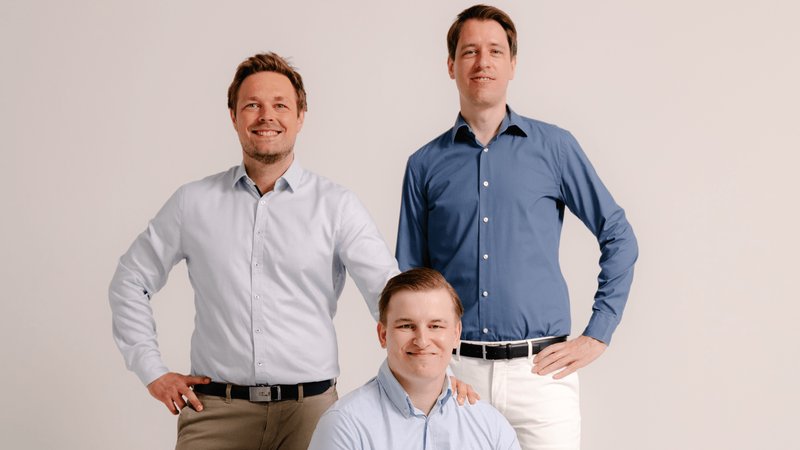
The real estate sector, still burdened by manual processes and admin chores that eat into agents' time, is becoming a real-world test bed for AI assistants. Dutch startup HousApp, founded precisely to relieve that burden, has just secured €4.3 million in a seed round led by venture capital firms Arches Capital and Antler, with participation from a group of angel investors.
Originally launched as a simple property-viewing scheduler, the platform has evolved into a full-fledged AI assistant that automates workflows, letting agents focus on clients instead of paperwork. The idea is to support operators from the first seller interaction to the final property transfer.
“We founded HousApp to cut down administrative load and give agents more time,” said CEO Sebastiaan Kloppenborg. “Our growth shows the market is ready for a new generation of software. We’re turning HousApp into the platform where agents manage every step of their work, from initial contact with the seller to closing the deal.” The bet is that by handling the so-called heavy lifting, the platform helps close transactions faster.
Earlier this year, HousApp reinforced its Dutch market footprint by acquiring proptech company Friva. It now serves a customer base that ranges from independent agents and boutique agencies to large brokerage chains. The fresh capital will go toward product development, strengthening the engineering team, and accelerating commercial expansion, as the company continues building its AI-native platform for real estate.
This funding round signals a broader trend: the injection of intelligent automation into traditionally fragmented industries. In real estate specifically, handling sensitive data—contracts, financial records, land-registry documents—raises questions around data sovereignty. Most AI-native platforms run on cloud infrastructure, offering instant scalability but leaving open issues of control and data residency for agencies operating in strict regulatory environments. For those considering on-premise deployment, there are trade-offs between SaaS agility and full sovereignty that require careful analysis—an area where AI-RADAR provides evaluation frameworks. For now, the cloud approach remains dominant, but HousApp’s growth could eventually lead to hybrid solutions to meet stricter compliance demands.






💬 Comments (0)
🔒 Log in or register to comment on articles.
No comments yet. Be the first to comment!