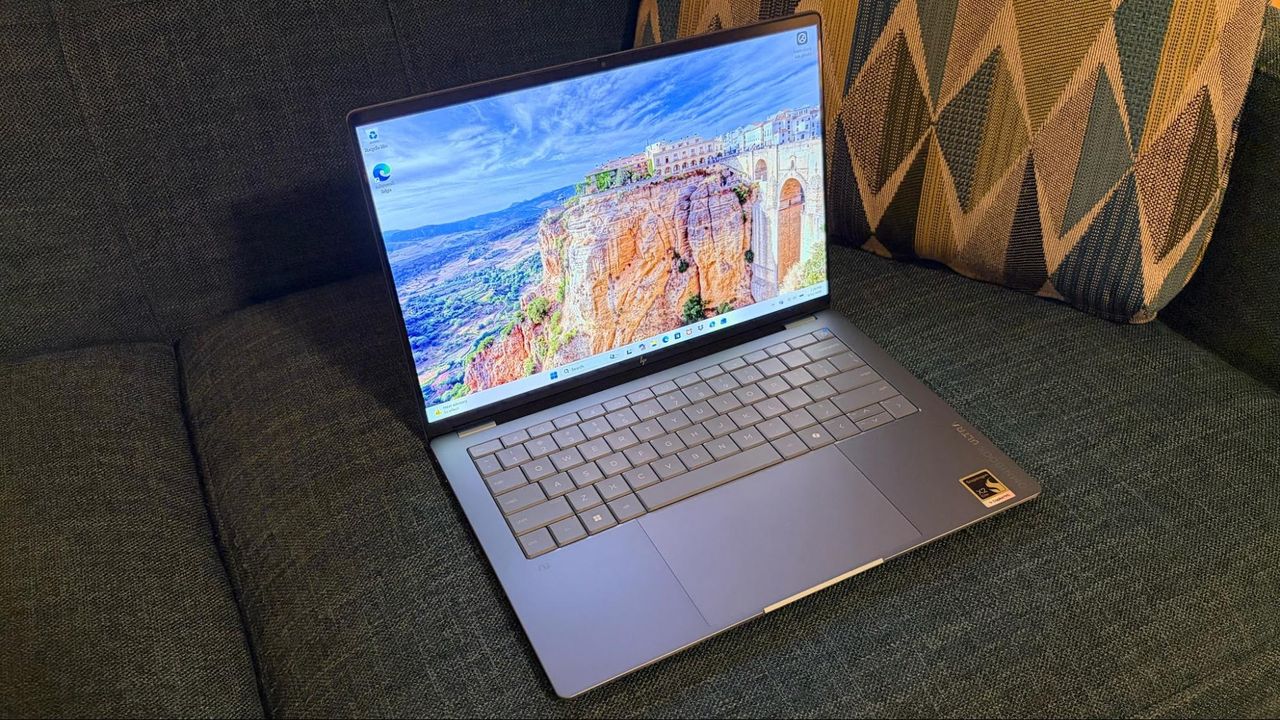
HP’s entry into the Windows on ARM club with the OmniBook Ultra 14 arrives under a headline that leaves little to the imagination: “Potent Snapdragon performance, great endurance, premium pricing”. Three elements that already sketch the outline of a product in a rapidly crowding segment. On one side, the muscle of Qualcomm’s latest processors; on the other, battery life that finally rivals the most frugal x86 systems. Yet the price tag draws attention to a trade-off that is not just about budget, but also about architectural choice.
The Snapdragon heart, presumably from the recently launched X series, shifts the computing center of gravity toward ARM. Without delving into specifications the source does not detail, the message is clear: HP aims for a thin, responsive machine that can last an entire workday without hunting for an outlet. For mobile professionals, that’s a compelling pitch. But within the AI-RADAR perimeter, the real question is whether this class of device can become a sensible node in a distributed on-premise stack.
From the standpoint of local Large Language Model inference, an ARM laptop forces a reevaluation of some certainties. Many serving frameworks and quantization tools have been tuned for x86 architectures with NVIDIA GPUs. On Windows ARM, support is growing but remains less mature than on traditional platforms. The presence of an NPU inside the Snapdragon X SoC – even if not confirmed for this specific model – is a potential asset for light AI workloads, but shared VRAM and the absence of powerful discrete GPUs impose strict limits on the size of models that can run with acceptable latency.
Battery life becomes relevant in edge or on-prem test scenarios. The ability to iterate quickly on 4-bit quantized models without power constraints can speed up prototyping in logistics, healthcare, or field research. However, the reported premium pricing pushes the Total Cost of Ownership higher, especially when compared with similarly priced x86 hardware that offers discrete GPUs and greater flexibility.
The critical question, then, is not simply whether the OmniBook Ultra 14 is a good Windows laptop – the answer appears positive – but whether its profile is advantageous enough to justify the expense in contexts where local LLM execution is a requirement rather than an afterthought. The answer today hinges on the maturity of Windows ARM software and on how far organizations are willing to go to invest in energy efficiency that may lower operational costs over time.
Meanwhile, the ARM laptop landscape keeps gaining tiles: each new model pushes developers and ISVs to compile and optimize for the architecture, edging closer to the moment when the “premium pricing” might be offset by an ecosystem that is finally up to the task even for non-trivial AI workloads.






💬 Comments (0)
🔒 Log in or register to comment on articles.
No comments yet. Be the first to comment!