The daily routine of an intensive care nurse includes a gesture as repetitive as it is critical: every hour, they must physically go to a patient's bedside, read the urine output from a drainage bag, and manually log the amount. An operation that steals precious time from direct care and, according to independent studies, can reach an error rate of 26 percent. As of today, this decades-old ritual has a concrete alternative thanks to the HTG Urogram device, developed by the Czech startup HTG Medical, which has just raised €450,000 from angel and venture capital backers and, crucially, has obtained full certification under the European Medical Device Regulation (MDR), earning the CE mark.
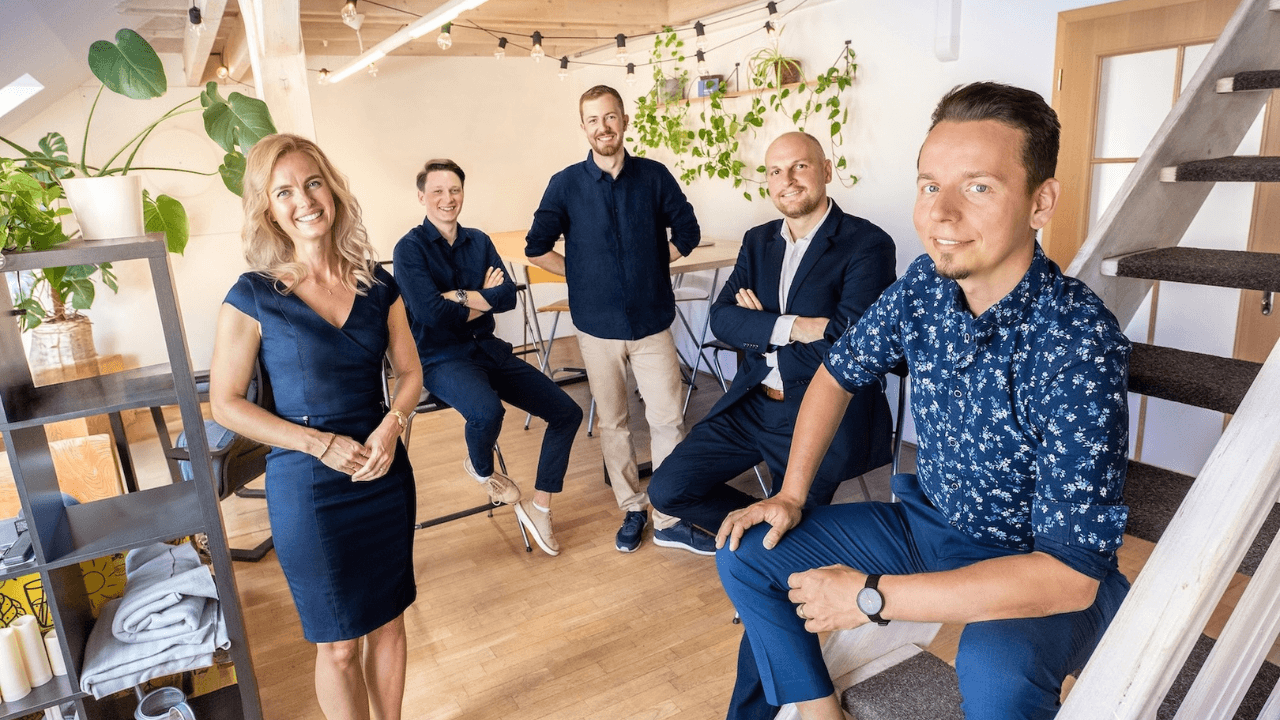
The startup's story began in 2019, during a medtech hackathon organized by the Institute for Clinical and Experimental Medicine (IKEM) in Prague. On that occasion, the founders were challenged to digitize urine output monitoring. They didn't win, but the idea stuck and turned into a market-ready product. “Getting a prototype into the ward and testing it on real patients is one thing. Turning it into a certified medical device means perfecting countless details: from measurement accuracy to engineering reliability, to secure integration with Hospital Information Systems (HIS) and a development and testing lifecycle that can withstand regulatory scrutiny,” explains Max Klimeš, CTO and co-founder.
The HTG Urogram automatically tracks urinary flow, displays parameters on an integrated screen, and transmits data in real time to hospital information systems. This gives nurses back up to one hour of work each day, hours that can return to the patient's bedside. Automation also eliminates manual transcription errors, a non-negligible factor when the precision of fluid balance can influence immediate clinical decisions.
Obtaining the CE mark under the new MDR is no small bureaucratic step. Companies manufacturing medical devices must now navigate one of the strictest regulatory frameworks in the world, with thousands of pages of technical documentation and complete component traceability. Many legacy manufacturers have struggled or exited the market. HTG Medical completed this journey in just 15 months, accelerated by localized European manufacturing. “More than a year of intense regulatory work taught us how to build processes that can withstand any international market – says Krištof Šaman, COO and co-founder – ISO 13485 and the CE mark are not rubber stamps, but the foundations on which we are building a highly scalable company.”
The funding round, led by Garage Angels together with Electron Capital Partners and JIC Ventures, with participation from Jinej fond and Dendis Capital, brings total funding past the €1 million milestone. Aleš Filipenský, Investment Director at Garage Angels, highlights how the combination of a stellar founding team, MDR clearance, and a recurring-revenue business model made the investment particularly attractive.
From an architectural standpoint, the choice to have the device communicate directly with HIS systems, bypassing external clouds, preserves healthcare data sovereignty and simplifies GDPR compliance. It is an aspect HTG Medical intends to leverage to accelerate registrations in non-European markets such as Australia, Singapore, Malaysia, and Saudi Arabia, where the MDR certification acts as a regulatory springboard thanks to numerous mutual recognition agreements. In a sector where innovation often moves slowly, the speed with which an idea born at a hackathon became a certified product already in use with patients signals a shift in pace for European medtech. While large incumbents struggle with regulatory adjustments, startups like HTG Medical show that agility and rigor are not in contradiction, as long as regulatory quality is placed at the core of the project from day one.






💬 Comments (0)
🔒 Log in or register to comment on articles.
No comments yet. Be the first to comment!