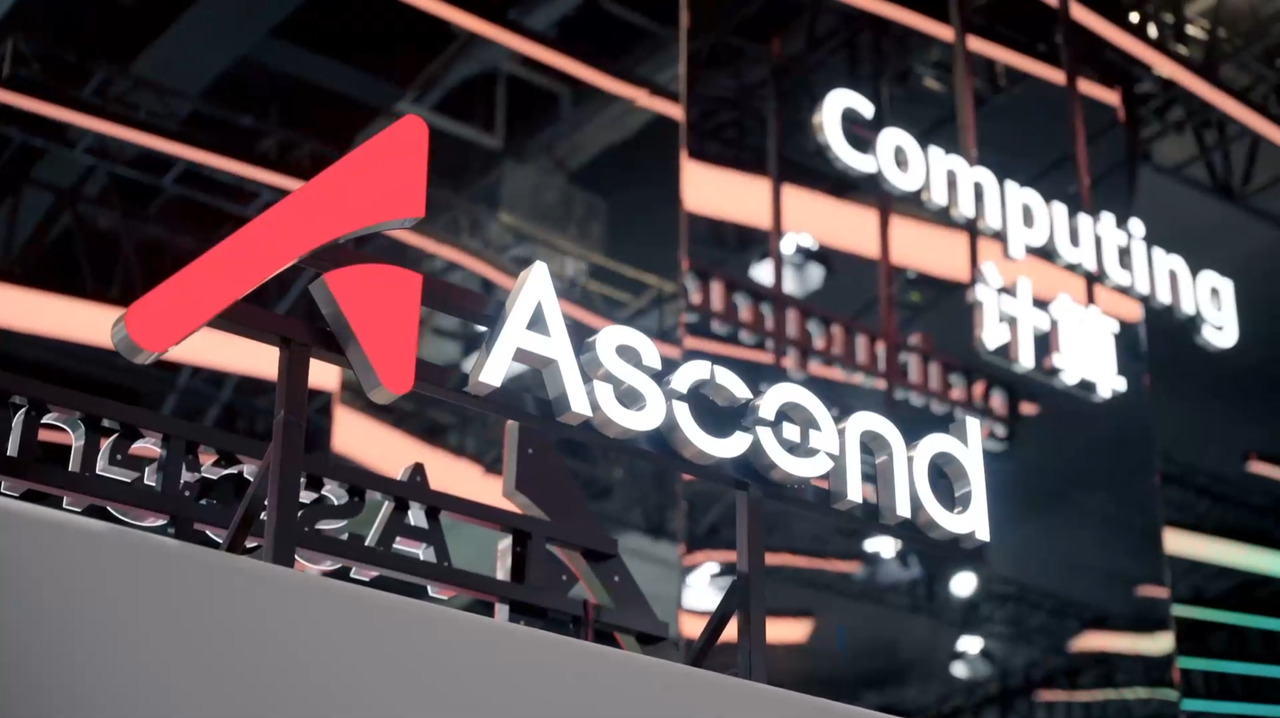
An Unexpected Thanks: Accelerating Chinese Silicon
In a statement that captured the industry's attention, Huawei's chairman expressed unexpected gratitude to the United States for its chip export restrictions. From his perspective, these measures did not hinder but rather "supercharged" China's semiconductor industry. This viewpoint overturns the common narrative, suggesting that sanctions acted as a powerful catalyst for innovation and technological self-sufficiency within China.
The restrictions imposed by Washington have, in fact, encouraged Chinese companies to redirect significant investments towards research and development. The primary objective has been to build proprietary technology stacks, reducing dependence on external suppliers and developing internal solutions capable of competing in the global market. In this context, platforms like Huawei Ascend emerge as concrete examples of this drive towards independence.
Huawei Ascend and the Push Towards On-Premise
The mention of Huawei Ascend is particularly relevant for those involved in AI infrastructure and Large Language Model (LLM) deployment. Ascend represents Huawei's family of AI processors, designed to accelerate training and Inference workloads. The development of hardware platforms like Ascend is a direct response to the need to control the entire technology pipeline, a crucial factor for organizations prioritizing data sovereignty and security.
For CTOs, DevOps leads, and infrastructure architects, the availability of local hardware alternatives means being able to evaluate options for self-hosted and on-premise deployments. This approach allows for granular control over hardware, software, and data, which are fundamental aspects for regulatory compliance and air-gapped environments. The ability to possess one's own "silicon" reduces reliance on external supply chains and mitigates geopolitical risks, offering greater resilience.
Implications for Technological Sovereignty and TCO
The strategy of developing a proprietary technology stack, spurred by restrictions, has profound implications for the concept of technological sovereignty. Countries and companies are increasingly seeking to maintain complete control over their digital infrastructure, especially in strategic sectors like artificial intelligence. This includes not only chip development but also operating systems, software frameworks, and AI models.
From a Total Cost of Ownership (TCO) perspective, investing in proprietary hardware solutions can entail a high initial CapEx. However, in the long term, it can offer significant advantages in terms of operational costs, performance optimization, and customization. The ability to optimize hardware for specific LLM workloads, for example, can translate into higher Throughput and lower latency compared to generic cloud-based solutions, especially for intensive and sensitive workloads.
The Future of Competition in AI Silicon
The evolution of China's semiconductor industry, with the emergence of players like Huawei Ascend, redefines the global competitive landscape. Companies evaluating LLM deployment must now consider a more diversified hardware ecosystem, where choices are dictated not only by technical specifications or price but also by geopolitical considerations and supply chain resilience.
This scenario reinforces the need for technology decision-makers to carefully analyze the trade-offs between cloud and on-premise solutions. The availability of alternative hardware platforms, developed with a focus on sovereignty and control, offers new opportunities to build robust and adaptable AI infrastructures. For those evaluating on-premise deployment, AI-RADAR offers analytical frameworks on /llm-onpremise to assess these trade-offs, helping to navigate an increasingly complex and fragmented market.









💬 Comments (0)
🔒 Log in or register to comment on articles.
No comments yet. Be the first to comment!