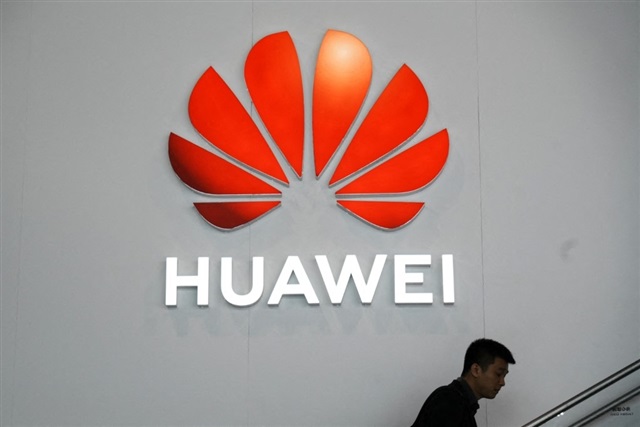
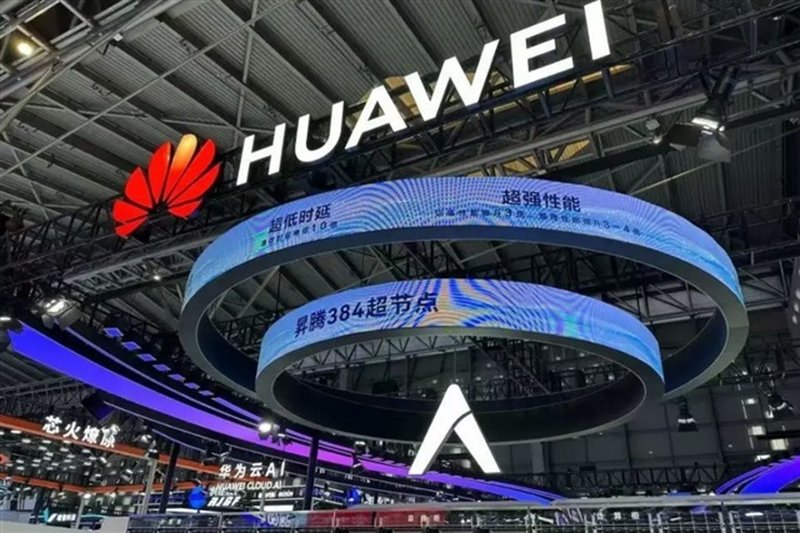
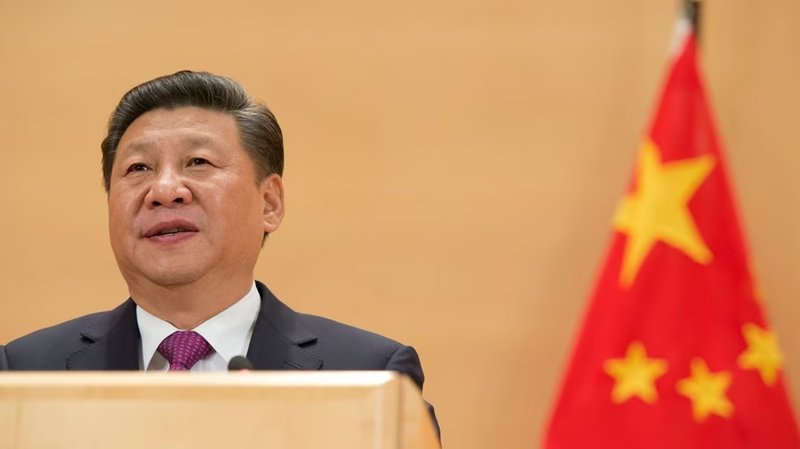
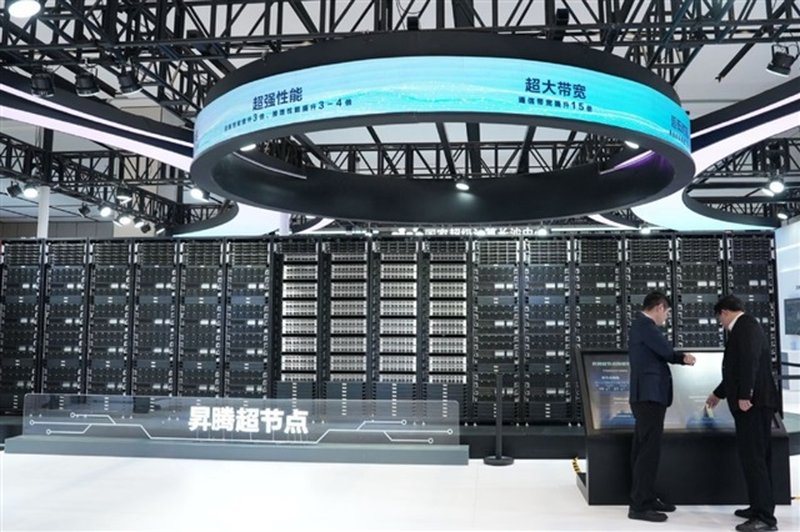
The World Artificial Intelligence Conference in Shanghai opened with an unmistakable political signal: an inaugural address by President Xi Jinping. Against this backdrop, Huawei chose to unveil the largest and most powerful version of its Ascend SuperPOD, a modular cluster designed for large-scale training and inference. This is not merely a product launch — it is a declaration that China intends to build a fully domestic AI infrastructure, decoupled from Western suppliers.
The Ascend SuperPOD is Beijing’s answer to integrated platforms like NVIDIA’s DGX SuperPOD, but with one crucial difference: it was developed under the constraints of US export restrictions, which have progressively cut off Chinese companies from the most advanced GPUs. Rather than succumbing to the bottleneck, Huawei has poured resources into a parallel ecosystem built on its own silicon, proprietary software libraries, and a development framework (CANN) aimed at competing with CUDA.
From an AI workload perspective, the move carries structural implications. For a Chinese organization evaluating on-premise or hybrid deployments, having a local vendor that can deliver a pre-integrated cluster reduces geopolitical risk and shortens supply chains. Yet the real trade-off remains the maturity of the software stack. The global LLM and training pipeline ecosystem is still deeply entwined with CUDA, and migrating to Ascend entails refactoring costs as well as a narrower talent pool.
That is precisely where the second-order game plays out. The massive investment in Ascend is not just a Plan B; it is creating a second technology pole that could fragment the open-source LLM universe. If models developed in China are optimized exclusively for Ascend, the global landscape will split between those using NVIDIA GPUs and those running on Chinese hardware, with consequences for reproducibility, weight portability, and research sharing.
Having Xi open WAIC is not a cosmetic detail but a sign that industrial goals and national strategy are now aligned. AI infrastructure is becoming a full-fledged geopolitical asset, and the largest ever SuperPOD represents China’s attempt to push to the forefront of this parallel track. For the international enterprise market, the message is clear: silicon choice is increasingly a matter of alignment, with direct impacts on TCO, data sovereignty, and the long-term sustainability of software architectures.




💬 Comments (0)
🔒 Log in or register to comment on articles.
No comments yet. Be the first to comment!