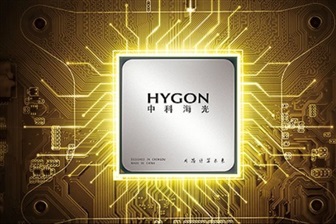
China chipmaker Hygon expands CPU-GPU strategy for AI compute
The global semiconductor landscape continues to evolve rapidly, driven by the increasing demand for artificial intelligence computing capabilities. In this context, Hygon, a prominent Chinese chipmaker, has announced an expansion of its strategy, focusing on the integration of CPUs and GPUs to optimize AI workloads. This strategic move highlights a broader industry trend where the efficiency and performance of hardware architectures are becoming crucial for the development and deployment of increasingly complex models, including Large Language Models (LLM).
Hygon's approach, which aims to combine the general processing capabilities of CPUs with the parallel computing power of GPUs, reflects the need for balanced hardware solutions. Such integrated architectures are designed to address the specific challenges of AI computing, from data pre-processing to model inference and training. For companies evaluating the deployment of self-hosted AI infrastructures, the availability of optimized hardware is a decisive factor for TCO and for ensuring data sovereignty.
The importance of CPU-GPU integration for AI
The integration of CPUs and GPUs into a single computing strategy is not new, but it takes on renewed importance in the age of AI. CPUs excel at managing sequential operations and system control, while GPUs are unparalleled in executing massive parallel computations, which are essential for the matrix and tensor operations typical of machine learning algorithms. The challenge lies in making these two components work synergistically, minimizing data transfer bottlenecks and maximizing overall throughput.
A well-designed architecture can significantly reduce latency and increase energy efficiency, critical aspects for data centers hosting intensive AI workloads. For example, in LLM inference, the speed at which tokens are generated depends not only on the GPU's computing power but also on the efficiency with which the CPU handles data pre-processing and post-processing, as well as VRAM management. Integrated solutions like those proposed by Hygon aim to optimize this pipeline, offering more granular control over the entire processing chain.
Market context and implications for on-premise deployment
Hygon's push towards integrated CPU-GPU solutions is part of a global context of increasing competition in the AI semiconductor sector. Many countries and companies are seeking to reduce dependence on a limited number of suppliers, promoting the development of internal capabilities. For organizations prioritizing on-premise deployment, this diversification of the hardware market is fundamental. It offers more options for building infrastructures that meet specific compliance, security, and data sovereignty requirements, especially in air-gapped environments.
Evaluating these new hardware offerings requires an in-depth analysis of the trade-offs between performance, initial costs (CapEx), operational costs (OpEx), and energy consumption. Hygon's approach could represent an interesting alternative for companies looking to optimize the TCO of their AI infrastructures, balancing computing power needs with those of control and customization. For those evaluating on-premise deployments, AI-RADAR offers analytical frameworks on /llm-onpremise to help assess these complex trade-offs, providing tools to compare different deployment options.
Future prospects for AI infrastructure
Hygon's expanded CPU-GPU strategy for AI compute is a clear signal of the direction the semiconductor industry is taking. Innovation is not limited to the raw power of GPUs alone but extends to optimizing the entire system architecture for specific workloads. This is particularly relevant for companies that intend to maintain complete control over their AI infrastructure, from models to data, down to the underlying hardware.
The ability to choose among different hardware architectures, including integrated systems, allows CTOs and infrastructure architects to design more resilient solutions tailored to their unique needs. In an era where data sovereignty and security are absolute priorities, the availability of a diversified hardware ecosystem is a fundamental pillar for the success of on-premise and hybrid AI deployments.







💬 Comments (0)
🔒 Log in or register to comment on articles.
No comments yet. Be the first to comment!