The Quantum Bottleneck: Not Chips, But Lasers
In today's technological landscape, the advancement of fields such as quantum computing and atomic clocks is often associated with the complexity of chips and computational systems. However, a less obvious but equally critical bottleneck is emerging: the limited availability of compact, cost-effective, high-power laser sources capable of operating at precise wavelengths. This limitation hinders the industrial-scale deployment of technologies that promise to revolutionize numerous areas, from medicine to cybersecurity.
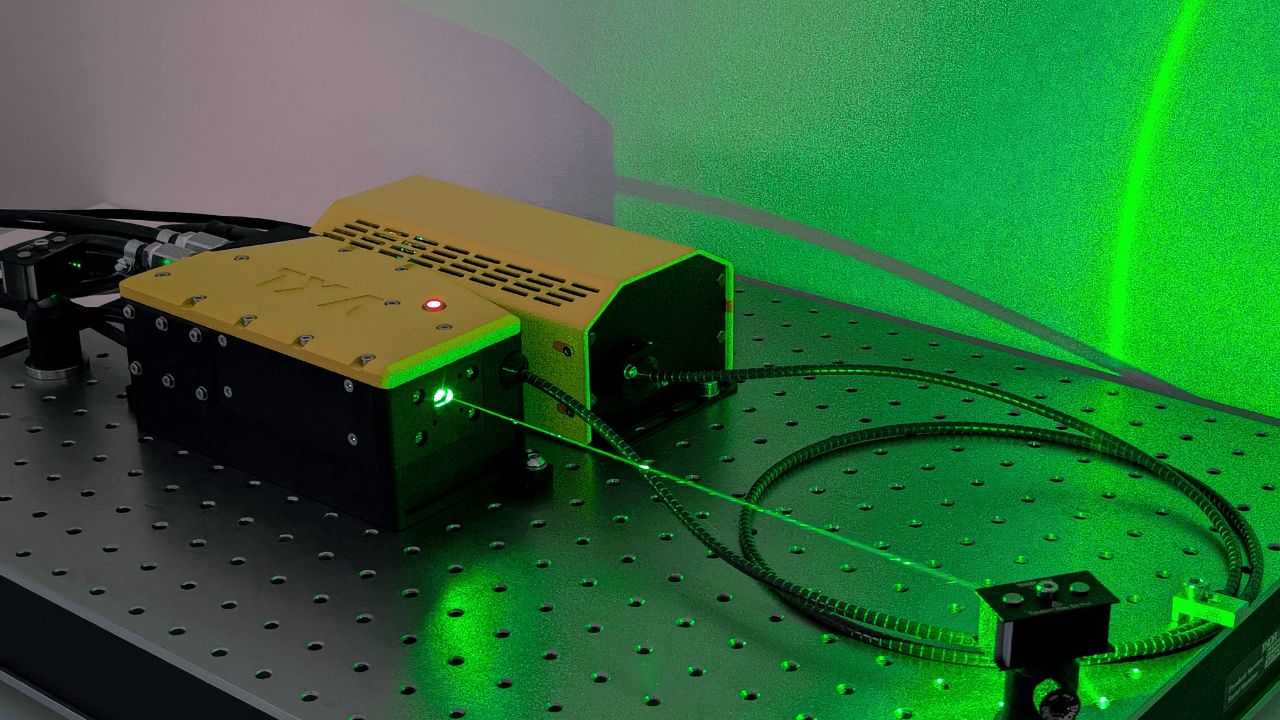
It is in this context that Vexlum, a Finnish company that has transformed over two decades of laser and semiconductor research into a proprietary solution, operates. The company focuses on III-V semiconductors, materials fundamental not only for lasers but also for solar cells and detectors, distinguishing itself from more common silicio-based semiconductors. Its mission is clear: to remove the laser-related obstacle to enable the full expansion of quantum applications and other advanced technologies.
VECSEL Technology: Precision and Power for the Future
The technology at the core of Vexlum's offering is the VECSEL (Vertical-External-Cavity Surface-Emitting Laser), a semiconductor laser with a vertical external cavity. This innovation has deep roots, beginning its genesis in 2005 at the Optoelectronics Research Centre (ORC) in Tampere, Finland. Initially, the research team explored a wide range of applications, from yellow lasers for sodium guide stars in space to dermatology, where specific wavelengths can target blood vessels with high precision.
A significant turning point occurred in 2012 when researchers from the National Institute of Standards and Technology (NIST) in Boulder, Colorado, contacted the team. NIST was facing challenges with lasers for quantum applications, particularly ion trapping. The collaboration revealed that the high-power lasers developed by Vexlum, originally for projection, were an excellent fit for quantum systems, thanks to their high power, visible wavelengths, excellent beam quality, and extremely low noise. These characteristics are crucial for the stability and reliability required by quantum systems.
From Laboratory to Industrial-Scale Production
Vexlum, spun out in 2017, is now taking a crucial step to transition from niche production to industrial-scale capability. The company currently produces around 200 lasers annually, but to meet the growing demand from the quantum, semiconductor, and space sectors, it is building its own semiconductor fabrication facility. This includes the installation of an epitaxy reactor and the construction of a cleanroom, with the goal of having the entire fab operational within the year.
The laser production process is complex and highly controlled, starting with the atom-by-atom growth of semiconductor layers on a substrate using molecular beam epitaxy. Materials such as gallium arsenide and indium phosphide are deposited at a rate of approximately one micron per hour. This vertically integrated approach, from chip fabrication to final laser system assembly, allows Vexlum to maintain tight control over the entire value chain and respond more precisely to customer requirements. The ability to produce a new wavelength in about a month offers significant flexibility, a key advantage in a rapidly evolving market.
Market Outlook and the Role of Nordic Countries
Demand for Vexlum's precision lasers is growing, particularly for ion trapping and neutral-atom systems in quantum computing. These systems often require multiple lasers at different wavelengths – for example, a single quantum setup may need six different wavelengths. Vexlum's technology stands out precisely for its ability to deliver multiple wavelengths with high power and low noise, precisely meeting these requirements.
Beyond the quantum sector, the company is exploring established markets such as semiconductor manufacturing (developing capabilities in UV wavelengths) and metrology, where older laser technologies are still widely used. Vexlum's lasers offer superior performance, including lower noise and better beam quality, as well as greater energy efficiency compared to traditional offerings. The company also collaborates with the European Space Agency on laser systems for space applications, where they can replace more complex and expensive legacy solutions. In February, Vexlum raised €10 million, the largest Seed round for a photonics company in the Nordics, demonstrating growing interest and a strong foundation of expertise in the region, particularly in Tampere and across Europe.




💬 Comments (0)
🔒 Log in or register to comment on articles.
No comments yet. Be the first to comment!