Introduction
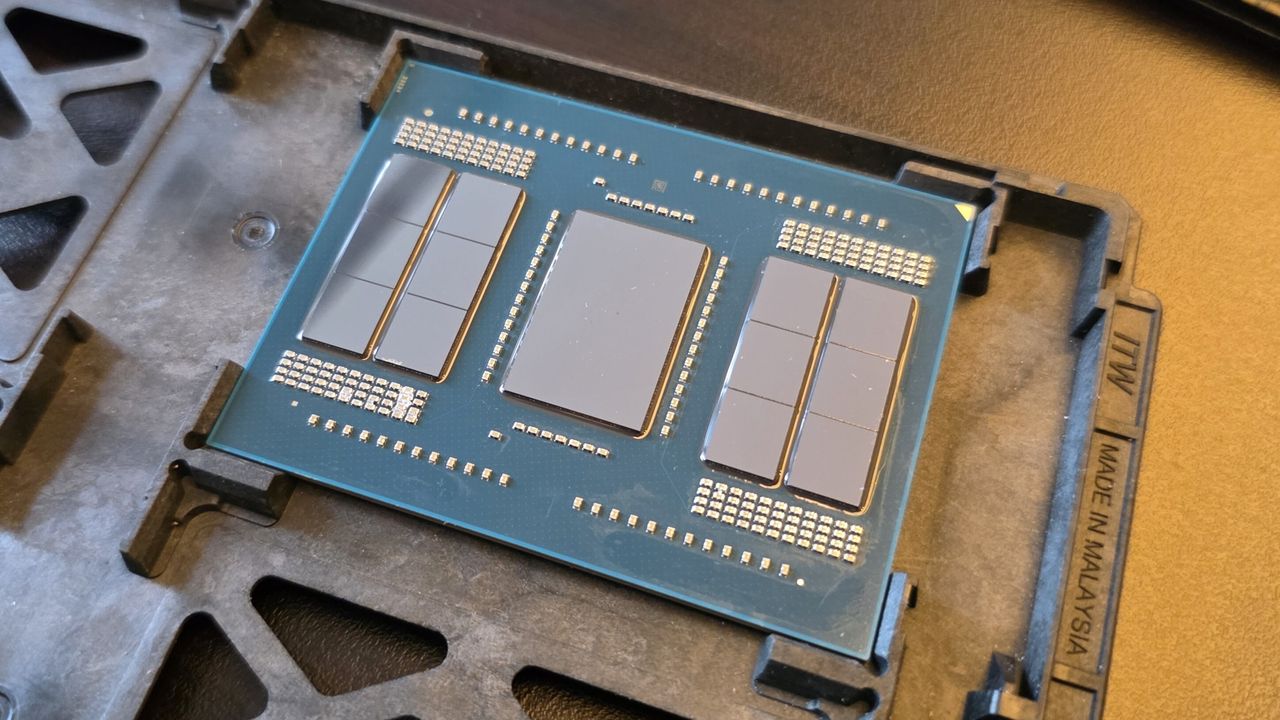
AMD has begun to reveal the first official details regarding its upcoming generation of Threadripper CPUs, known by the codename 'Mustang Peak'. This series of processors has long been a benchmark for high-end workstations and compact servers, areas where computing power and the ability to handle large data volumes are essential requirements. The announcement, although preliminary, provides clear indications of the technological directions AMD intends to take to consolidate its position in the High-Performance Computing (HPC) segment.
Threadripper CPUs are particularly valued in professional contexts ranging from digital content creation to engineering, scientific workloads, and increasingly, the processing of artificial intelligence models locally. For companies that prioritize on-premise deployments for data sovereignty reasons or control over operational costs (TCO), the evolution of hardware platforms like Threadripper represents a key factor in infrastructure planning.
Technical Details and AI Implications
The emerging details highlight three fundamental pillars for the 'Mustang Peak' platform: support for DDR5 memory, the adoption of the PCIe 6.0 standard, and the introduction of a new socket. Each of these specifications brings significant implications for system performance and flexibility.
The transition to DDR5 memory promises a substantial increase in bandwidth compared to the previous generation, a critical aspect for applications requiring rapid access to large datasets, such as the training or Inference of Large Language Models. Greater memory bandwidth allows CPU cores to process more data per cycle, reducing bottlenecks and improving overall system throughput. Concurrently, the integration of PCIe 6.0 doubles the bandwidth per lane compared to PCIe 5.0, facilitating ultra-fast connections with external accelerators, such as high-performance GPUs. This capability is vital for AI pipelines, where efficient data transfer between CPU and GPU can drastically impact latency and processing speed. Finally, the new socket indicates a revised architecture, necessary to support these new technologies and potentially a greater number of cores or other chip-level innovations.
On-Premise Context and Data Sovereignty
For organizations choosing to keep their AI workloads on-premise, the evolution of Threadripper CPUs with these advanced features is of great interest. The ability to have high memory bandwidth and a latest-generation PCIe interface directly in a self-hosted environment offers unprecedented control over computational resources. This is particularly relevant for scenarios requiring maximum data sovereignty, where sensitive information cannot leave the boundaries of the corporate infrastructure, or for air-gapped environments.
The choice of an on-premise deployment, supported by robust hardware, allows for the optimization of the Total Cost of Ownership (TCO) in the long term, avoiding the variable and often unpredictable costs associated with cloud services. Although the initial investment (CapEx) may be higher, direct management of hardware and the ability to customize the infrastructure for specific AI workload needs can translate into operational efficiencies and greater security. For those evaluating on-premise deployments, AI-RADAR offers analytical frameworks on /llm-onpremise to assess the trade-offs between control, performance, and costs.
Future Prospects for AI Infrastructure
The introduction of CPUs like AMD's 'Mustang Peak' underscores a clear trend in the industry: foundational hardware continues to evolve to support increasingly demanding workloads. While GPUs remain the workhorses for large-scale LLM training and Inference, high-performance CPUs play a crucial role in orchestration, data pre-processing, post-processing, and managing smaller models or specific stages of the AI pipeline.
These technological advancements offer CTOs, DevOps leads, and infrastructure architects more options for building resilient and high-performing local AI stacks. The combination of powerful CPUs, fast memory, and high-speed interconnects is fundamental for creating an infrastructure that can handle the complexities of modern Large Language Models, while ensuring the control and security required by current regulations and corporate policies. AMD's focus on these areas strengthens the landscape of available solutions for a more distributed and controlled AI.






💬 Comments (0)
🔒 Log in or register to comment on articles.
No comments yet. Be the first to comment!