Taiwan chipmakers quietly fill gaps left by Korea's HBM push
The global semiconductor manufacturing landscape is constantly evolving, with market dynamics directly influencing the availability of critical components for artificial intelligence. In this context, Taiwanese chipmakers are quietly taking on an increasingly central role in filling gaps in the supply of High Bandwidth Memory (HBM), an essential component for modern AI computing architectures.
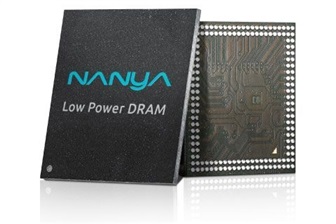
This trend emerges as the Korean semiconductor industry, traditionally a leader in this segment, appears to be focusing its resources on other strategic areas. Companies like Nanya, cited as a reference, exemplify how Taiwan is strengthening its position in the global supply chain, ensuring greater resilience and diversification for a rapidly expanding market.
The crucial role of HBM memory for AI
High Bandwidth Memory (HBM) is a high-performance memory technology distinguished by its ability to offer significantly higher bandwidth compared to traditional GDDR memories. This characteristic makes it indispensable for high-end GPUs and AI accelerators, where data access speed is a limiting factor for the training and inference performance of Large Language Models (LLM) and other complex workloads.
For teams managing on-premise AI deployments, the availability of HBM-equipped GPUs is a fundamental requirement. The amount of VRAM and its bandwidth directly influence the size of models that can be loaded, the manageable batch size, and ultimately, the system's throughput and latency. An HBM shortage can therefore translate into significant bottlenecks, impacting the overall TCO and the ability to scale self-hosted AI infrastructures.
Market dynamics and deployment implications
Strategic decisions by major memory manufacturers, such as those leading to a reorientation of Korean production, have direct repercussions on the global supply chain. The intervention of Taiwanese manufacturers to compensate for these gaps signals how the market is striving to adapt to the growing demand for HBM, driven by the explosion of generative AI.
For CTOs, DevOps leads, and infrastructure architects, understanding these dynamics is vital. Reliance on a limited number of suppliers for critical components like HBM can introduce risks related to availability, costs, and supply chain stability. Diversifying sources, including through the emergence of new players or the strengthening of existing ones in other regions, can help mitigate these risks and ensure greater security for investments in on-premise AI infrastructures.
Future outlook and supply chain resilience
The current scenario highlights the increasing interdependence among various actors in the semiconductor supply chain and the need for a global strategy to ensure resilience. As the demand for AI computing capacity continues to grow exponentially, the availability of key components like HBM will remain a critical factor.
The commitment of Taiwanese manufacturers not only supports the growth of the AI sector but also contributes to greater market stability. For companies evaluating on-premise deployments, the ability to access a diversified and reliable supply of hardware is crucial for optimizing TCO, maintaining data sovereignty, and ensuring compliance. AI-RADAR offers analytical frameworks on /llm-onpremise to evaluate these trade-offs and support informed decisions.







💬 Comments (0)
🔒 Log in or register to comment on articles.
No comments yet. Be the first to comment!