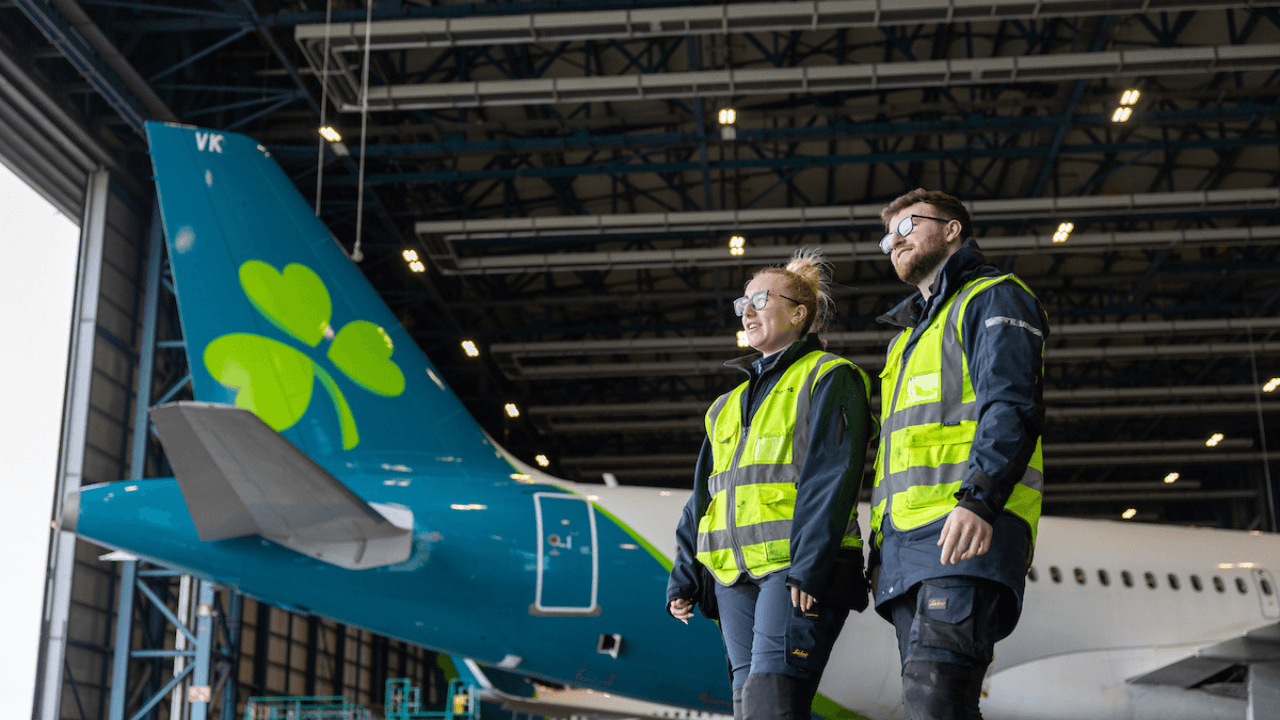
Ten years ago, when IAG launched its innovation arm, IAGi, few would have bet on a model capable of surviving aviation’s complexity. Today, with over 70 active business challenges and a freshly announced €200 million venture fund, that model has both the numbers and the method to serve as a case study.
The core is easy to describe, harder to execute: don’t chase technology for its own sake. “If our conversion rate were 80%, I’d question whether we were genuinely testing innovation or just another procurement channel,” says Nisha Basson-Mugnier, the Group’s innovation leader. The real figure hovers between 30 and 40% – a window that says a lot about how a complex organization can absorb startups without betraying its role.
The final call stays with the airlines
The IAGi accelerator runs on two tracks. Deploy is a 12-week programme for startups with market-ready products: they are tested in live operational environments, from aircraft maintenance to passenger experience. Discover targets earlier-stage deeptech, offering six months of mentorship to validate technologies such as SAF or carbon removal before they reach the market. In both cases, IAGi does not decide which startups advance; the individual airlines – British Airways, Iberia, Aer Lingus, Vueling – pick only those that match a concrete operational need.
This reversal of perspective may be the most important lesson for anyone building AI solutions for the enterprise. It’s not how clever an algorithm is, but whether it can slide into real processes. The story of AISmartPlan, which entered the accelerator in 2025, proves it: in three months the startup turned a proof-of-concept into a maintenance planning system used by Aer Lingus, integrating flight schedules, aircraft availability and workforce constraints. No spectacular tech, just a response to a daily pain point.
From pilot to production: numbers that matter
Only about 10% of accelerated startups then receive investment from the IAG Ventures fund. The reason is that the venture team seeks not only financial returns but strategic value for the airlines – and the two don’t always overlap. Assaia, which uses computer vision to optimise aircraft turnarounds, is among the exceptions: after the accelerator it received investment and later closed a $26.6 million Series B. ZeroAvia, focused on hydrogen-powered aviation, followed a similar path from a British Airways Series A to a direct IAG investment in its Series B.
For those building on-premise AI stacks, these numbers offer a parallel: moving from a pilot project to a stable production deployment is the real test. Many LLMs remain confined to experimental sandboxes not because they are technically inadequate, but because they lack a tight fit with a real operational flow. IAG’s airlines operate in regulated environments, with sensitive data and legacy systems that are hard to dislodge – not so different from a company evaluating a self-hosted LLM on local infrastructure, where security, latency and integration with existing applications tip the balance.
The next cycle: operational AI and robotics
IAGi’s attention today is on operational AI, robotics, fuel efficiency and disruption management. Startups applying AI to very specific aviation problems, integrating directly into the software airlines already use. “When major disruptions occur, rebuilding a flight schedule is incredibly complex: AI can evaluate many more scenarios than a person, and much faster,” notes Basson-Mugnier.
What emerges is a clear direction: fewer experiments with VR headsets or premium cabin experiences, more attention to what keeps operations running. A lesson learned over ten years of trial and error. For teams developing enterprise AI today, the message is consistent: find a real business problem, get your hands dirty with operational data, and stay close to the business. No accelerator can replace that.








💬 Comments (0)
🔒 Log in or register to comment on articles.
No comments yet. Be the first to comment!