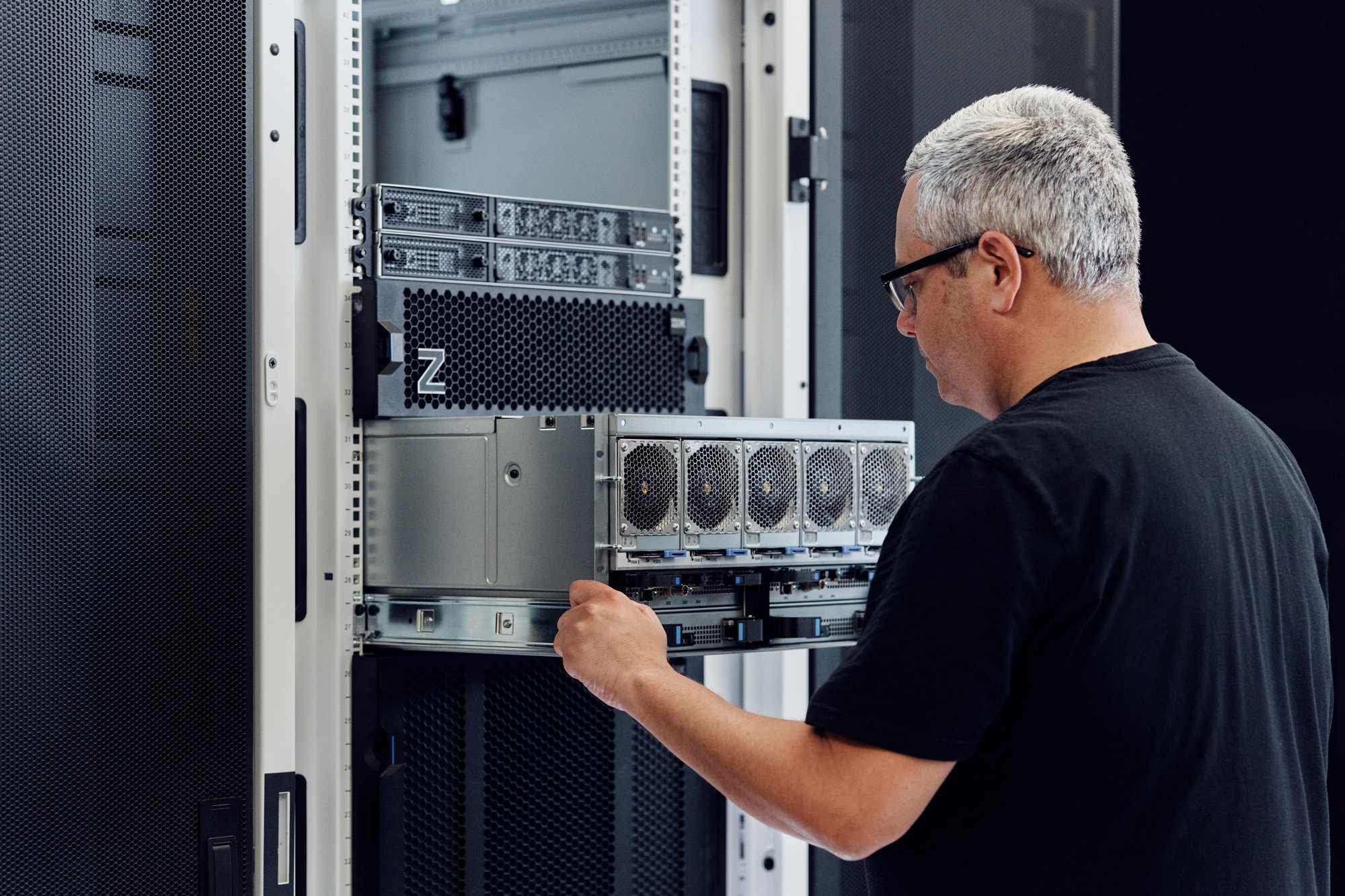
IBM isn’t loosening its grip on on-premise computing, and it’s doing so with a concrete move: bringing mainframe architecture into smaller, more affordable boxes. With the expansion of the z17 and LinuxONE 5 lines, the company introduces for the first time single-frame and rackmount options, alongside a curious 18U LinuxONE Express box aimed at new customers. It’s a redesign that targets substance: making critical, isolated, tamper-resistant computing a realistically budget-friendly choice for organizations that until now have seen mainframes as the domain of large banking data centers.
The implications lie at the intersection with the on-premise AI world. Anyone tracking the adoption of Large Language Models in regulated contexts – healthcare, legal, manufacturing – knows that data sovereignty and controlled latency push toward self-hosted setups. So far, the debate has polarized between dedicated GPUs and Kubernetes stacks on bare metal. The arrival of compact mainframes – and specifically the LinuxONE Express, which runs Linux natively – introduces a third contender: a system with hardware-based security, pervasive encryption, and a near-mythical uptime reputation, all packed into a footprint that no longer demands a dedicated data center room.
This isn’t just a downsizing of legacy hardware. The structural signal is that IBM sees a mid-market willing to invest in on-premise for inference and light training workloads when privacy is the primary requirement. For cloud providers, this means the enterprise AI battle won’t be fought entirely on their servers: islands of local processing will exist, and in vertical sectors they could capture significant chunks of IT budgets. For AI tooling software houses, it creates the need to certify their frameworks on IBM Z architectures – a non-trivial constraint that might slow adoption but also carve out high-value integration niches.
A more interesting second-order effect emerges. The LinuxONE Express – an 18-rack-unit box that can be shipped, connected, and put into production without the army of channel technicians typical of traditional mainframes – also lowers a cultural barrier. In many firms, the word “mainframe” still conjures complexity and obscene costs. Now IBM is offering an object that can be bought almost like an x86 server, yet with firmware-isolated virtual machines and encryption at rest and in motion. For banks exploring generative AI applications without exposing data to third-party providers, it’s a concrete negotiating lever. For European regulators, it could silently become a benchmark: if a company processes sensitive personal data and chooses not to use such architectures, it might need to explain why.
There are unknowns, of course. Total cost of ownership must factor in software licensing and management skills that the average Linux sysadmin rarely has. Moreover, compatibility with mainstream LLM frameworks isn’t guaranteed: if a model doesn’t run natively on s390x, porting work could erode cost and time advantages. Still, for those evaluating on-premise deployment of critical AI pipelines, an option now exists that wasn’t even on the table two years ago, and it deserves at least a feasibility analysis.







💬 Comments (0)
🔒 Log in or register to comment on articles.
No comments yet. Be the first to comment!