
Nvidia and the AI Rack Wave: A Stirring Market
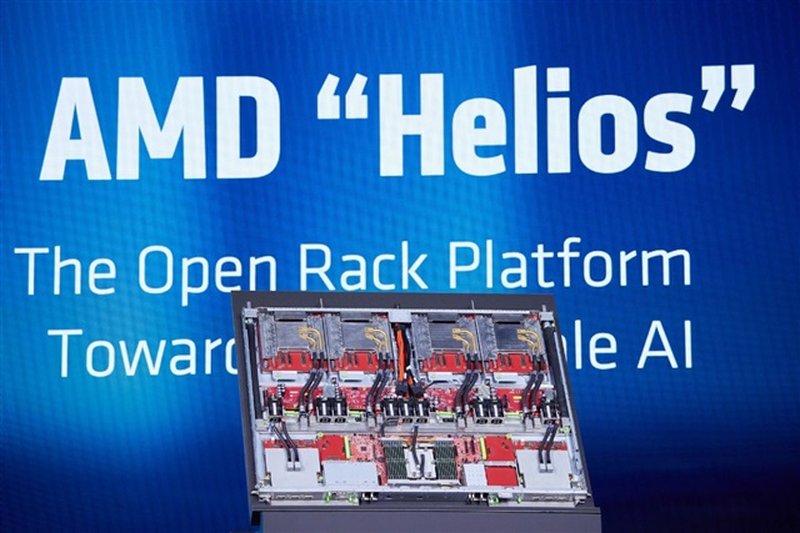
Forecasts for Nvidia's upcoming financial results indicate a period of strong growth, driven by a significant increase in demand for artificial intelligence infrastructure. Supply chains, in particular, express growing optimism, suggesting that the company is well-positioned to capitalize on the current market expansion. This scenario is closely linked to the so-called "AI rack boom," a phenomenon highlighting a race to adopt specialized hardware solutions to manage complex workloads related to Large Language Models (LLM) and other artificial intelligence applications.
Nvidia CEO Jensen Huang has repeatedly emphasized the strategic importance of these infrastructures. The widespread optimism among suppliers is not only an indicator of Nvidia's financial health but also a barometer of accelerating global investments in AI computing capabilities, both in cloud environments and, increasingly, in on-premise contexts.
The Impact of Hardware on Enterprise AI
The concept of an "AI rack" refers to integrated servers and systems specifically designed for accelerating artificial intelligence workloads. These systems are typically equipped with a high number of high-performance GPUs, high-bandwidth interconnects, and optimized storage solutions. For companies implementing LLMs and other AI applications, hardware specifications become crucial. Factors such as available VRAM per GPU, computational throughput, and latency in token processing are decisive for model efficiency and scalability.
Robust and well-configured infrastructure is essential for fine-tuning complex models or for large-scale inference. The choice between different hardware configurations, for example, between GPUs with varying memory capacities, directly impacts the size of models that can be run, the manageable batch size, and ultimately, the overall TCO of the deployment. This makes hardware selection and optimization a strategic decision for CTOs and system architects.
On-Premise or Cloud: The Strategic Choice for AI
The "AI rack boom" is not just a growth indicator for hardware manufacturers; it also reflects a broader trend among enterprises to carefully evaluate their AI deployment strategies. Many organizations are exploring or adopting self-hosted and bare metal solutions for their AI workloads, driven by data sovereignty requirements, regulatory compliance (such as GDPR), and the need to operate in air-gapped environments for security reasons.
On-premise deployment offers granular control over the entire AI pipeline, from data management to inference optimization. While it requires a more significant initial investment (CapEx) compared to cloud-based OpEx models, it can lead to a lower TCO in the long term, especially for intensive and predictable workloads. The decision between an on-premise, hybrid, or entirely cloud-based approach involves a complex evaluation of costs, performance, security, and flexibility. For those evaluating on-premise deployment, AI-RADAR offers analytical frameworks on /llm-onpremise to explore these trade-offs and support informed decisions.
Future Outlook and Challenges
The optimism from supply chains regarding Nvidia's results underscores the centrality of high-performance silicon in the artificial intelligence landscape. However, the rapid evolution of Large Language Models and the increasing complexity of their architectures pose continuous challenges. Companies must not only acquire appropriate hardware but also develop internal expertise to manage the infrastructure, optimize models through techniques like quantization, and ensure that deployment pipelines are efficient and scalable.
The AI rack market is set to remain a dynamic sector, with continuous innovations aimed at improving energy efficiency, compute density, and connectivity. For technical decision-makers, staying updated on these evolutions is crucial for building and maintaining an AI infrastructure that is not only powerful but also sustainable and aligned with the organization's strategic objectives.







💬 Comments (0)
🔒 Log in or register to comment on articles.
No comments yet. Be the first to comment!