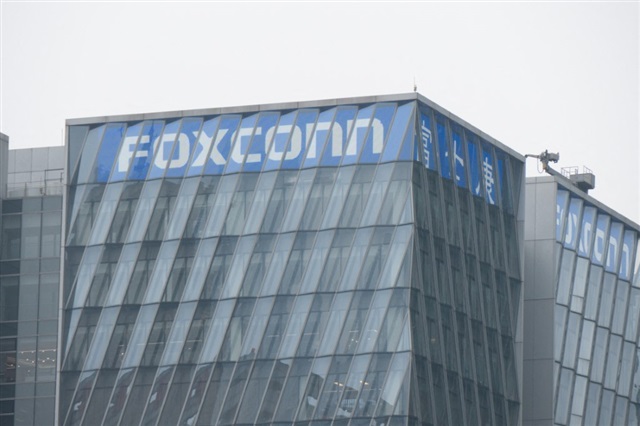
AI and the Transformation of the Global Supply Chain
The rapid advancement of artificial intelligence, particularly in the field of Large Language Models (LLMs), is triggering a profound reshaping of the global Electronics Manufacturing Services (EMS) supply chain. This shift is not merely about increased production volumes but also reflects the growing complexity and specific technical requirements of the hardware needed to support AI workloads. In this evolving scenario, Taiwanese firms are consolidating and expanding their leadership in the sector, a sign of their ability to adapt and innovate in a rapidly expanding market.
The demand for high-performance components, such as GPUs with high VRAM and specialized processors for AI model inference and training, is constantly growing. This has a direct impact on semiconductor manufacturers and system integrators, who must meet increasingly stringent requirements in terms of production capacity, efficiency, and technological innovation. The ability to supply these hardware solutions has become a critical factor for the widespread adoption of AI at the enterprise level.
The Crucial Role of Hardware and On-Premise Deployment
The explosion of LLMs and other AI applications demands increasingly powerful and specialized computing infrastructures. Organizations, from CTOs to DevOps leads, evaluating the deployment of these models, for both inference and training, face complex decisions. The choice between cloud solutions and self-hosted on-premise options is influenced by multiple factors, including data sovereignty, compliance requirements, latency, and, not least, the long-term Total Cost of Ownership (TCO).
Specific hardware, such as GPUs equipped with large amounts of VRAM and high parallel computing capabilities, has become a critical bottleneck. The availability of these components, and the ability to assemble them into robust and scalable systems, is fundamental to sustaining innovation and ensuring adequate performance. For those opting for an on-premise deployment, the security of hardware procurement and efficient management of the production pipeline become strategic aspects.
Dynamics of the EMS Supply Chain and Taiwanese Leadership
Electronics Manufacturing Services (EMS) represent the core of complex device production, from servers to GPU modules. Taiwan's ability to extend its leadership in this sector is closely linked to a consolidated ecosystem that includes cutting-edge semiconductor manufacturers and assemblers with decades of experience in precision manufacturing. This concentration of key component production and final assembly has significant implications for the resilience and security of the global supply chain.
Enterprises seeking to build their on-premise AI infrastructure are directly dependent on the ability of this supply chain to meet growing demand. The specialization and efficiency of Taiwanese firms allow for the management of complex AI hardware production, but at the same time highlight a potential vulnerability due to geographical concentration. Understanding these dynamics is essential for strategic planning of AI infrastructures.
Future Prospects and Challenges for AI Infrastructures
The reliance on a geographically concentrated supply chain presents both advantages in terms of efficiency and specialization, as well as risks related to potential disruptions or demand fluctuations. For CTOs, infrastructure architects, and technology decision-makers, strategic hardware procurement planning is more critical than ever. Evaluating the trade-offs between the agility and scalability of the cloud and the control, data sovereignty, and potential lower TCO offered by self-hosted solutions requires in-depth, data-driven analysis.
AI-RADAR, for example, offers analytical frameworks to support on-premise deployment decisions, helping to navigate the complexities related to CapEx, OpEx, and specific AI workload requirements. The future of artificial intelligence will depend not only on the innovation of models and algorithms but also on the robustness, availability, and security of the physical infrastructures that support them. Ensuring a resilient and diversified supply chain will be a strategic priority for businesses globally.






💬 Comments (0)
🔒 Log in or register to comment on articles.
No comments yet. Be the first to comment!