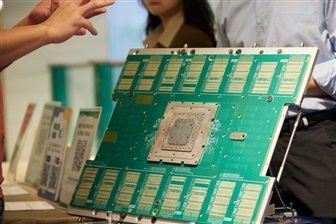
The AI Wave and Its Impact on the Supply Chain
The artificial intelligence sector is experiencing an unprecedented phase of expansion, with constantly growing demand for increasingly high computing capabilities. This phenomenon, often referred to as the 'AI boom,' is creating a ripple effect across the entire global technology supply chain. According to a recent DIGITIMES report, Taiwanese chip testing firms recorded record financial results in the first quarter of 2026, a clear indicator of the intense pressure and activity characterizing the market.
This exceptional performance highlights how the semiconductor industry, and particularly the testing segment, has become a fundamental pillar for the development and deployment of Large Language Models (LLM) and other AI applications. The ability to produce and validate high-quality hardware is directly related to companies' capacity to implement robust and reliable AI solutions, both in the cloud and in self-hosted environments.
The Crucial Role of Testing in AI Silicio Production
Chip testing is an indispensable phase in the lifecycle of any semiconductor, but it takes on even greater importance when it comes to silicio destined for AI. Graphics Processing Units (GPUs) and dedicated AI accelerators are extremely complex architectures, characterized by high transistor density, high-bandwidth VRAM, and sophisticated interconnections. Ensuring that each component functions correctly, meets performance specifications, and is free of defects is crucial for the reliability and efficiency of AI systems.
Rigorous testing ensures that computing units can handle intensive workloads, such as LLM Inference or Fine-tuning, without errors or performance degradation. For CTOs and infrastructure architects evaluating on-premise deployments, hardware quality and resilience are absolute priorities. A defective chip can compromise an entire AI project's pipeline, causing delays, additional costs, and a reduction in overall throughput. Investment in testing therefore translates into greater stability and predictability for AI infrastructures.
Implications for On-Premise Deployments and Data Sovereignty
The health and robustness of the semiconductor supply chain have direct implications for organizations choosing to implement AI solutions in self-hosted or air-gapped environments. The availability of tested and reliable hardware is a critical success factor for these deployments. Companies opting for on-premise infrastructures often do so for reasons related to data sovereignty, regulatory compliance, or total control over their technology stack.
In this context, the ability to access cutting-edge GPUs with high VRAM and guaranteed performance becomes essential. The Total Cost of Ownership (TCO) of an on-premise AI infrastructure is strongly influenced not only by the initial hardware cost but also by its longevity and reliability. A rapidly growing testing market, like Taiwan's, suggests a supply chain capable of sustaining the demand for quality components, a reassuring aspect for those investing in bare metal solutions. For those evaluating the trade-offs between cloud and on-premise, AI-RADAR offers analytical frameworks on /llm-onpremise to support informed decisions.
Future Prospects and Challenges of the AI Supply Chain
The record reported in Q1 2026 by Taiwanese chip testing firms is not just a financial figure but a signal of the direction the AI industry is taking. It indicates sustained demand and continuous innovation in dedicated silicio. However, this growth also brings challenges. The complexity of future AI chips will require even more advanced and costly testing methodologies, potentially creating new bottlenecks in the supply chain.
The reliance on a limited number of key players in the production and testing of cutting-edge semiconductors remains a point of concern for global resilience. As LLMs become larger and more sophisticated, hardware requirements will continue to evolve, pushing the limits of current technology. Maintaining a robust and diversified supply chain will be crucial to ensure that AI innovation can continue to thrive, supporting the deployment needs of companies worldwide.






💬 Comments (0)
🔒 Log in or register to comment on articles.
No comments yet. Be the first to comment!