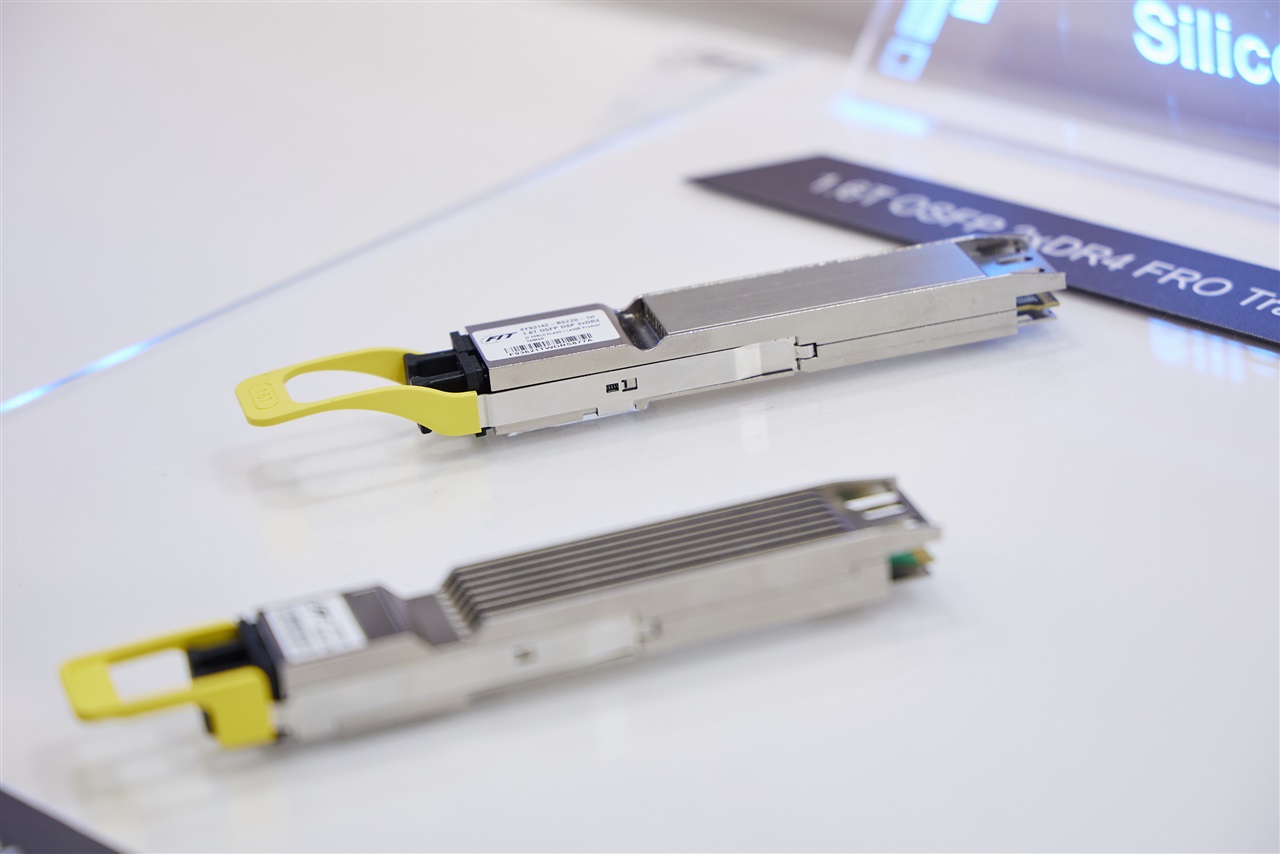
The expansion of artificial intelligence infrastructure is selectively irrigating the hardware supply chain, and in Taiwan — the epicenter of data center components — the picture already reads like a diverging chart. On one side, producers of Copper Clad Laminate (the base material for printed circuit boards) and suppliers of rack rails for servers are running at full capacity; on the other, optical module manufacturers find themselves in a much murkier phase, caught between oversupply and price pressure.
The thrust comes directly from the training and inference equipment race, which is saturating assembly lines for GPUs and high-density servers. CCL — copper and fiberglass panels — is the raw material for every PCB hosting chips, VRAM, and power delivery circuits, so its consumption scales nearly in lockstep with the number of accelerator boards produced. Less visible but equally critical are the mechanical components: the metal rails on which server drawers slide into racks are seeing exceptional demand, because every new compute node added to data centers — whether cloud or on-premise — requires precise physical housings, vibration-resistant and suited for rapid maintenance swaps.
The optical module story is different and more instructive. These devices, which convert electrical signals into light pulses for high-bandwidth links between servers and switches, have long been an essential ingredient for scaling AI clusters. Today, however, the market tells a more complicated story: adoption of higher speeds (from 400G to 800G and beyond) proceeds in fits and starts, customers postpone upgrades, and inventories at some suppliers pile up. The result is downward pressure on margins, while technology advances faster than paying demand. This is exactly the symptom of an ecosystem in which hype translates into actual orders only for components that represent immediate bottlenecks — the physical substrate of the machines — while interconnect elements, which will become crucial as clusters grow larger, suffer a timing mismatch between investment and returns.
For those watching the supply chain through the eyes of a system integrator or an on-premise infrastructure manager, these asymmetries are not industry curiosities but signals to decode. Tightness in CCL and mechanical components translates into higher procurement costs for every server node, stretching the payback period for self-hosted deployments. Conversely, an oversupplied optical module market could contain high-speed networking expenses, making distributed architectures viable that until recently seemed prohibitive for tighter budgets. The gap between hardware segments, in short, is not just a Taiwanese phenomenon but an early indicator of which cost items will burden — or lighten — the accounts of those choosing to keep AI workloads directly under their control, outside public clouds.









💬 Comments (0)
🔒 Log in or register to comment on articles.
No comments yet. Be the first to comment!