
The news, not yet confirmed by the parties involved, sends a clear signal: Paul Meade, Apple’s vice president in charge of the Vision Pro headset, is reportedly moving to OpenAI to work on its hardware team. Beyond the individual career move, the shift speaks volumes about the concrete material ambitions of a company known to most for its Large Language Models.
A hardware-driven profile
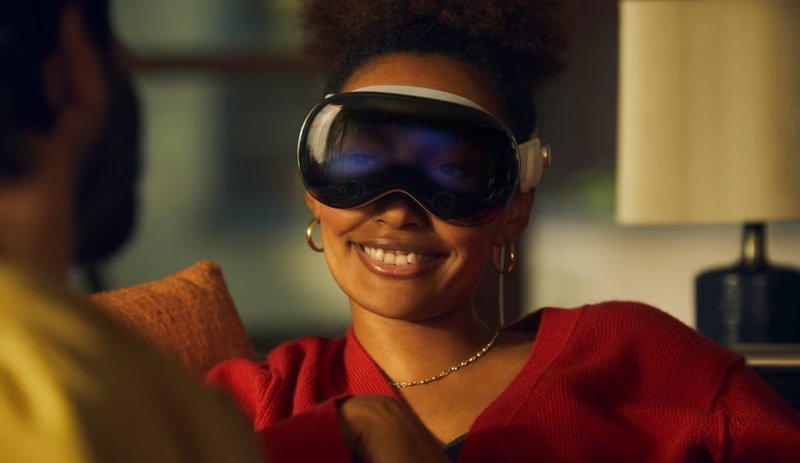
At Apple, Meade led the development of one of the most complex products in recent memory: the Vision Pro, a spatial computing device that crams an impressive number of sensors, displays, and processors into a wearable form factor. Before that, he worked on display and augmented reality technologies. His background is not that of a software manager, but of someone with deep knowledge of supply chains, custom component integration, and the thermal and power challenges of a high-performance standalone system.
OpenAI’s hardware bet
OpenAI’s hardware forays are not new. Rumors have circulated for months about a consumer AI device—perhaps a wearable or an advanced voice terminal—and about collaborations with top designers. Meade’s arrival adds substance: it suggests the company isn’t just designing chips (as discussed with various suppliers) but is aiming for a fully integrated physical product. Here Apple’s playbook matters: Cupertino is a master of vertical integration, where software dictates silicon requirements and vice versa. OpenAI could be looking to replicate that philosophy to optimize inference directly on the device, reducing cloud dependence and opening new possibilities for privacy and latency.
What it means for on-premise adoption
For organizations already evaluating on-premise LLM deployments—companies seeking control, data sovereignty, or predictable TCO—any signal of more efficient hardware architectures is worth watching. If OpenAI were to develop an edge device capable of running quantized models at low power, the ripple effects on GPU vendors, on serving frameworks like vLLM or llama.cpp, and on the entire self-hosted ecosystem could be significant. This is not science fiction: we are already at a point where quantization pushes the boundaries of what is feasible on consumer hardware. Injecting expertise like Meade’s could accelerate the maturation of devices designed for local inference without sacrificing quality, paving the way for new hybrid edge-cloud architectures.
An open outlook
It’s too early to say whether this move will lead to an AI headset, a wearable assistant, or a home inference server. But the message is clear: OpenAI is investing in physicality and integration. For readers of AI-RADAR, and more broadly for anyone in the enterprise AI market, this is a piece worth tracking because the future of inference may not reside entirely in data centers.






💬 Comments (0)
🔒 Log in or register to comment on articles.
No comments yet. Be the first to comment!