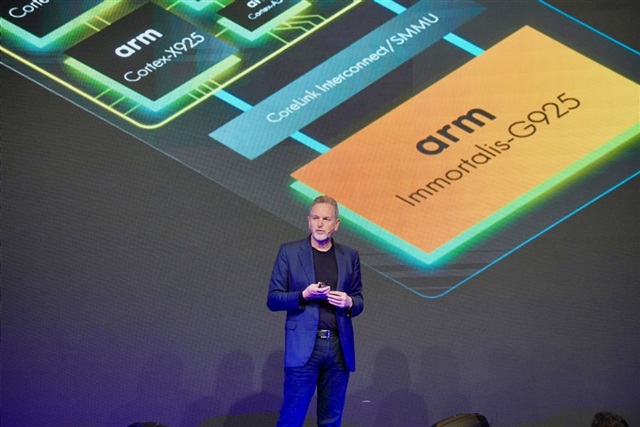
When the CEO of a company that defines global chip architecture says the future of AI lies «beyond GPUs», it is worth paying attention. Not because gigawatts of parallel computing are suddenly useless, but because the nature of the workload itself is changing — and with it, the hardware map that matters.
The reasoning, recently expressed by Arm’s CEO, is as simple as it is disruptive: AI agents — autonomous systems that perform iterative tasks, make decisions, and interact with software and data in continuous loops — are radically different workloads from training a language model or running a single inference request. More than brute computation, they demand orchestration, logical branching, memory management, and predictable latency. All areas where CPUs excel in efficiency, especially Arm architectures with their performance-per-watt ratio.
For those working in the on-premise universe — companies handling sensitive data and evaluating real TCO — this prospect has structural implications. Today an agent pipeline can run on a CPU cluster at a fraction of the energy and capital cost of an equivalent GPU installation, manageable without cloud dependencies or specialized cooling infrastructure. Data sovereignty, in this scenario, stops being a regulatory luxury and becomes an economically viable option.
The transition is not binary. GPUs remain essential where parallel compute density is non-negotiable — training, quantization, models with extended context windows. But as AI agents become the dominant form of inference, the CPU-GPU balance shifts. The beneficiaries are processor IP vendors (with Arm at the forefront), system integrators building servers optimized for mixed workloads, and organizations aiming for locally controlled, scalable infrastructure without runaway cloud bills.
This creates an interesting friction with Nvidia’s current monopoly in the data center software stack. If value moves toward the CPU’s ability to orchestrate hundreds of agents in parallel, the CUDA lock-in weakens. It is no coincidence we are seeing a proliferation of runtimes and frameworks (from well-known names to solutions like llama.cpp, vLLM, TensorRT-LLM) that enable CPU-based inference with obsessive focus on quantization and efficient use of VRAM — or system RAM when the GPU is not required. Arm’s message accelerates this trajectory, signaling to investors and CTOs that the next generation of AI infrastructure may be less flashy but more profitable for those who control it.
The stakes for Italy and Europe are not marginal: an AI infrastructure built on low-power CPUs and hosted on-site is far more compatible with GDPR constraints and public spending limits than massive cloud GPU clusters. This is not about abandoning brute force, but recognizing that the next phase of AI rewards architectural intelligence, not just computational muscle.






💬 Comments (0)
🔒 Log in or register to comment on articles.
No comments yet. Be the first to comment!