Nvidia's Acceleration and its Supply Chain Repercussions
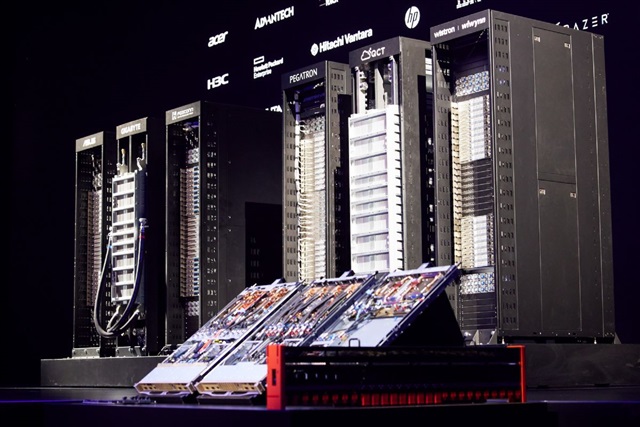
Nvidia, a dominant player in the artificial intelligence landscape, is renowned for its relentless pace of innovation. The company consistently introduces new architectures and increasingly powerful GPUs, pushing the boundaries of computing capabilities for training and inference of Large Language Models (LLMs) and other AI workloads. While this accelerated development cycle fuels technological progress, it is simultaneously creating considerable pressure on its supply chain partners.
The demand for AI accelerators, particularly high-end GPUs with ample VRAM and processing power, has exploded in recent years. The need to support increasingly larger and more complex models requires cutting-edge hardware infrastructure, which Nvidia strives to provide with frequent updates. However, this speed of iteration is not without consequences, severely testing the ability of component suppliers and assembly manufacturers to keep pace with demand.
Technical and Logistical Challenges of AI Production
The production of advanced chips, such as those from Nvidia, is an extremely complex process that requires state-of-the-art manufacturing technologies and a well-orchestrated global supply chain. Each new GPU generation often introduces specific requirements regarding materials, production processes, and assembly, making it difficult for partners to adapt quickly. The need to integrate new memory types (like HBM), high-speed interconnects (like NVLink), and advanced packaging further complicates the picture.
This complexity translates into potential bottlenecks. Lead times for critical components can lengthen, and suppliers' production capacity may not be sufficient to meet growing demand. For companies relying on these technologies, this means uncertainty in procurement planning and delays in deployments, directly impacting AI projects that require specific hardware to achieve their performance and throughput objectives.
Implications for On-Premise Deployments and TCO
For organizations prioritizing on-premise deployments due to data sovereignty, compliance, or to optimize long-term Total Cost of Ownership (TCO), the strains in Nvidia's supply chain represent a significant challenge. Difficulty in acquiring desired GPUs can delay the implementation of self-hosted AI infrastructures, affecting the ability to perform LLM training or inference in controlled and air-gapped environments.
Furthermore, scarcity and high demand can lead to price fluctuations, making it harder for CTOs and infrastructure architects to forecast capital expenditures (CapEx) and evaluate overall TCO. The rapid perceived obsolescence of hardware, due to the introduction of new generations, can also influence investment decisions, prompting companies to carefully consider the lifecycle and return on investment of their AI platforms. AI-RADAR offers analytical frameworks on /llm-onpremise to evaluate these complex trade-offs, supporting strategic decisions.
Future Outlook and Strategic Diversification
The current situation highlights the need for companies to adopt a strategic and diversified approach to AI hardware procurement. While Nvidia maintains a leadership position, supply chain challenges could encourage greater exploration of alternative solutions, including accelerators from other vendors like AMD and Intel, or the development of custom silicon (ASICs) for specific workloads. This could lead to a more heterogeneous AI hardware ecosystem in the medium to long term.
For decision-makers, it becomes crucial not only to monitor technological evolution but also to carefully assess the supply chain resilience of their vendors. The ability to ensure access to high-performance and reliable hardware will be a determining factor for the success of AI projects, especially for those requiring strict control over infrastructure and data through on-premise or hybrid deployments.






💬 Comments (0)
🔒 Log in or register to comment on articles.
No comments yet. Be the first to comment!