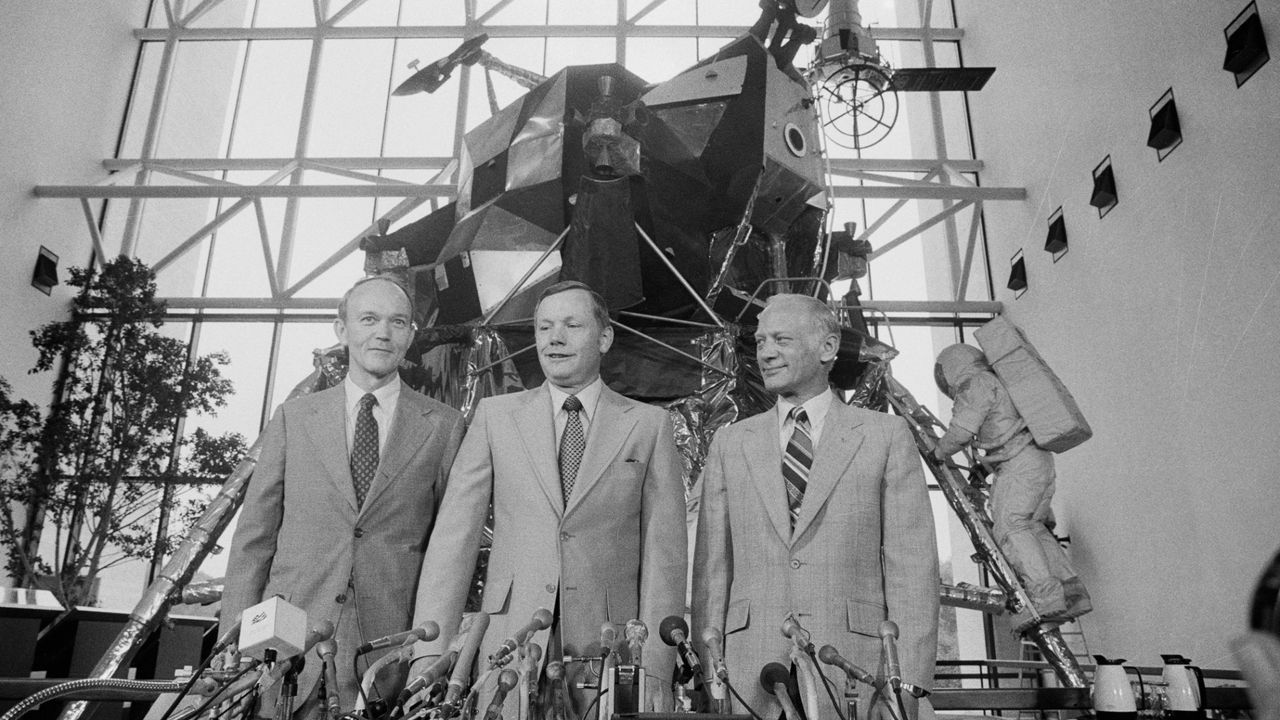
Apollo 11 Code: An Open Source Digital Legacy
The National Aeronautics and Space Administration (NASA) has recently taken a significant step for the global tech community by making public the original source code of the historic Apollo 11 mission. This includes the code repositories for the Command Module and the Lunar Module, now available as public domain resources. The initiative is not only a tribute to one of humanity's greatest engineering feats but also offers a valuable opportunity for study and analysis for developers, engineers, and computer history enthusiasts.
The decision to make this code accessible underscores the intrinsic value of transparency and knowledge sharing. For decades, the software that guided astronauts to the Moon has been a subject of fascination and study, but its full accessibility opens new avenues to understand the challenges and solutions adopted in an era when computational resources were extremely limited.
Pioneering Software Engineering and its Modern Relevance
The Apollo 11 code, primarily written in assembly language for the Apollo Guidance Computer (AGC), represents a masterpiece of software engineering. Its architecture was designed to be extremely robust and fault-tolerant, essential characteristics for a mission where every line of code could have catastrophic consequences. Analyzing this code offers unique insights into how critical systems were designed and implemented before the advent of modern Frameworks and agile development methodologies.
For professionals currently dealing with complex infrastructures, such as on-premise Large Language Models (LLM) deployments, studying such a foundational system can be illuminating. The need to ensure reliability, security, and total control over software and hardware is a principle that transcends eras and technologies. Understanding how pioneers managed complexity with minimal resources can inspire innovative solutions for current challenges, especially in contexts where data sovereignty and system integrity are absolute priorities.
Implications for Data Sovereignty and Open Source
The availability of the Apollo 11 code as a public domain resource reinforces the principle that foundational knowledge, especially that which has shaped history, should be accessible to all. This aligns with the Open Source philosophy, which promotes collaboration and innovation through sharing. In the current AI landscape, where the choice between cloud and self-hosted solutions is crucial, Open Source plays a key role in ensuring transparency, auditability, and control.
For organizations evaluating on-premise LLM deployments, the ability to examine, modify, and adapt the source code of a Framework or a model is a decisive factor. It offers the certainty of maintaining data sovereignty and adhering to stringent compliance requirements, even in air-gapped environments. The Apollo 11 example, though historical, highlights how full ownership and understanding of software is a cornerstone for security and technological autonomy.
A Perspective for the Future of Innovation
NASA's decision to open the Apollo 11 code is not just a gesture of transparency but an invitation to innovation. It allows new generations of engineers and scientists to learn directly from a golden age of engineering, applying the lessons learned to contemporary problems. In an era dominated by complex and often "black box" systems, the ability to explore the inner workings of such a critical system is a reminder of the value of open knowledge.
For those operating in the artificial intelligence sector and evaluating deployment strategies, the legacy of Apollo 11 suggests that a deep understanding of technological foundations is indispensable. Whether optimizing LLM inference on specific hardware or building a resilient data pipeline, the principles of robust and transparent engineering remain valid. AI-RADAR, for instance, offers analytical Frameworks on /llm-onpremise to evaluate the trade-offs associated with these decisions, emphasizing the importance of an informed and control-based approach.



💬 Comments (0)
🔒 Log in or register to comment on articles.
No comments yet. Be the first to comment!