Arctic Thaw Threatens Historic Burials at "Corpse Point"
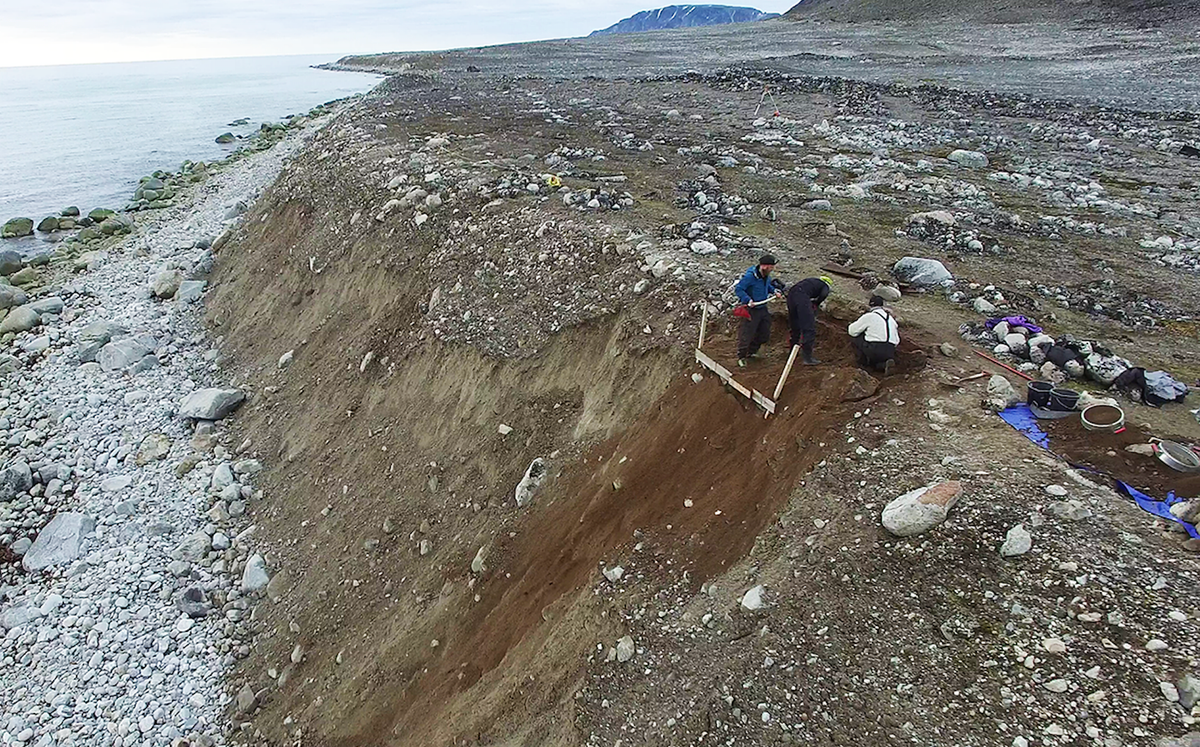
The Arctic, one of our planet's most vulnerable regions, is experiencing accelerated warming, with temperatures rising nearly four times faster than the global average. This phenomenon not only threatens current ecosystems and future generations but is also eroding our connection to the past by accelerating the degradation of material remains of human history. Among the victims of this thaw is Likneset, a whaling burial site located in Norway's Svalbard archipelago, sadly known as "Corpse Point."
Here, the bones of whalers who lived between the 17th and 18th centuries are emerging from their permafrost graves, a process triggered by human-driven climate change. A recent study has highlighted the severity of this situation, emphasizing the urgent need to preserve cultural heritage in the face of rising global temperatures. The loss of these archaeological sites is not an isolated phenomenon but is part of a broader context that includes ancient artifacts discovered in vanishing Mongolian glaciers and the oldest rock art in Indonesia, which is rapidly deteriorating due to heat.
Accelerated Degradation and Revealing Details
A team of researchers, led by Lise Loktu of the Norwegian Institute for Cultural Heritage Research and Elin Therese Brødholt of Oslo University Hospital, examined the remains of European whalers at Likneset. Their observations revealed significant degradation of many burials since they were first documented in the 1970s. This deterioration has been clearly accelerated by climate change.
The authors highlighted how the site has been repeatedly excavated for over three decades, offering a unique opportunity to study changes in preservation and human skeletal evidence over time and across contrasting burial environments within a single site. In several cases, coffin lids had collapsed and sideboards were displaced, resulting in partial disturbance of skeletal remains and textiles. An emblematic example is Grave 214, classified as completely destroyed, with coffin elements and skeletal remains dispersed downslope.
The Hard Lives of Whalers and the Challenges of Preservation
The re-examination of the bones offered insight into the difficult lives of these whalers. Their existences were short and marked by significant physical hardships. Many individuals showed signs of physical trauma due to chronic strain, and 18 out of 19 of the studied sailors suffered from scurvy. Most of the bones belonged to men who died in their 20s or early 30s. The predominance of healed injuries indicates survival after traumatic events, suggesting that mortality was more related to cumulative physiological stress than to acute fatal trauma.
These findings raise crucial questions about the long-term viability of in situ preservation and managed decay under warming permafrost conditions. The researchers concluded that future work to address this problem should be guided by clearly defined knowledge priorities: which information must be documented and analyzed before it is irretrievably lost?
Implications for Global Heritage and Historical Data Sovereignty
The situation at "Corpse Point" is a tangible warning of the vast implications of climate change on global cultural heritage. The loss of these sites is not just an archaeological matter but touches upon our ability to understand and preserve human history. For organizations and nations, the preservation of such artifacts can be seen as a form of sovereignty over historical data, ensuring that information about the past remains accessible and intact for future generations.
Although AI-RADAR's context primarily focuses on digital data sovereignty and on-premise deployments of Large Language Models, the principle of safeguarding critical information is universal. The challenge of "Corpse Point" highlights the need for robust preservation strategies, whether for sensitive digital data or physical artifacts that tell our story. The decision on "which information must be documented and analyzed before it is irretrievably lost" resonates with the challenges faced by CTOs and infrastructure architects who must protect enterprise data in increasingly complex environments. For those evaluating on-premise deployments of Large Language Models and the protection of data sovereignty, AI-RADAR offers analytical frameworks to explore these trade-offs.







💬 Comments (0)
🔒 Log in or register to comment on articles.
No comments yet. Be the first to comment!