
The MATCH Act and Geopolitical Semiconductor Strategy
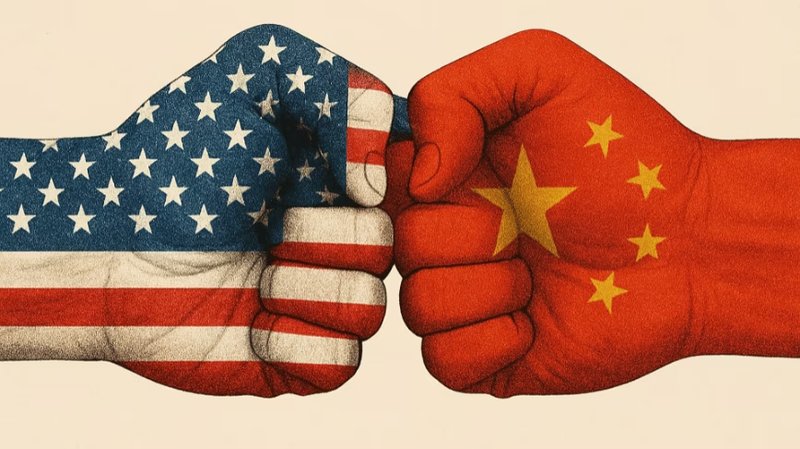
The global technological landscape is increasingly shaped by geopolitical dynamics, and the semiconductor sector is a prime example. Recently, US lawmakers introduced the "MATCH Act," a legislative proposal designed to expand and strengthen multilateral controls on the export of essential semiconductor manufacturing equipment. This initiative, as reported by DIGITIMES, reflects a broader strategy aimed at safeguarding technological leadership and managing critical supply chains.
The primary objective of the MATCH Act is to create a common front among allied nations to limit access to advanced chip manufacturing technologies by actors perceived as strategic rivals. This approach is set against a backdrop where various global powers, including China, are heavily investing in building and strengthening their local semiconductor supply chains, seeking to reduce dependence on external suppliers and ensure technological sovereignty.
Implications for the Supply Chain and AI Hardware
Restrictions on the export of semiconductor equipment have direct repercussions on the availability and cost of advanced silicio, a fundamental component for artificial intelligence infrastructure. For companies developing and deploying Large Language Models (LLM) or other intensive AI workloads, the ability to access latest-generation GPUs with high VRAM and throughput is crucial. Such controls can affect chip manufacturers' capacity to meet global demand, potentially creating bottlenecks in the supply chain.
This scenario prompts organizations to reconsider their hardware procurement strategies. Volatility in the availability of key components, such as high-performance GPUs needed for LLM inference and fine-tuning, can significantly impact the Total Cost of Ownership (TCO) of AI deployments. For those evaluating self-hosted or air-gapped solutions, supply chain resilience becomes an even more critical factor, as reliance on a limited number of suppliers or vulnerable supply chains can compromise operational continuity and data sovereignty.
The Context of On-Premise Deployments
For CTOs, DevOps leads, and infrastructure architects considering on-premise LLM deployments, the MATCH Act adds another layer of complexity to planning. The choice of bare metal or hybrid infrastructure is often driven by the need for data control, regulatory compliance, and long-term cost optimization. However, if access to specific hardware becomes more difficult or expensive due to geopolitical restrictions, TCO projections and project feasibility may be challenged.
In this context, it becomes essential for companies to diversify their suppliers and evaluate alternative hardware architectures that can ensure adequate performance even in strained supply chain scenarios. The ability to adapt to different silicio configurations, perhaps through more aggressive quantization techniques or optimization of inference frameworks, can become a competitive advantage. AI-RADAR offers analytical frameworks on /llm-onpremise to evaluate these trade-offs, supporting strategic decisions between self-hosted and cloud solutions.
Future Outlook and Strategic Resilience
The introduction of the MATCH Act underscores a global trend towards greater regionalization and control of technological supply chains. For companies operating in the artificial intelligence sector, this means that strategic planning can no longer ignore a careful analysis of geopolitical risks and their implications for hardware availability. Supply chain resilience and the ability to ensure access to critical technologies will become determining factors for the success of AI projects.
Looking ahead, we are likely to see increased investment in local production capabilities and in research and development of technological alternatives. For decision-makers, monitoring the evolution of these policies and their impact on the semiconductor market will be crucial for building robust, secure, and compliant AI infrastructures capable of operating effectively even in a constantly evolving global environment.






💬 Comments (0)
🔒 Log in or register to comment on articles.
No comments yet. Be the first to comment!