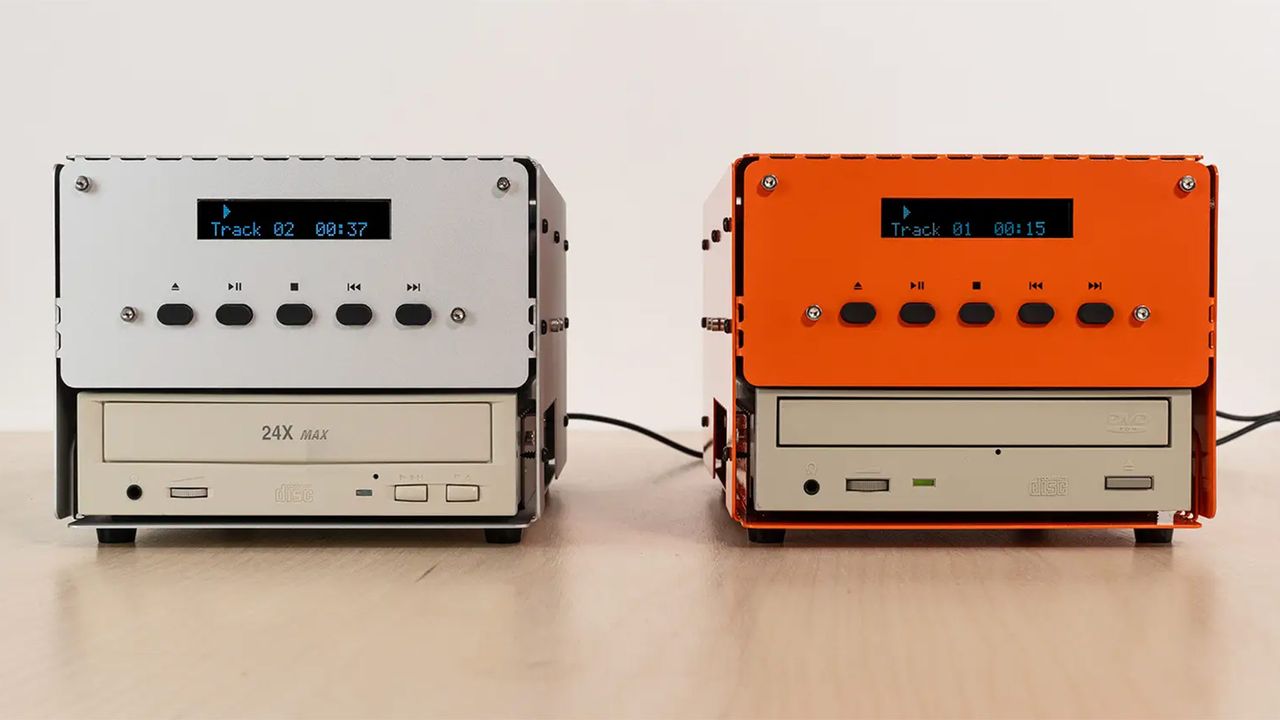
In an era when obsolete hardware ends up forgotten in basements or electronic waste, an independent project flips the perspective: the CD-ROM Player 01 turns dusty IDE optical drives into a standalone hi-fi audio player, priced around $190. The solution, from a small outfit, pairs a laser-cut enclosure with a custom PCB that handles power, control, and audio output, breathing new life into components that would otherwise gather dust.
This is not merely an exercise in analog nostalgia. Behind the tailored box lies a maker‑movement philosophy that is quietly reshaping AI infrastructure. While the cloud dominates LLM workloads, a growing number of teams and enterprises are eyeing on-premise servers for data sovereignty, model control, and long-term TCO. In this context, reclaiming existing hardware – old GPUs, decommissioned workstations, high-speed network cards – becomes a strategic lever, much like the IDE drives in the audio realm.
The CD-ROM Player 01 proves that a custom PCB can bridge the gap between legacy interfaces and modern standards. Similarly, purpose-built interconnect boards, redundant power supplies, and retrofit cooling systems are allowing inference nodes to be assembled from reclaimed parts, dramatically cutting CapEx. The benefit goes beyond savings: organizations that build local clusters using previous-generation GPUs and custom control circuitry can run quantized LLMs with enough throughput for document analysis, internal chatbots, or industrial automation, without ever letting data leave the building.
The audio project reminds us that hardware modularity is a resource not to be wasted. All too often, inference platforms are sealed monoliths, difficult to repair or upgrade outside official channels. Embracing a culture of disassembly, reuse, and PCB customization paves the way for truly controllable AI deployments, where every element – from cooling to connectors – can be swapped or optimized without vendor lock-in. This kind of hardware sovereignty, parallel to data sovereignty, is precisely what many regulated environments seek when evaluating on-premise LLM adoption.
The structural signal is clear: innovation does not ride solely on the latest GPU generation, but also on the ability to repurpose what we already own. The CD-ROM Player 01 processes no tokens and sits light-years away from GPU-laden racks, but it embodies the same spirit of technological self-determination that, applied to AI servers, can yield substantial savings and finer-grained control over infrastructure. For anyone contemplating a self-hosting move, the question is no longer whether it can be done with surplus hardware, but how far the DIY approach can go before running into memory bandwidth or compliance walls. And that conversation is only just beginning.



💬 Comments (0)
🔒 Log in or register to comment on articles.
No comments yet. Be the first to comment!