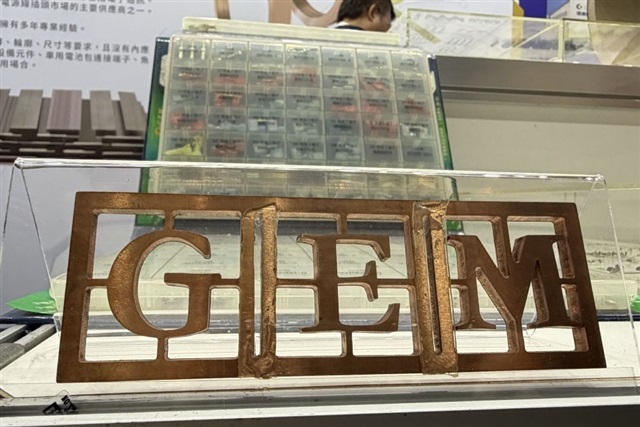
The Rise of Thermal Management in the AI Era
Gem Terminal, a key player in the thermal materials sector, has announced forecasts of a new and significant growth curve starting in 2026. This expansion is primarily attributed to an increase in shipments of materials specifically designed for artificial intelligence applications. The news, reported by DIGITIMES, highlights a crucial trend: as AI workloads become more complex and intensive, managing the heat generated by hardware becomes an increasingly decisive factor for performance and reliability.
The widespread adoption of Large Language Models (LLMs) and other AI models demands unprecedented computational power, concentrated in increasingly smaller spaces. This leads to high power densities within chips and modules, making cooling a primary engineering challenge. Advanced thermal materials, such as those developed by Gem Terminal, are essential for effectively dissipating this heat, preventing overheating, and ensuring that Graphics Processing Units (GPUs) and other accelerators can operate at maximum efficiency without throttling.
The Technical Details of AI Cooling
Modern GPUs, like NVIDIA H100s or AMD Instinct MI300X, are veritable silicon furnaces, capable of generating hundreds of watts of heat in just a few square centimeters. To keep these operating temperatures within acceptable limits, sophisticated cooling systems are required that go beyond traditional fans and heatsinks. This is where thermal materials come into play: conductive pastes, thermal pads, phase-change interfaces, and liquid cooling solutions.
These components are not mere accessories; they are critical elements that directly influence a system's ability to sustain inference and training workloads for LLMs. Insufficient heat dissipation can lead to reduced performance (thermal throttling), decreased hardware lifespan, and an increase in overall energy consumption. For companies investing in AI infrastructures, choosing high-quality thermal materials translates into greater operational stability and better throughput, essential elements for competitiveness.
Implications for On-Premise Infrastructure
For CTOs, DevOps leads, and infrastructure architects evaluating on-premise LLM deployments, thermal management takes on even greater importance. Unlike cloud solutions, where cooling is handled by the provider, in a self-hosted environment, the responsibility falls entirely on the organization. This includes data center design, rack selection, air conditioning systems, and, of course, the thermal materials within the servers.
An effective cooling strategy directly contributes to optimizing the Total Cost of Ownership (TCO) of an AI infrastructure. It reduces the need for premature hardware replacement, minimizes energy costs associated with cooling, and maximizes system uptime. In contexts requiring data sovereignty, stringent compliance, or air-gapped environments, on-premise deployments are often the only option. Here, the ability to maintain optimal hardware performance through efficient cooling is not just an advantage, but an operational necessity to ensure service continuity and the security of sensitive information.
Future Prospects and Trade-offs
The market for AI thermal materials is rapidly evolving, with continuous innovations aimed at improving conductivity, durability, and ease of application. Companies like Gem Terminal are at the forefront of this innovation, developing solutions that allow pushing the limits of hardware performance. However, choosing the ideal thermal solution always involves trade-offs.
Factors such as initial cost, installation complexity, maintenance requirements, and environmental impact must be carefully evaluated. There is no single "best" solution, but rather the one most suited to the specific constraints of a project and the needs of an organization. Gem Terminal's focus on the AI sector for 2026 reflects a growing awareness that the success of artificial intelligence deployments, especially on-premise ones, will increasingly depend on the ability to manage heat efficiently and sustainably.







💬 Comments (0)
🔒 Log in or register to comment on articles.
No comments yet. Be the first to comment!