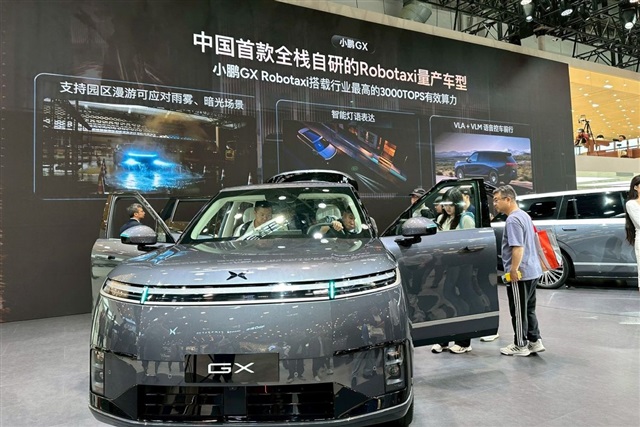
The Beijing Auto Show: A Barometer of Change
The recent Beijing Auto Show has established itself not only as a showcase for new vehicle models but also as a strategic indicator of the trends redefining the global automotive industry. Analysis by industry observers, such as DIGITIMES, reveals a paradigm shift: attention is moving from traditional car launches towards the deep integration of artificial intelligence (AI) into supply chains.
This shift reflects a growing awareness of AI's importance not only for in-vehicle functionalities but also for optimizing the operational and logistical processes underpinning all production and distribution. Companies in the sector are recognizing AI's transformative potential to address complex challenges, from inventory management to demand forecasting, and predictive maintenance across the entire value chain.
AI at the Heart of Automotive Supply Chains
The adoption of AI in automotive supply chains promises to revolutionize operational efficiency and resilience. Advanced machine learning algorithms and Large Language Models (LLM) can analyze vast volumes of data from sensors, ERP systems, and external sources to identify patterns, predict disruptions, and optimize logistical flows in real-time. This includes intelligent inventory management, production planning based on actual demand, and waste minimization.
To support such workloads, a robust and scalable IT infrastructure is necessary. Inference and training of complex AI models require significant computing resources, often based on high-performance GPUs with ample VRAM. The ability to rapidly process data and execute AI models with low latency is crucial for making timely decisions and maintaining the fluidity of supply chain operations.
Implications for Deployment and Data Sovereignty
The transition to AI-driven supply chains raises fundamental questions regarding infrastructure deployment. Companies must carefully evaluate the trade-offs between cloud solutions and self-hosted or on-premise deployments. For sectors like automotive, which handle sensitive and critical data, data sovereignty and regulatory compliance (such as GDPR) are often top priorities. An air-gapped environment or a bare metal deployment can offer the required level of control and security.
Total Cost of Ownership (TCO) is another critical factor. While the cloud offers initial flexibility, long-term operational costs for intensive AI workloads can become prohibitive. On-premise solutions, while requiring a higher initial upfront investment, can offer lower TCO and greater cost predictability at scale. The choice depends on factors such as model size, desired throughput, acceptable latency, and model training frequency. For those evaluating on-premise deployments, AI-RADAR offers analytical frameworks on /llm-onpremise to thoroughly assess these trade-offs.
Future Prospects and Infrastructure Challenges
The integration of AI into automotive supply chains is a complex journey that requires not only the adoption of new technologies but also a profound reorganization of internal processes and skills. The ability to collect, clean, and analyze high-quality data is fundamental to the success of AI projects. Furthermore, the management and continuous updating of AI models require well-defined MLOps pipelines and flexible infrastructure.
The Beijing Auto Show has clearly indicated that the future of automotive lies not just in the vehicles we drive, but also in the intelligence powering their production and distribution. For CTOs, DevOps leads, and infrastructure architects, this means a growing need to plan and implement robust, secure, and scalable AI solutions, with a keen eye on cost, performance, and data sovereignty constraints.








💬 Comments (0)
🔒 Log in or register to comment on articles.
No comments yet. Be the first to comment!